May 23rd, 2022 | 11:42 CEST
Share sell-off: TUI, Barsele Minerals, Nel ASA - Buy or sell these stocks?
The sell-off in equities entered a new round in May. With rising inflation, disrupted supply chains and uncertain energy supplies, the risk for investors is increasing as interest rates are now exploding to unprecedented levels in parallel with the highly volatile environment. The 10-year yields on government bonds in Germany and the USA have moved up from near zero to 1.14% and from 1.5% to 3.12%, respectively. Whenever there was a noticeable rise in interest rates for bonds, things became critical on the stock market. At the moment, this is weighing on technology stocks in particular. The DAX and S&P have already lost 20% in the current correction phase. After initial losses, gold is now accelerating. Where are the opportunities for investors?
time to read: 4 minutes | Author: André Will-Laudien
ISIN: TUI AG NA O.N. | DE000TUAG000 , BARSELE MINERALS | CA0688921083 , NEL ASA NK-_20 | NO0010081235
Table of contents:
Author

André Will-Laudien
Born in Munich, he first studied economics and graduated in business administration at the Ludwig-Maximilians-University in 1995. As he was involved with the stock market at a very early stage, he now has more than 30 years of experience in the capital markets.
Tag cloud
Shares cloud
Nel ASA - The hydrogen pearl of the North
The Ukraine crisis shows the vulnerability of the European energy policy. Continuing as before not only jeopardizes supply but also political stability in Europe because a permanent doubling of energy prices would put an extreme strain on purchasing power and future growth. The sooner the EU switches to renewables, the sooner it will regain control of its own energy system. The energy renewal plan recently unveiled by the EU Commission called "REPowerEU" is a bold initiative. It will cost around EUR 300 billion.
Nel ASA is one of the hydrogen protagonists and fits well into the "REPowerEU" plan. With the recently reported figures for the first quarter, Nel was not quite able to meet analysts' expectations for sales, but a look into the future promises further growth. The order book climbed by 19% to a new record level of NOK 1.29 billion. A successful private placement of NOK 1.5 billion means that Nel is still sitting on a comfortable cash position of a total NOK 3.9 billion.
Even if Nel's figures were disappointing at first glance, market participants should not lose sight of the high investments in the future technology "hydrogen" against the backdrop of the overall political situation. Nel is able to land large orders consistently, and the further essential development of the technology is thus secured. The share price is now down almost 30% on a 12-month basis and has already corrected more than 65% from its high. The current valuation based on estimated sales (P/S) for 2022 of approximately NOK 1.2 billion is still ambitious at a factor of 16. Buy in weakness!
Barsele Minerals - A promising investment in Sweden
Those looking for stability for their portfolio should look at the current gold spot price after the last correction. Because after a steep rise to USD 2,072 at the time of Russia's invasion of Ukraine, the yellow metal has now corrected considerably. The current price of USD 1,844 is once again giving a positive signal in the long-term upward trend.
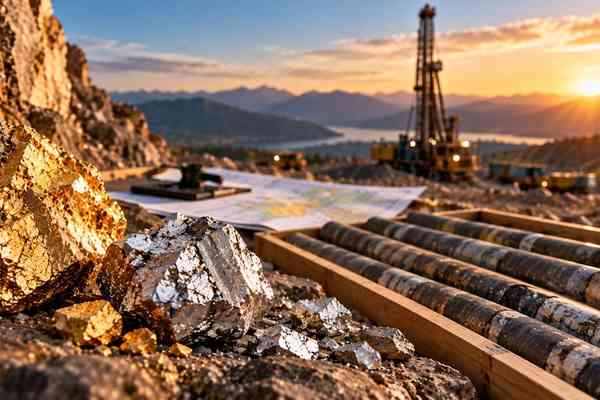
Mining has been going on in Scandinavia for centuries, as the large area and the very sparse population offer a good location for mining. In the international race for critical metals, Sweden, in particular, is well-positioned because its deposits of rare raw materials and energy sources are outstanding compared to Europe, which is otherwise relatively poor in raw materials. Due to a friendly jurisdiction, it is also possible for smaller mining companies to implement suitable exploration projects.
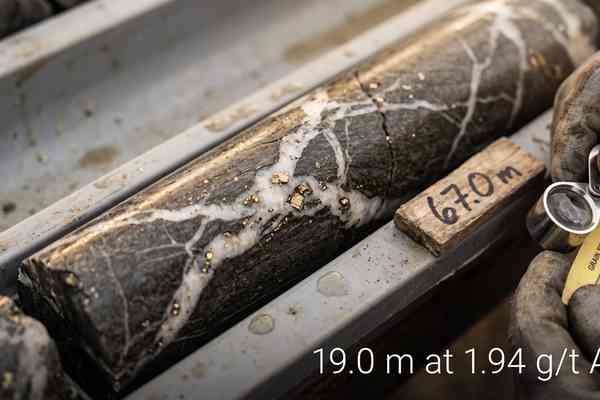
In the mining region of Västerbottens Län in northern Sweden, we have come across a promising project with the Canadian Company Barsele Minerals. Within the polymetallic deposits indexed on 34,500 hectares, a resource estimate of 2.41 million ounces was already carried out in 2019. Under the management of the successful Belcarra Group, drilling will continue in 2022. The project is currently still 55% owned by the major Agnico Eagle. With their assistance, 155,000 meters of drilling program have already been completed. Also striking about the deposit are the deposits in metals such as lead, zinc and nickel. These materials are still in demand for the e-mobility and high-tech industries and add value to the property.
The Canadians have indicated that they would also like to take over the remaining 45% of the project. As is usual with such promising claims, the back-and-forth tactics of the shareholders will probably take some time until a price acceptable to both sides has been found. At present, this is still speculation, but it is precisely this that gives the Barsele share its great charm. With a market capitalization of EUR 32 million, the share is far below its intrinsic value.
TUI or Lufthansa - Who has the better balance sheet for a turnaround?
Opinions differ when looking at the charts of TUI and Lufthansa. Both shares have been badly hit by the Corona pandemic. Only with emergency aid from Berlin were the two companies saved from the threat of illiquidity in 2020/2021. Lufthansa has already repaid most of the aid, and TUI is now in the process of its third capital increase to repay the silent partnership contributions from the German government.
However, in the case of TUI, this debt relief process is fraught with significant risks. This is because the German-British travel group raised EUR 425 million overnight from a number of institutional investors. Some 162.3 million new shares have been placed at a price of EUR 2.62, representing 10% of outstanding shares. The proceeds and further cash will now be used to repay one of the two silent participations of the state Economic Stabilization Fund (WSF) with a volume of EUR 671 million. The major Russian investor Alexei Mordashov is currently unable to participate in a capital increase. He owns a good 30% of the Company but ended up on the EU sanctions list at the end of February.
If you put the two shares side by side, Deutsche Lufthansa seems to be doing its homework better. The share price has at least been able to stabilize at the EUR 6.8 line since the last dilution. In the case of TUI, the current action initiated another crash towards EUR 2.43, and the low at EUR 2.30 is not far away. Both shares are struggling with major defaults in their business and extreme increases in the cost of their services. Whether this will lead to profit increases remains questionable. Nevertheless, both shares are attractive for momentum trading, but we expect the medium-term turnaround to be more likely in Lufthansa.
The volatility of stocks is currently over 30% on an annual basis. It makes long-term investment decisions difficult and short-term speculation attractive. Nel ASA, TUI and Lufthansa are fluctuating quite a bit at times. Barsele Minerals has access to prime property in Sweden with excellent prospects.
Conflict of interest
Pursuant to §85 of the German Securities Trading Act (WpHG), we point out that Apaton Finance GmbH as well as partners, authors or employees of Apaton Finance GmbH (hereinafter referred to as "Relevant Persons") may hold shares or other financial instruments of the aforementioned companies in the future or may bet on rising or falling prices and thus a conflict of interest may arise in the future. The Relevant Persons reserve the right to buy or sell shares or other financial instruments of the Company at any time (hereinafter each a "Transaction"). Transactions may, under certain circumstances, influence the respective price of the shares or other financial instruments of the Company.
In addition, Apaton Finance GmbH is active in the context of the preparation and publication of the reporting in paid contractual relationships.
For this reason, there is a concrete conflict of interest.
The above information on existing conflicts of interest applies to all types and forms of publication used by Apaton Finance GmbH for publications on companies.
Risk notice
Apaton Finance GmbH offers editors, agencies and companies the opportunity to publish commentaries, interviews, summaries, news and the like on news.financial. These contents are exclusively for the information of the readers and do not represent any call to action or recommendations, neither explicitly nor implicitly they are to be understood as an assurance of possible price developments. The contents do not replace individual expert investment advice and do not constitute an offer to sell the discussed share(s) or other financial instruments, nor an invitation to buy or sell such.
The content is expressly not a financial analysis, but a journalistic or advertising text. Readers or users who make investment decisions or carry out transactions on the basis of the information provided here do so entirely at their own risk. No contractual relationship is established between Apaton Finance GmbH and its readers or the users of its offers, as our information only refers to the company and not to the investment decision of the reader or user.
The acquisition of financial instruments involves high risks, which can lead to the total loss of the invested capital. The information published by Apaton Finance GmbH and its authors is based on careful research. Nevertheless, no liability is assumed for financial losses or a content-related guarantee for the topicality, correctness, appropriateness and completeness of the content provided here. Please also note our Terms of use.