
Batteries

Commented by Stefan Feulner on October 8th, 2026 | 07:45 CEST
Amprius Technologies, HPQ Silicon, Kratos Defense: This Technology Is Revolutionizing the Military
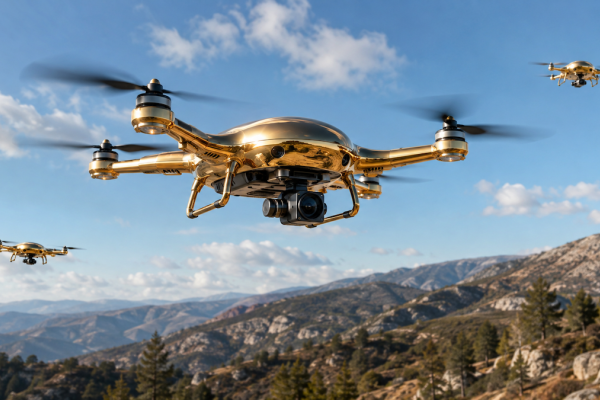
Drones are transforming modern warfare, and suddenly, the battery determines range, payload, and mission duration. As a result, the US is investing millions in new high-performance cells and domestic manufacturing capacity. Silicon anodes could represent a decisive technological leap, promising significantly higher energy densities than traditional graphite anodes. The race is already on. While major defense contractors ramp up production of unmanned systems, battery developers are striving to pack the necessary energy into the lightest possible package.
Read
Commented by Fabian Lorenz on October 7th, 2026 | 08:35 CEST
Time to Sell Moderna Stock After a 200% Rally? A Comeback for Standard Lithium and HPQ Silicon?
Moderna's stock has had a spectacular run in recent weeks. Since mid-August, the biotech company's stock has surged from USD 63 to over USD 200. But now analysts are pouring cold water on the price surge. In their view, the stock could more than halve in value. While Moderna has already made a successful comeback, there are good reasons to believe that HPQ Silicon's is still to come. Despite positive news flow, the stock has yet to take off. Following successes in the drone sector, the company recently laid the groundwork to market its technology for producing fumed silica. Investors have been waiting for a comeback from Standard Lithium for quite some time. The stock is trading at a yearly low and approaching penny stock levels. Yet the company recently secured a new customer.
Read

Commented by André Will-Laudien on October 1st, 2026 | 08:30 CEST
No Chips, No AI – But Without Power, Nothing Runs! Big Opportunities Await in AMD, Nvidia, HPQ Silicon and Infineon
Is the AI boom starting to overheat? The fact is, the entire tech sector is heading straight for a critical bottleneck. While the developers of the world's fastest graphics processors and accelerator hardware are driving computing power to astronomical heights, the industry's foundation is beginning to falter. At the end of the day, every neural network and every sophisticated language model is only as good as the infrastructure that keeps it alive. The next phase of technological evolution will therefore no longer be decided solely in the design studios of Silicon Valley, but at the level of efficient power supply and revolutionary materials. This is where specialized semiconductor giants and innovative pioneers in cutting-edge anode materials come into play. They provide the key technologies needed to manage the exploding energy demands of modern data centres and mobile systems. The market winner will be determined by who produces the most efficient power semiconductors and next-generation battery cells. For investors, this means betting on the right suppliers for the energy transition now will secure the most profitable positions for the tech future. We do the math!
Read
Commented by Jens Castner on September 30th, 2026 | 07:30 CEST
The Heart of the European Battery: How BASF, IBU-tec and HPQ Silicon Are Revolutionizing the Battery
The future of the European automotive industry will not be decided on the assembly line, but in the chemistry lab. Until now, battery cells—the heart of modern electric vehicles—have come almost exclusively from Asia. This dependency is dangerous, and politicians have warned about it for years: Europe urgently needs its own self-contained battery value chain. But to achieve this independence, it is not enough to simply build massive factories ("gigafactories") on greenfield sites. The real key lies in the molecular components: the cathode (the positive terminal) and the anode (the negative terminal). Three companies are demonstrating how this European supply chain can become a reality: DAX giant BASF is focusing on high-end chemicals for the premium range, while the mid-sized company IBU-tec, with its new mega-factory in Bitterfeld-Wolfen, is poised to become the European LFP cathode leader for the mass market. At the other end of the battery spectrum, the Canadian-French technology firm HPQ Silicon is using innovative silicon anodes to ensure future energy storage systems will be dramatically more powerful. This technological pincer movement could free the continent from Asia's stranglehold. Read on to find out what this means for investors.
Read

Commented by Stefan Bode on September 29th, 2026 | 07:55 CEST
Stock Markets Between Speculation, Progress and Falling Prices: HelloFresh, Net Digital and HPQ Silicon
Three completely different stories are currently drawing attention to these companies. While a technology conglomerate is taking off with surprisingly strong growth and defence-related speculation, a Canadian materials specialist is banking on a breakthrough in batteries. Meanwhile, an established online retailer is struggling with declining customer acquisition, a reduced marketing budget, and a new record low on the stock market. This report examines the opportunities, risks, and unanswered questions behind the price movements.
Read
Commented by Armin Schulz on September 25th, 2026 | 09:50 CEST
Volkswagen, HPQ Silicon, AeroVironment: How Investors Can Profit from the Battery and Drone Boom
The lines between defence and automotive are blurring. Defence budgets are reaching record highs, while the auto industry is undergoing a complete transformation. In between, a new value chain is emerging, built on batteries, silicon and autonomous systems. After all, drones and an ever-increasing amount of military technology also require better batteries. Electric mobility needs them too. Those who understand the intersections are a step ahead of the masses. Headlines are of little help here. What counts are supply chains, patents and full order books. That is why we are taking a closer look at Volkswagen, HPQ Silicon and AeroVironment today.
Read
Commented by Fabian Lorenz on September 21st, 2026 | 07:45 CEST
Following Stock-Market Legend André Kostolany: Are Siemens Energy, BioNTech or HPQ Silicon Contrarian Plays?
Contrarian investors, take note! The stock market does not always behave rationally. Stock-market legend André Kostolany liked to compare the relationship between a company's performance and its share price to a man out for a walk with his dog. Sometimes the dog runs ahead, sometimes it lags behind, but ultimately both move in the same direction. HPQ Silicon appears to be a case in point. While the company has been releasing one positive announcement after another, its stock has come under pressure. This discrepancy is precisely what makes the stock interesting for contrarian investors. Siemens Energy presents almost the opposite picture. The stock has already priced in a great deal of growth, while analysts are recommending a "Sell". And what about BioNTech?
Read
Commented by Fabian Lorenz on September 21st, 2026 | 07:35 CEST
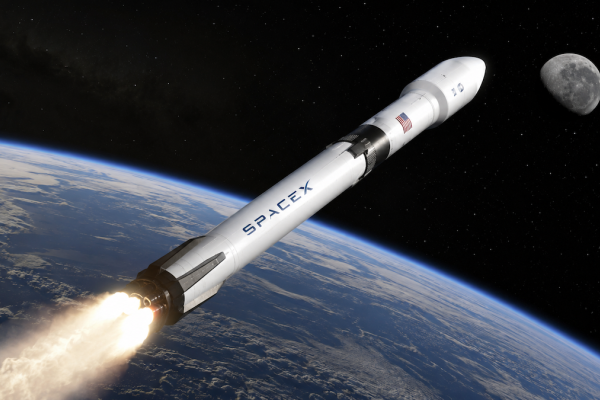
SpaceX Needs Raw Materials: MP Materials, Standard Lithium and Strategic Resources Aim to Meet the Demand
SpaceX's appetite for raw materials is enormous. Elon Musk's company requires large quantities of a wide range of strategic materials for rockets, satellites and battery systems. These include rare earths for high-performance magnets, lithium for battery systems, as well as titanium and iron for high-load components and steel structures. SpaceX is just one example of the growing global demand. Companies such as Strategic Resources, MP Materials and Standard Lithium are working to supply the market. They are developing raw material deposits needed for critical applications in the space industry and numerous other key sectors. Strategic Resources focuses on iron, titanium and vanadium; MP Materials on rare earths; and Standard Lithium on lithium. Only one of the three stocks appears to be undervalued.
Read

Commented by André Will-Laudien on September 21st, 2026 | 07:15 CEST
E-Mobility in the Grip of Energy Prices! Things Are Heating Up for VW, Porsche, Mercedes, BYD and Phenom Resources
Filling up currently feels like a painful visit to the dentist — but without much hope of a cure! Yet despite all the gloom, there are also winners. Against the backdrop of rising energy prices, European e-mobility has entered a dynamic yet fiercely competitive phase in recent months. The historic price shock at the pump is prompting consumers to rethink their spending while driving a boom in new battery electric vehicle registrations. In Europe, electric vehicles now appear on the horizon as a subsidized solution, while gasoline and diesel prices march from one all-time high to the next. However, the charts so beloved by stock market traders are difficult to apply to gas station products. As the operating costs of internal combustion engines soar, electric vehicles are rapidly gaining appeal as an alternative. This is particularly good news for Chinese automakers, who are pushing into Europe with an aggressive market strategy and challenging the established, traditional brands. Even the import tariffs imposed by Brussels on pure-electric vehicles can barely slow the advance from the Far East. The local automotive industry is thus under unprecedented pressure to transform and compete. Where exactly should investors be looking?
Read

Commented by Carsten Mainitz on September 18th, 2026 | 09:35 CEST
New Chips, New Batteries, New Chances: HPQ Silicon Breakthrough? Micron Keeps Surging – Can Aixtron Catch Up?
Nvidia, AMD and Broadcom are among the companies most closely associated with the AI boom. But the next major wave of growth could emerge among suppliers and technology partners. After all, the more AI applications find their way into data centres, the greater the demand for fast memory, efficient power electronics, and new materials. HPQ Silicon is focusing on silicon as a key material for the next generation of lithium-ion batteries and recently achieved an important milestone. Aixtron and Micron are riding the AI wave in different ways. Which horse should investors bet on?
Read