
Batteries

Commented by Matthias Schomber on September 15th, 2026 | 07:45 CEST
Megatrends and Future Market Stocks For The Portfolio: Can BASF, Porsche and HPQ Silicon Deliver the Breakthrough?
Today, we take a closer look at three companies at pivotal decision points. First, we examine the chemical heavyweight BASF. The Ludwigshafen-based company is currently fighting tooth and nail for a global turnaround and surprising the markets with innovative new technologies. The technical level of EUR 55 is crucial here. Next, we turn our attention to the immense structural challenges facing Porsche AG and ask whether the automaker will succeed in making a breakthrough following Volkswagen's radical restructuring—or not. Last but not least, we focus on an exciting technology developer from North America: HPQ Silicon. With new milestones in the battery and drone industries, the company could soon attract more attention. The stock is currently trading at a level that would have been unthinkable just months ago. Read on to discover the opportunities these three stocks offer.
Read

Commented by Nico Popp on September 11th, 2026 | 08:10 CEST
The Anode Is the Key: How Ferroglobe, Wacker Chemie and HPQ Silicon Aim to Break China's Market Dominance
Anyone getting into an electric vehicle today takes a range of several hundred kilometres and fast charging on the highway for granted. Yet while EVs may be relatively straightforward to use today, their supply chains have weak points. While Western buyers focused for years on cathode metals such as lithium and cobalt, Beijing has secured almost complete control over the anode. Without graphite from the Far East, nearly every Western battery factory would currently be at a standstill. The International Energy Agency (IEA) puts China's share of global anode material production capacity at 97%. For the West, the way forward lies in innovative materials such as silicon and its smart application. We take a closer look at innovative business models.
Read

Commented by Stefan Bode on September 10th, 2026 | 08:30 CEST
A Plunge, Corporate Restructuring, and a Bet on Technology – Novartis, HPQ Silicon, Volkswagen
In the stock market, it is often not the big promises but the critical transition phases that determine investment opportunities—true to the saying: "The profit lies in the purchase." That is exactly where the following three stocks stand. A corporation with costly pipeline risk, a tech stock on the path from testing to potential commercialization, and an industrial giant in the midst of a tough restructuring. Investors looking to understand where hope, risk, and revaluation are currently most strongly intertwined will find interesting case studies here.
Read

Commented by Fabian Lorenz on September 9th, 2026 | 07:10 CEST
Insider Alert at Deutz! Buy Recommendation for Renk! Drone Potential at HPQ Silicon!
At the start of the year, HPQ Silicon's stock would likely have skyrocketed. Back then, the stock market loved drone stocks. Little remains of that euphoria today. But that is precisely where the opportunity lies for HPQ. The news flow is strong, with several European drone manufacturers currently testing its latest-generation batteries, while the French Army has already placed an order. Deutz is arguably the star among defence stocks right now. An insider continues to buy, and the news flow is also positive. At Renk, analysts believe the recent share price decline has been overdone. They have upgraded the stock. The upside potential is limited, however, and there are risks in the order backlog.
Read

Commented by Matthias Schomber on September 4th, 2026 | 09:30 CEST
Danger at Rheinmetall and OHB! Is HPQ Silicon a Buying Opportunity?
The defence sector has experienced an unprecedented rally in recent years, but a harsher wind is suddenly blowing on the trading floor. While major players such as Rheinmetall and the aerospace specialist OHB are suffering from profit-taking and rising oil prices despite their exceptionally strong order books, a potentially entirely new opportunity is emerging away from the headlines. Canadian technology company HPQ Silicon is developing market-changing innovations in battery and hydrogen technologies that are approaching commercial breakthrough. Bold investors who think innovatively may recognize that opportunities on the stock market could be emerging right now.
Read

Commented by Stefan Feulner on September 4th, 2026 | 07:20 CEST
Cerebras, Volatus Aerospace, Standard Lithium: 3 Markets Poised for a Breakthrough
The next wave of investment is well underway. Billions are flowing into new AI data centres, Western nations are securing critical raw materials, and companies are increasingly automating tasks that previously had to be carried out by people, aeroplanes or helicopters. For investors, this creates opportunities that extend far beyond the well-known technology giants. Of particular interest are companies that provide the infrastructure for this development.
Read

Commented by Stefan Feulner on September 1st, 2026 | 06:55 CEST
AeroVironment, HPQ Silicon, BAE Systems: It Is All About the Battery
Drones are fundamentally changing modern warfare. What used to cost millions can now be reconnoitered or countered using comparatively inexpensive unmanned systems. Western nations are ramping up their procurement efforts accordingly. But as demand grows, so do the technical challenges. Range, payload, and endurance depend crucially on the power supply. More powerful batteries are thus becoming a key technology in the drone boom. Not only could the major defense contractors benefit from this, but also suppliers that have received little attention until now.
Read

Commented by Tarik Dede on August 31st, 2026 | 07:10 CEST
Markets on the Move: PayPal, HPQ Silicon and Salesforce in Focus
The summer break is officially coming to an end. Particularly in North America, investors typically return to their desks around September 1, after Labour Day. But this year, plenty has been happening in the stock markets even during the summer months—there has been little sign of a lull. Following Nvidia's phenomenal second-quarter results, innovative sectors now appear to be shifting into higher gear. And the market is not expecting much turbulence on the interest rate front either. Despite rising inflation, the Federal Reserve appears unlikely to take action ahead of the midterm elections in November. At least, that is what the markets are largely pricing in at present. That makes it worthwhile for investors to take a closer look. Today, we do just that with PayPal, HPQ Silicon and Salesforce.
Read
Commented by Fabian Lorenz on August 25th, 2026 | 06:55 CEST
Bombshell, Crash Risk and Buy Recommendation! Hensoldt, D-Wave and HPQ Silicon in Focus!
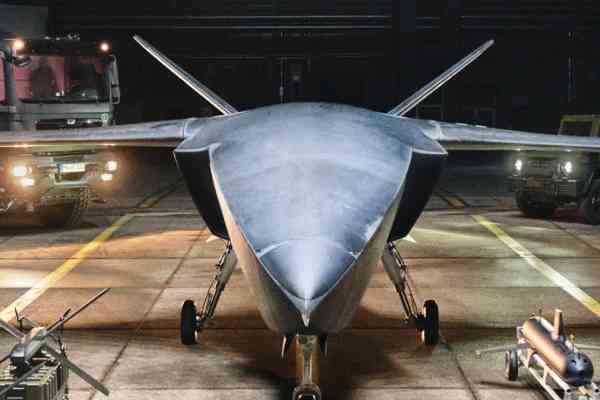
Major announcement from HPQ Silicon. Together with a partner, the company has secured its first military contract. The partner's batteries performed convincingly in tests and will be integrated into FPV drones for a regiment of the French Army. This should make it easier to secure contracts from NATO countries. Other potential customers are already conducting tests. As a result, HPQ is evolving from a hidden gem into a drone play. By contrast, analysts see more than 30% downside potential for Hensoldt. Compared with Renk and Rheinmetall, the reported order backlog is considered to be of higher quality, but the question is how quickly it can be converted into revenue and profit. In addition, analysts see risks stemming from Hensoldt's dependence on armoured-vehicle programs. D-Wave Quantum, on the other hand, is recommended as a "Buy". Analysts praise its unique strategy, first-mover advantage, and the fact that revenue generation is now beginning to take hold.
Read
Commented by Armin Schulz on August 24th, 2026 | 08:00 CEST
Potential Winners of the USD 1.4 billion Pentagon Deal: Rheinmetall, HPQ Silicon and BYD
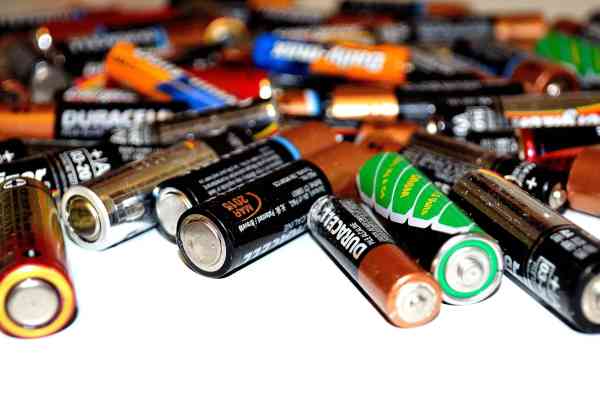
The Pentagon's USD 1.4 billion allocation to the US startup Sila Nanotechnologies for the development of silicon batteries is not a financial deal, but rather the starting signal for a new era in defense. The US military is aware that drones will dominate the battlefields of the future. Their performance is largely determined by the energy density of the battery cells. Silicon anodes promise advantages in terms of range and payload. The US and Europe have also recognized that they must reduce their dependence on Asian manufacturers for domestic supply chains. So today, we take a closer look at Rheinmetall's efforts, HPQ Silicon's latest innovations and BYD's battery activities.
Read