
Batteries
Commented by Nico Popp on July 1st, 2026 | 07:10 CEST
What VW and Mercedes-Benz Must Do Immediately: Lithium as a Constant in Battery Technology – Rock Tech Lithium in an Exciting Phase
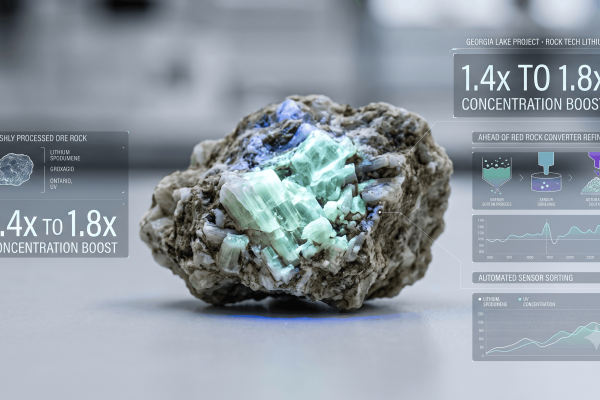
Mass layoffs and poor quarterly results are spreading fear in southwestern Germany, the heart of the automotive industry. And rightly so. The German automotive industry faces not only the mammoth task of transformation but also the challenge of sourcing critical battery raw materials. Over 80% of the lithium hydroxide needed in Europe currently comes from Chinese refineries. However, legal requirements such as the European Critical Raw Materials Act (CRMA) call for the establishment of local structures for mining and processing in order to break the critical dependence on China. A German-Canadian company could offer the solution.
Read
Commented by Stefan Feulner on June 29th, 2026 | 07:25 CEST
Atlas Lithium, Rock Tech Lithium, Ganfeng Lithium: A Market in Flux
Lithium is emerging as a key strategic raw material for the next phase of electrification. The global expansion of electric vehicles, energy storage systems, data centers, and modern defense technology is expected to further drive demand in the coming years. At the same time, secure supply chains outside of China are increasingly coming into focus. Producers, project developers, and companies with innovative battery and storage technologies could all benefit disproportionately from this trend.
Read
Commented by Tarik Dede on June 29th, 2026 | 07:20 CEST
Boom, Thanks to the AI Loop: Broadcom, HPQ Silicon, and GitLab
Whether it is the AI revolution, quantum computing, or electric vehicles, the tech sector is booming worldwide—from the Nasdaq to the KOSPI. Keeping pace with this growth requires a massive expansion of infrastructure. Data centers and semiconductor manufacturing capacity are being built out at an unprecedented rate, while memory and chip equipment suppliers are ramping up production. Artificial intelligence is driving this process itself. This phenomenon is known as "recursive self-improvement." AI is currently becoming faster and more capable through three reinforcing mechanisms: it writes better code by building on previous generations of AI, it optimizes hardware—such as the design of next-generation AI chips from Nvidia or Broadcom—and it discovers more efficient circuit designs than human engineers could achieve on their own. The result is a powerful feedback loop that is also delivering major benefits to other industries. Today, we take a closer look at three technology companies that stand to benefit from this trend: Broadcom, HPQ Silicon, and GitLab. Without Broadcom, none of this would be possible.
Read
Commented by André Will-Laudien on June 26th, 2026 | 07:55 CEST
Battery Boom 3.0: The Future Is 100% Electric! VW, BYD, Stellantis, and HPQ Silicon at the Eye of the Storm
Things are a bit bumpy on the stock market right now. While the high-tech sector is now showing clear signs of slowing down, chip stocks—led by Micron and AMD—are really stepping on the gas again. At the heart of this are massive investments in data centers and new AI infrastructure. This is putting the spotlight on companies whose innovative ideas have the potential to disrupt an entire sector. One example is HPQ Silicon, which addresses several critical areas for future energy and industrial value creation. For VW, BYD, and Stellantis, too, the focus has long since shifted from mere market share to dominance in the global battery race. For the automotive industry, the challenges of the moment could not be greater. After all, they need reliable access to raw materials and strong end markets. Ultimately, however, success is determined by the often fickle consumer. Investors, too, have always been highly selective in their choices. We reveal a few criteria for separating the winners from the rest.
Read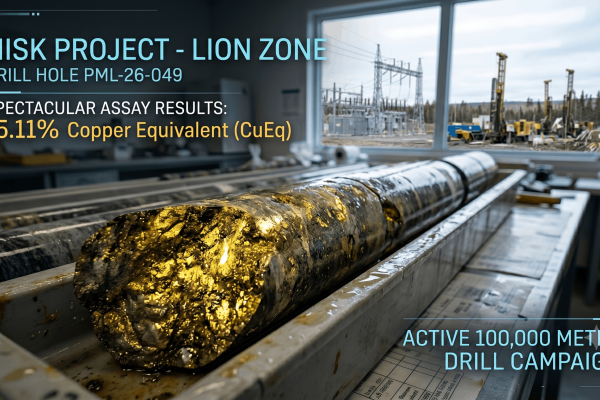
Commented by Nico Popp on June 25th, 2026 | 07:35 CEST
Commodity Concerns at General Motors and Amazon – Why Power Metallic Mines Is One of the World's Most Promising Juniors
The era of raw materials is already here: geopolitical tensions and future technologies are driving the market. The traditional procurement model based on global spot markets is increasingly reaching its limits. It is being replaced by direct participation of leading industrial and technology conglomerates in mining and raw materials companies. Increasingly, this is happening even at very early-stage development companies. Companies such as Power Metallic Mines are responding to this trend and, even before production begins, are developing into platforms for ESG-compliant supply chains. We take a closer look at the market and the associated opportunities.
Read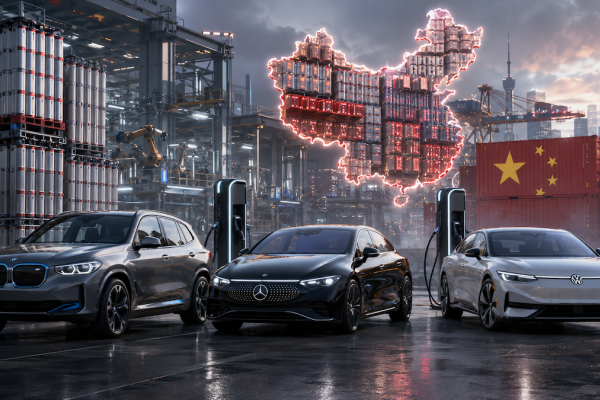
Commented by Fabian Lorenz on June 25th, 2026 | 07:30 CEST
Electromobility and the Structural Risk for BMW, Mercedes, and Volkswagen: Rock Tech Lithium Stock Poised for Revaluation
Electric vehicle sales in Europe continue to rise steadily. In the EU, new registrations of battery-electric passenger vehicles in the first five months of 2026 were up 35.7% compared to the same period last year. The market share of fully electric vehicles increased to 20.0%. In Germany, growth was even stronger at 40.9%, with BEVs reaching a market share of 23.9%. German manufacturers remain among the leaders in producing the most popular models. However, as with all European automakers, a structural risk persists: dependence on China for batteries. Without secure access to lithium and domestic conversion capacity, European automakers cannot fully control their electric-vehicle value chain. China could, at any time, effectively "turn off the tap" for its competitors. And this is where Rock Tech Lithium comes into play. The company has repositioned itself in recent years and aims to cover the value chain all the way down to battery-grade lithium chemicals. The stock could be poised for a spectacular comeback.
Read
Commented by Matthias Schomber on June 24th, 2026 | 08:35 CEST
Allianz Breaks the Record, Siemens Energy Is on a Roll, and Is HPQ Silicon on the Verge of a Breakthrough?
The stock market is currently producing stories as different as one could possibly imagine. On one hand, we are witnessing impressive rallies—especially in the AI sector and among AI-related stocks—as well as historic milestones at established German blue-chip companies such as Allianz. Record profits and full order books are pushing share prices to levels unimaginable just a few years ago. On the other hand, smaller technology companies are stepping into the spotlight, aiming to revolutionize entire industries with fresh ideas and smart partnerships. Today, we take a detailed look at this fascinating mix. We examine the rapid resurgence of a true energy heavyweight from Germany: Siemens Energy. We analyze the historic breakout of a Munich-based insurance giant: Allianz. And we highlight a Canadian materials specialist whose stock is approaching a decisive technical level and comes with highly intriguing news flow: HPQ Silicon. Take a moment to explore three completely different investment ideas, each carrying its own potential for excitement—and possibly gains—in your portfolio.
Read
Commented by André Will-Laudien on June 23rd, 2026 | 11:00 CEST
Gigawatt Power for AI and Electric Mobility: BMW, BYD, Rock Tech Lithium and Volkswagen in Focus
Current energy market analyses project electricity demand of around 780 TWh for Germany in 2035, representing an increase of approximately 56% compared to 2022. The Fraunhofer Institute estimates electricity demand from electric mobility alone at approximately 260 TWh by 2035. As a rule of thumb: if more than 50% of an upscaled car fleet runs electrically, mobility alone will require roughly an additional 200 to 260 TWh of electricity per year by 2035 — equivalent to around one third of Germany's current total electricity consumption. By comparison, the AI boom represents a different but equally massive load: data centres consumed approximately 415 TWh worldwide in 2024, and according to the IEA, that figure could reach around 945 TWh by 2030. BMW, VW and BYD occupy different positions in the same value chain: they sell vehicles that will increasingly require not only batteries but also a significantly larger and more flexible electricity infrastructure. Lithium remains the key raw material, because every battery — whether LFP, NMC or solid-state — cannot do without the white metal. Accordingly, Europe will need up to 20 times as much lithium by 2035 as it does today, according to industry sources. Rock Tech Lithium intends to make its mark in Canada and Germany and become an important building block in the North Atlantic supply chain. We do the math!
Read
Commented by Armin Schulz on June 22nd, 2026 | 07:20 CEST
From a Canadian Mine to a German EV: Rock Tech Lithium, BASF, and Volkswagen are Reducing Dependence on China
Electric mobility continues to grow unabated, but the fuel of the future is becoming scarce. Demand for lithium is skyrocketing, while prices are once again heading toward record highs after a slump. European industry faces a critical test between dependence on China and the drive for autonomy. It is precisely in this gap that a window of opportunity opens for savvy investors. It is not the raw material alone that promises returns, but the intelligent integration of mining, refining, and production right on our doorstep. A strategic alliance between Canada and Germany could reshape the market. Three companies occupy the key stages of this value chain: Rock Tech Lithium, BASF, and Volkswagen.
Read
Commented by Stefan Feulner on June 22nd, 2026 | 06:50 CEST
Rheinmetall, HPQ Silicon, DroneShield: Tomorrow's Winners Take Shape at Eurosatory
Eurosatory in Paris is one of the world's most important defence and technology trade shows. It is not just a place to showcase new systems; it is also where strategic partnerships are forged that can determine future market share and contracts worth billions. With defence budgets on the rise, the focus is particularly on drone technology, drone defence, precision weapons, and AI-powered reconnaissance. Several companies used this year's trade show to expand their position in these high-growth markets of the future through groundbreaking collaborations.
Read