
Electromobility

Commented by Tarik Dede on October 9th, 2026 | 09:00 CEST
Copper in the Spotlight: BHP, Southern Copper and Power Metallic Mines
Copper prices remain elevated despite ongoing market volatility. Recent developments in the physical market have provided plenty of reasons for concern. Production in Chile, by far the world's largest copper-producing country, remains subdued and is declining at some operations. Strikes are looming at several mines. Most recently, Antofagasta reported the start of a work stoppage at its Centinela mine in the Andean nation. Adding to these concerns, Deutsche Bank's commodities team highlighted the geopolitical aspects in a recent study. Copper is essential to virtually every sector of the economy, from construction and power grids to manufacturing and AI data centres. According to the study, the US and China now control, directly or indirectly, 70% of global copper production. This presents a challenge for Europe and many other regions, where securing reliable supplies of critical raw materials remains a key strategic priority. Against this backdrop, we take a closer look at the copper market and the geopolitical tensions shaping it through three stocks: Power Metallic Mines, BHP and Southern Copper.
Read

Commented by Carsten Mainitz on October 9th, 2026 | 07:10 CEST
dynaCERT, Volkswagen and Plug Power: Between Breakthrough and Cost Pressure! Who Will Take Off and Who Will Fall Behind?
Volkswagen shows how rising costs and intensifying competition can put even an industry veteran under pressure. Have the deep cuts and strategic adjustments come too late, and can closer partnerships help turn things around? Plug Power recently landed a notable major order. Yet its gross margin in the latest quarter came close to zero. dynaCERT is taking a very different approach. The Canadian company makes diesel engines more fuel-efficient and environmentally friendly through retrofit technology. The innovative bridging technology has proven itself in numerous pilot projects, and commercialization is now gaining momentum. Analysts at the research firm GBC believe the stock is significantly undervalued.
Read

Commented by Matthias Schomber on October 8th, 2026 | 07:20 CEST
Three Hot Stocks in Focus: Insurance giant Allianz, EV and electronics specialist Xiaomi and drone expert Volatus Aerospace
We kick off today's report with Munich-based insurance giant Allianz, which is shining with its billion-dollar share buybacks and strong financial results, yet is still grappling with investors' concerns about AI. Next, we head to China to look at tech specialist Xiaomi, which is looking to hit the gas with its new auto division and is shaking up the established smartphone market—though margin issues are weighing on its share price. We wrap up with the Canadian drone expert Volatus Aerospace. After a major contract and an attempted technical breakout, something big may be on the horizon. Read on to find out which of these stocks could offer the greatest potential for your portfolio.
Read
Commented by Matthias Schomber on September 28th, 2026 | 07:20 CEST
The Hunt for Returns Begins: Volkswagen and BYD Set for a Rebound? Globex Mining Breaks Out!
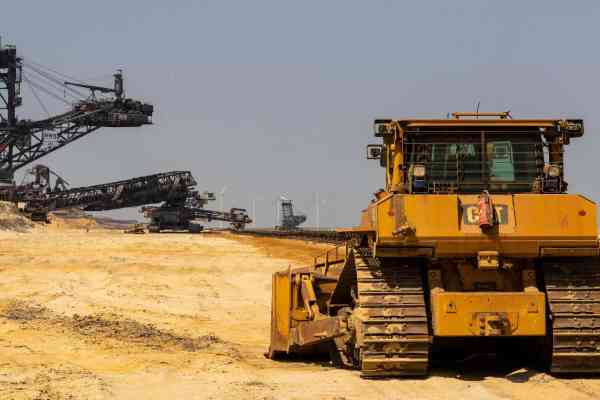
Everyone is looking for returns in the stock market. The autumn hunt for high-return stocks has begun, and we have found some interesting candidates. While Germany's homegrown automaker Volkswagen is in the middle of a difficult and costly transformation, its Chinese rival BYD is pushing aggressively into the European market with smart pricing strategies. Both stocks could now offer rebound potential. But it is not just the automakers that are seeing interesting developments. Smaller companies that are not necessarily on investors' radar also deserve a closer look. The commodities company Globex Mining is not only positioning itself operationally but has also managed a technical breakout above a key resistance level. We take a closer look at these three stocks, assess their return potential and evaluate their current situation.
Read

Commented by Jens Castner on September 28th, 2026 | 07:10 CEST
WHEN STOCK PRICES AND REALITY COLLIDE: THE WEEK OF TRUTH FOR BYD, VIDAC PHARMA AND FEDEX
This week holds a fascinating lesson for investors. BYD, Vidac Pharma and FedEx, three publicly traded companies that could hardly be more different, are holding their annual shareholder meetings: a Chinese auto giant, a British-Israeli biotech minnow, and an American logistics conglomerate. Current developments reflect three completely different realities. The spectrum ranges from global market battles to controversial issues regarding insider stock sales and executive compensation. Two of the stocks have recently lost about half their value. The third, while down significantly from its all-time high after a record run, is still clearly up for the year. Read on to learn about the opportunities and risks this presents.
Read
Commented by Armin Schulz on September 25th, 2026 | 09:50 CEST
Volkswagen, HPQ Silicon, AeroVironment: How Investors Can Profit from the Battery and Drone Boom
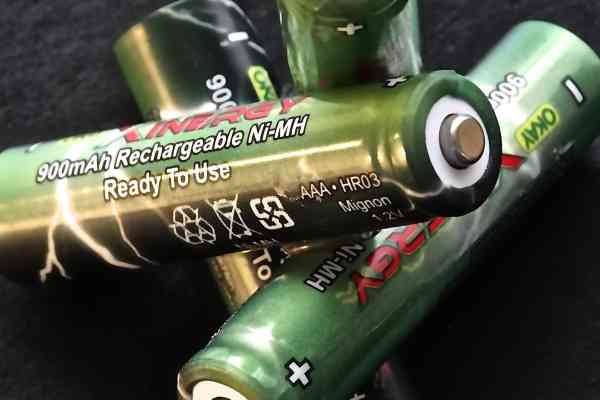
The lines between defence and automotive are blurring. Defence budgets are reaching record highs, while the auto industry is undergoing a complete transformation. In between, a new value chain is emerging, built on batteries, silicon and autonomous systems. After all, drones and an ever-increasing amount of military technology also require better batteries. Electric mobility needs them too. Those who understand the intersections are a step ahead of the masses. Headlines are of little help here. What counts are supply chains, patents and full order books. That is why we are taking a closer look at Volkswagen, HPQ Silicon and AeroVironment today.
Read

Commented by André Will-Laudien on September 21st, 2026 | 07:15 CEST
E-Mobility in the Grip of Energy Prices! Things Are Heating Up for VW, Porsche, Mercedes, BYD and Phenom Resources
Filling up currently feels like a painful visit to the dentist — but without much hope of a cure! Yet despite all the gloom, there are also winners. Against the backdrop of rising energy prices, European e-mobility has entered a dynamic yet fiercely competitive phase in recent months. The historic price shock at the pump is prompting consumers to rethink their spending while driving a boom in new battery electric vehicle registrations. In Europe, electric vehicles now appear on the horizon as a subsidized solution, while gasoline and diesel prices march from one all-time high to the next. However, the charts so beloved by stock market traders are difficult to apply to gas station products. As the operating costs of internal combustion engines soar, electric vehicles are rapidly gaining appeal as an alternative. This is particularly good news for Chinese automakers, who are pushing into Europe with an aggressive market strategy and challenging the established, traditional brands. Even the import tariffs imposed by Brussels on pure-electric vehicles can barely slow the advance from the Far East. The local automotive industry is thus under unprecedented pressure to transform and compete. Where exactly should investors be looking?
Read

Commented by Lars Winter on September 15th, 2026 | 07:35 CEST
Power Metallic Mines, Oracle, and Adobe: Three Interesting Stocks Poised for a Revaluation?
Copper and precious metals lie dormant beneath Québec's soil, billion-dollar contracts are piling up in Oracle's order books, and Adobe is earning handsomely despite AI concerns. Yet doubts prevail on the stock market. That is exactly what makes these three stocks so interesting. Canadian explorer Power Metallic Mines has significant upside potential: the first resource estimate for the Lion Zone adds substance to hopes of a new mine. Analysts believe this hot stock could more than double in value. With Oracle and Adobe as well, investors are wondering whether the market is correctly identifying the risks or underestimating the opportunities. Fresh figures and news may provide new reasons to buy. We are taking a closer look at this trio in our stock review.
Read
Commented by Armin Schulz on September 14th, 2026 | 07:50 CEST
Power Metallic Mines, Volkswagen and RWE: Raw Materials, Cells, Grid — Benefiting from the Germany-Canada Pact
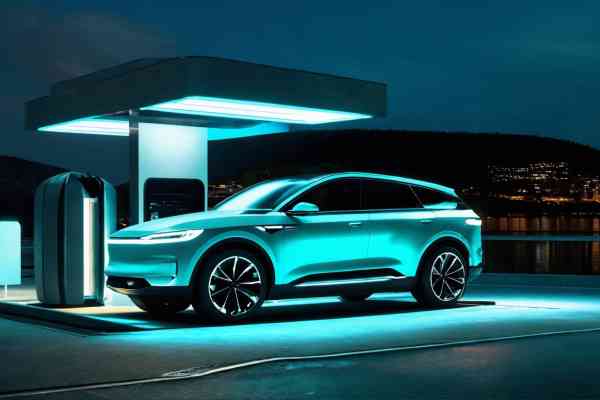
Europe aims to expand battery production in 2026, but without raw materials, cells, and electricity, every target remains fragile. Regulations on carbon footprints and battery passports are increasing the pressure. Europe remains dependent on supply chains from Asia. Anyone looking to reduce this dependence needs secure access to raw materials, gigafactories and energy storage. Germany and Canada are currently in formal talks on a comprehensive Canada-Germany Strategic Partnership Agreement, which is also intended to cover raw materials, energy and investments. The aim is to strengthen raw material security—all the more reason to take a closer look at Power Metallic Mines, Volkswagen and RWE.
Read

Commented by Nico Popp on September 11th, 2026 | 08:10 CEST
The Anode Is the Key: How Ferroglobe, Wacker Chemie and HPQ Silicon Aim to Break China's Market Dominance
Anyone getting into an electric vehicle today takes a range of several hundred kilometres and fast charging on the highway for granted. Yet while EVs may be relatively straightforward to use today, their supply chains have weak points. While Western buyers focused for years on cathode metals such as lithium and cobalt, Beijing has secured almost complete control over the anode. Without graphite from the Far East, nearly every Western battery factory would currently be at a standstill. The International Energy Agency (IEA) puts China's share of global anode material production capacity at 97%. For the West, the way forward lies in innovative materials such as silicon and its smart application. We take a closer look at innovative business models.
Read