
Electromobility

Commented by Carsten Mainitz on July 28th, 2026 | 07:25 CEST
The Automotive Industry Is Under Pressure: Why dynaCERT Could Be the Missing Piece of the Puzzle for Volkswagen and Daimler Truck
The discussion about the future of mobility is currently dominated by electric vehicles and hydrogen, both of which meet the vision of zero-emission transportation. But the road ahead is long; further technological advances and, in particular, the expansion of infrastructure pose challenges. Another crucial factor is often overlooked. In heavy-duty transport in particular, diesel forms the backbone of global logistics and will continue to do so for decades to come. This is precisely where dynaCERT comes in with an innovative bridging technology. The Canadian company's retrofit solution generates hydrogen and oxygen on board as needed. These are fed into the intake system of diesel engines, thereby reducing fuel consumption and emissions. Is a billion-dollar market on the horizon?
Read
Commented by Nico Popp on July 27th, 2026 | 07:35 CEST
China's Export Restrictions: German Industry Must Invest in Raw Materials. How VW and Rheinmetall Respond & Why Aspermont Could Benefit
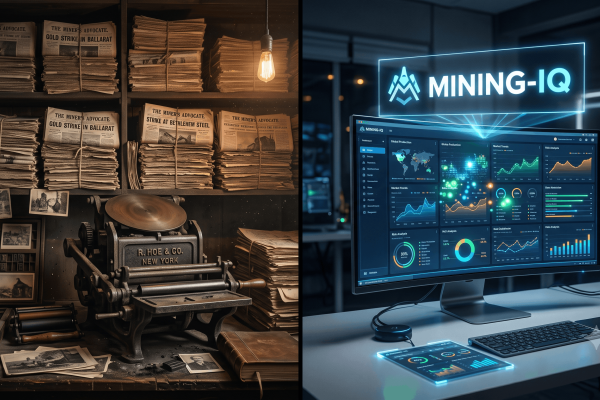
For decades, raw materials were commodities in the truest sense of the word—interchangeable goods purchased at the lowest possible price. But in recent years, security of supply has evolved from a procurement issue into a decisive factor for the survival of Western industry. Depending on the sector, shortages can threaten entire business models. To reduce the risks posed by geopolitical tensions, volatile commodity prices and increasingly stringent sustainability requirements, industrial companies are taking a much closer look at their raw material supply chains. Some are investing directly in mining projects, while others are forming strategic partnerships. In either case, access to reliable information on mining projects and the conditions across the value chain is essential for assessing supply risks. Aspermont, a specialist provider of mining and commodities intelligence, could be well positioned to benefit from this shift.
Read
Commented by Stefan Feulner on July 27th, 2026 | 07:25 CEST
Southern Copper, Power Metallic Mines, Vale: The Commodities Story Is Gaining Significant Momentum
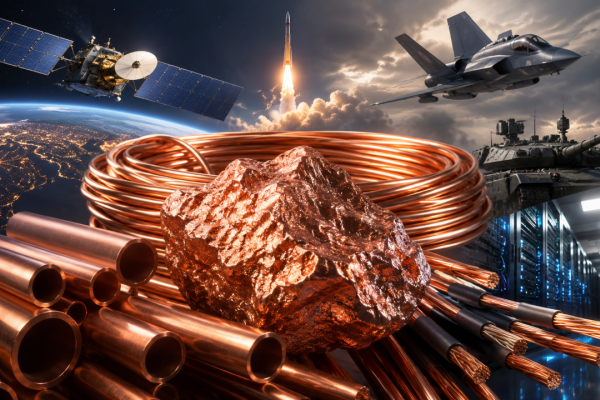
The race for artificial intelligence, satellite networks, and global military buildup is intensifying the battle for strategic commodities. Copper, in particular, is becoming a bottleneck for global industry, as power grids, data centers, missiles, and modern weapons systems require enormous quantities of the metal. At the same time, supply remains tight, and even major producers are struggling with declining output. This is bringing exploration companies with high-grade deposits even more into the spotlight, while established mining conglomerates face rising demands and falling production figures.
Read
Commented by Matthias Schomber on July 26th, 2026 | 07:00 CEST
Volkswagen Under Pressure! Is Porsche AG Ready to Accelerate? RE Royalties Near a Technical Breakout?
The world remains mired in a web of conflicts and wars, leaving financial markets repeatedly holding their breath. Geopolitically, we appear to be heading towards a scenario that would have seemed unthinkable only a short time ago. Will the conflict with Iran escalate further? Are we facing devastating large-scale US air strikes in the Middle East, following the deployment of B-1 bombers to the region? Could the situation even escalate to the use of a tactical nuclear weapon, or is this historic sabre-rattling ultimately a calculated bluff by global powers—designed to trigger panic before the next major "TACO trade" unfolds? While investors grapple with uncertainty, Europe's traditional industries are coming under increasing pressure. The automotive sector and its suppliers are particularly vulnerable. Even iconic German industrial giants such as Volkswagen are showing signs of strain, prompting an increasingly uncomfortable question: Will Volkswagen still exist in five years? In this historic context, the wheat is truly being separated from the chaff. While traditional industries and corporations are fighting for their very survival, smaller niche players are seeing significant opportunities emerge. We take a closer look at where investors may still be able to generate attractive returns.
Read

Commented by Matthias Schomber on July 23rd, 2026 | 12:00 CEST
Mercedes-Benz Dangerously Close to the Brink! BYD Posts Strong Numbers! American Atomics Offers the Solution to the Energy Crisis!
Even in July 2026, parts of the world remain in flames. We have to make sure these flames do not spread further or even paralyze the global economy. While Russia intensifies its airstrikes on Ukrainian cities, including Kyiv, and continues to rely heavily on drone technology from Iran, the fronts in this "global proxy war" are hardening by the day. These ongoing tensions on Europe's eastern flank and in the Middle East are casting a shadow over global energy markets and throwing them into disarray. The relentless pursuit of energy security and technological independence is a major concern for governments and investors alike. It is precisely in this cauldron of conflict that the future of the global economy and individual companies will be decided. Today, we take a closer look at BYD, Mercedes-Benz, and American Atomics, each of which is writing its own story.
Read

Commented by Stefan Feulner on July 17th, 2026 | 09:05 CEST
Siemens Energy, HPQ Silicon, BYD: A Clear Course Set
The race for the technologies of the future is rapidly gaining momentum. Artificial intelligence, electric mobility, energy storage, and the global expansion of power grids are triggering a wave of investments worth billions. At the same time, innovative battery materials, hydrogen solutions, and modern energy technology are becoming increasingly important. Companies that develop these key technologies or benefit from the rising demand could secure a strong market position early on and emerge as major winners of the global transformation in the long term.
Read
Commented by Nico Popp on July 17th, 2026 | 07:30 CEST
The End of the Auto Industry Looms: Will Mercedes-Benz & Co. Find a Way Out? BYD as a Role Model, Rock Tech Lithium as a Problem-Solver
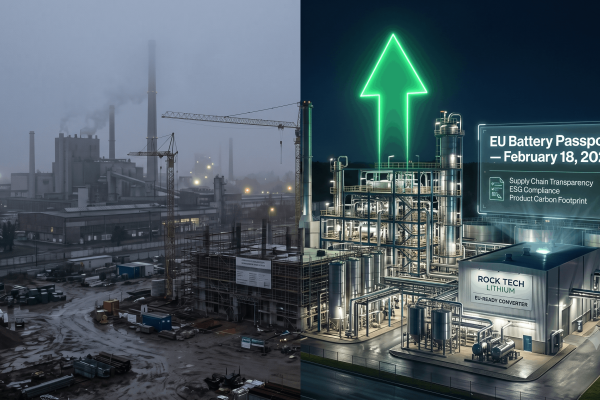
The auto industry is in the midst of a deep crisis, as evidenced not only by the news from Volkswagen. The availability of battery raw materials has become a critical factor for automakers. According to a survey by industry experts at Benchmark Minerals, global demand for lithium-ion batteries rose by 29% in 2025 to a total of 1.59 terawatt-hours. While stationary battery storage was the fastest-growing segment, the electric vehicle sector remains the dominant driver of demand in terms of volume. This trend is intensifying global competition for critical raw materials. China is leading the way here. The country controls an estimated 85% of global battery production and processes around 70% of the world's lithium. This poses a risk for Western automakers. They need to develop their own solutions. We analyze the situation and explore a potential solution.
Read

Commented by Matthias Schomber on July 17th, 2026 | 07:15 CEST
Crash Risk or Buying Opportunity? SpaceX Slides, BMW Eyes a Rebound, and Desert Gold Shines on the Charts
The situation in the Middle East has continued to escalate, with attacks around the Strait of Hormuz driving up oil prices. Brent crude has recently climbed to around USD 85 per barrel, adding another layer of uncertainty to global financial markets. For investors searching for opportunities in the current environment, it is important to look beyond individual stocks and keep a close eye on geopolitical developments. In this article, we examine three companies from very different sectors and highlight where potential opportunities may be emerging. First, we look at BMW, whose shares are currently trading at what many consider an attractive valuation and may be positioned for a rebound. We also examine SpaceX, whose stock has entered what many investors would describe as crash territory, with the share price falling below its IPO level. Finally, we turn to Desert Gold Ventures, a small West African gold explorer that has continued to make steady operational progress largely independent of broader market turbulence—and largely without attracting much attention. Could this overlooked company represent a significant opportunity for investors?
Read

Commented by Lars Winter on July 17th, 2026 | 07:00 CEST
Long Live Diesel: Why dynaCERT, Deutz, and Daimler Truck Are Worth Watching—Analysts See More Than 500% Upside
The future of transportation may be electric, but the road to getting there will be longer and more complicated than many investors believed. Millions of trucks, construction and agricultural machines, generators, and military vehicles will continue to rely on internal combustion engines for years to come. That reality is creating an intriguing investment opportunity. We take a closer look at three companies that could benefit from this transition: dynaCERT, Deutz, and Daimler Truck.
Read

Commented by André Will-Laudien on July 13th, 2026 | 07:50 CEST
The Unexpected Lithium Rally 2.0: Mercedes, Porsche AG, Rock Tech Lithium, and BASF in Focus
It has finally happened! The looming global power shortage is unexpectedly becoming a massive catalyst for a new boom in the commodities market, once again propelling lithium stocks into the spotlight. The renowned Fraunhofer Institute has reached the clear conclusion that European demand for high-purity lithium hydroxide will increase sixfold by 2030. Analysts explicitly emphasize that only companies with closed, regional supply chains will be able to successfully circumvent the looming production bottlenecks caused by power and raw material shortages. This is because Western industrialized nations aim to drastically reduce their dependence on Asia and rely on their own raw material reserves. For investors, this fundamental transformation builds a highly attractive bridge to the next generation of beneficiaries. While automotive groups such as Mercedes and Porsche are now radically securing their supply chains through partnerships, Rock Tech is poised to move into supplier status in the near future. The chemical company BASF, an indispensable partner for cathode materials, is also part of the picture. Savvy investors are using the current consolidation phase to position themselves early among the winners of this megatrend.
Read