January 7th, 2026 | 07:10 CET
The clean solution to the dirty nickel problem: How Power Metallic Mines could save the supply chains of Mercedes-Benz and Volkswagen
The automotive industry faces a paradoxical situation in 2026. While sales figures for electric vehicles have stabilized and the technology is becoming increasingly mature, the threat now comes not from demand but from the supply side of the value chain. The supply of raw materials, especially the critical battery metal nickel, is coming under massive pressure due to geopolitical shifts and drastically tightened environmental regulations in Asia. German flagship companies Mercedes-Benz and Volkswagen, which have invested billions in their electrification strategies, are faced with the challenge of reconciling their ethical promises with the physical reality of the market. In this area of tension between regulatory constraints and industrial needs, Canadian explorer Power Metallic Mines is evolving from a raw materials explorer into a potential strategic enabler with its NISK project.
time to read: 3 minutes
|
Author:
Nico Popp
ISIN:
POWER METALLIC MINES INC. | CA73929R1055 , MERCEDES-BENZ GROUP AG | DE0007100000 , VOLKSWAGEN AG VZO O.N. | DE0007664039
Table of contents:
Author

Nico Popp
At home in Southern Germany, the passionate stock exchange expert has been accompanying the capital markets for about twenty years. With a soft spot for smaller companies, he is constantly on the lookout for exciting investment stories.
Tag cloud
Shares cloud
Mercedes-Benz: Luxury meets ESG reality
For Mercedes-Benz, electrification is much more than a change "under the hood" – it is a fundamental realignment of the brand. Under the leadership of Ola Källenius, the Stuttgart-based company has consistently positioned itself in the luxury segment. Although it is now moving away from this somewhat, the Mercedes-Benz brand still comes with a certain obligation: customers who are willing to pay six-figure sums for an EQS or an electric G-Class SUV expect not only perfect panel alignment, but also a flawless ecological footprint.
Mercedes is therefore increasingly focusing on "sustainable luxury." An electric vehicle whose battery was produced with nickel from environmentally harmful sources is toxic to the Stuttgart-based company's marketing narrative. Mercedes-Benz needs access to "green nickel" to achieve its own CO2 targets and maintain its reputation as a technological pioneer.
Although the Company has begun to conclude direct supply contracts, the global shortage of ESG-compliant material hits Mercedes-Benz where it hurts most: its credibility. If the supply chain is not clean, the foundation of the premium pricing strategy crumbles.
Volkswagen: PowerCo and the pressure to go regional
The situation at Volkswagen is quite different, but no less dramatic. As a volume manufacturer, the Wolfsburg-based giant needs to secure millions of battery cells to achieve its fleet electrification targets. With the establishment of its battery subsidiary PowerCo, VW has taken its fate into its own hands and is building its own gigafactories, including one in St. Thomas, Canada. The "local for local" strategy is economically imperative: to benefit from the massive tax credits offered by the US Inflation Reduction Act (IRA), raw materials must be sourced and processed in North America or free trade partner countries.
Volkswagen is currently fighting on many fronts, from software development to its cost structure in Germany. The last risk the Company needs right now is a production stoppage at its new Canadian battery factory due to a lack of raw materials. VW needs huge quantities of Class 1 nickel, physically located in North America, to keep logistics costs low. PowerCo's business model stands or falls with the availability of local raw materials.
This changes everything: Indonesia's environmental hammer
For a long time, the automotive industry thought that Indonesia had solved the nickel problem. The island nation has massively expanded its production in recent years and flooded the world market with nickel. However, this nickel comes mainly from laterite ores, the processing of which is extremely energy-intensive and often relies on coal-fired power. It also produces huge amounts of toxic waste. Now, driven by international pressure and its own ecological disasters, the government in Jakarta has drastically tightened environmental regulations.
New regulations on waste disposal and caps on coal-fired power plants for industrial parks mean that many Indonesian projects are either becoming unprofitable or have to reduce their output. At the same time, more and more Western regulatory authorities are classifying Indonesian nickel as "unsustainable," which effectively renders it unusable for the ESG balance sheets of Mercedes and VW. This supply shock has caught the market completely off guard. Cheap, dirty nickel is increasingly being ruled out as an option for Western OEMs, while demand continues to rise. This creates a vacuum for clean nickel that needs to be filled.
Power Metallic Mines: The logical answer from Québec
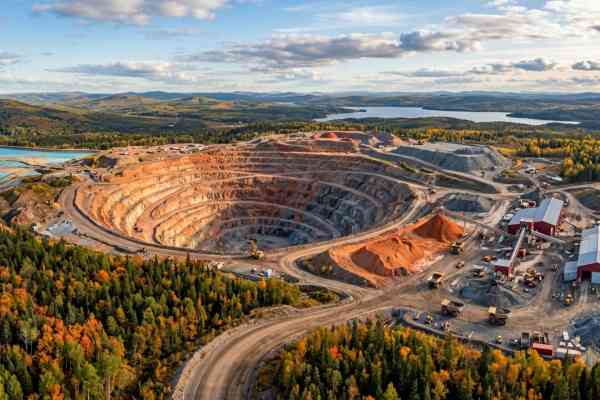
Power Metallic Mines is stepping into this vacuum. The Company is developing a sustainable nickel deposit with the NISK project in Québec. Unlike the energy-intensive lateritic nickel deposits common in Asia, NISK is a high-grade nickel sulfide deposit. Sulfides can be processed into battery-grade material using proven standard processes and a fraction of the energy required. Since Québec obtains almost 100% of its electricity from hydropower, the carbon footprint of this nickel would be one of the smallest in the world.
The NISK project is located in a politically stable jurisdiction, has excellent infrastructure, and delivers precisely the geological quality required for high-performance batteries.
The bottom line for investors: Problem solvers are rewarded
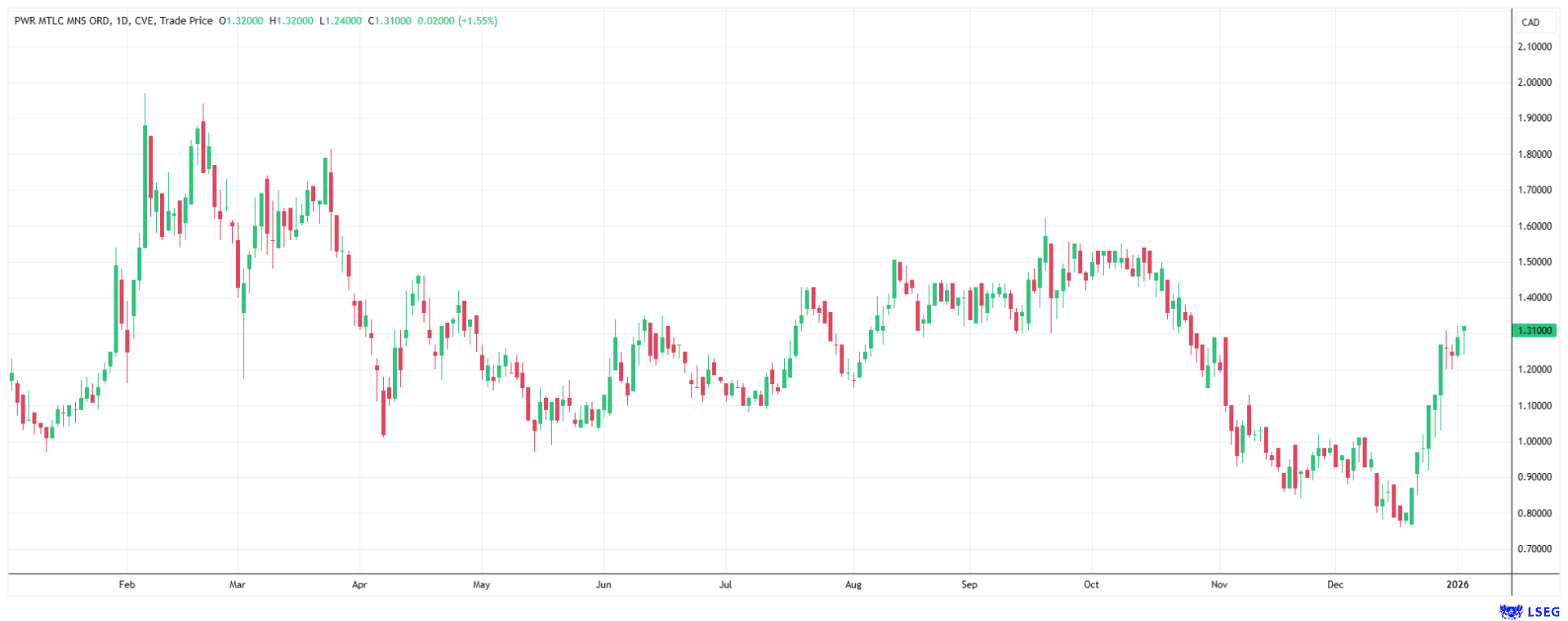
The investment thesis for Power Metallic Mines is straightforward: a company's value is measured by the size of the problem it solves for its customers. By providing automotive giants with a solution to reduce dependence on dirty or sanctioned nickel, Power Metallic Mines becomes a strategic asset. While Mercedes-Benz and VW must invest billions to secure their electrification plans, Power Metallic operates at the beginning of the value chain, controlling a potential supply bottleneck for high-quality nickel. High-profile investments, including from commodity billionaire Gina Rinehart, underscore the Company's market potential, and the stock has already shown recent gains.
Conflict of interest
Pursuant to §85 of the German Securities Trading Act (WpHG), we point out that Apaton Finance GmbH as well as partners, authors or employees of Apaton Finance GmbH (hereinafter referred to as "Relevant Persons") may hold shares or other financial instruments of the aforementioned companies in the future or may bet on rising or falling prices and thus a conflict of interest may arise in the future. The Relevant Persons reserve the right to buy or sell shares or other financial instruments of the Company at any time (hereinafter each a "Transaction"). Transactions may, under certain circumstances, influence the respective price of the shares or other financial instruments of the Company.
In addition, Apaton Finance GmbH is active in the context of the preparation and publication of the reporting in paid contractual relationships.
For this reason, there is a concrete conflict of interest.
The above information on existing conflicts of interest applies to all types and forms of publication used by Apaton Finance GmbH for publications on companies.
Risk notice
Apaton Finance GmbH offers editors, agencies and companies the opportunity to publish commentaries, interviews, summaries, news and the like on news.financial. These contents are exclusively for the information of the readers and do not represent any call to action or recommendations, neither explicitly nor implicitly they are to be understood as an assurance of possible price developments. The contents do not replace individual expert investment advice and do not constitute an offer to sell the discussed share(s) or other financial instruments, nor an invitation to buy or sell such.
The content is expressly not a financial analysis, but a journalistic or advertising text. Readers or users who make investment decisions or carry out transactions on the basis of the information provided here do so entirely at their own risk. No contractual relationship is established between Apaton Finance GmbH and its readers or the users of its offers, as our information only refers to the company and not to the investment decision of the reader or user.
The acquisition of financial instruments involves high risks, which can lead to the total loss of the invested capital. The information published by Apaton Finance GmbH and its authors is based on careful research. Nevertheless, no liability is assumed for financial losses or a content-related guarantee for the topicality, correctness, appropriateness and completeness of the content provided here. Please also note our Terms of use.