
geopolitics

Commented by Tarik Dede on October 9th, 2026 | 09:10 CEST
Drones, AI and Gold: Samsung, Volatus Aerospace and Equinox Gold in Focus
These are turbulent times for the stock markets. Interest rates are rising, bank stocks are weakening, and the number of mega-IPOs, including SpaceX and Anthropic, keeps growing. Parallels with previous stock-market crashes are becoming increasingly apparent. Yet many investors are still riding a wave of euphoria. The current bull market is already the longest in US stock-market history, driven largely by artificial intelligence. But the downside is becoming increasingly evident: valuations are high, and concentration in the major stock indices is enormous. Consider just one example: ten stocks, the so-called Magnificent Seven, along with Broadcom, AMD, and Micron, now account for 42% of the S&P 500. At these levels, there is little room for anything to go wrong. Even in this market environment, however, opportunities and risks coexist. Today, we take a closer look at Samsung, Volatus Aerospace and Equinox Gold.
Read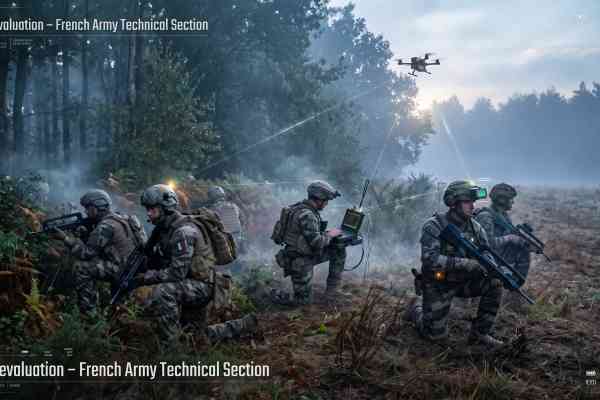
Commented by Nico Popp on October 9th, 2026 | 07:05 CEST
HPQ Silicon, Rheinmetall and Wacker Chemie: Silicon Batteries for the French Military?
Digitalization is also making its way into the defence sector. This is evident, not least, from developments in Ukraine. Modern communication devices, networked combat operations, and constant data streams are driving up power consumption even among infantry units. Existing graphite-based batteries are reaching their limits, and every additional gram of equipment restricts mobility in the field. Switching to silicon-based anodes promises longer operational times without adding weight. We examine this development and highlight opportunities for investors.
Read
Commented by Stefan Feulner on October 9th, 2026 | 07:00 CEST
Torex Gold, Desert Gold, Discovery Mining: The Race for the Next Gold Millions
Despite the current correction, gold remains at historically high levels. At the same time, supply is becoming a critical issue. Producers must operate their mines at full capacity and develop new deposits, while project developers strive to bring projects into production. This is precisely where the wheat is increasingly being separated from the chaff. Those who currently own attractive deposits and can actually develop them enjoy exorbitant margin leverage in a gold market trading above USD 4,000. Silver is also fueling investor imagination.
Read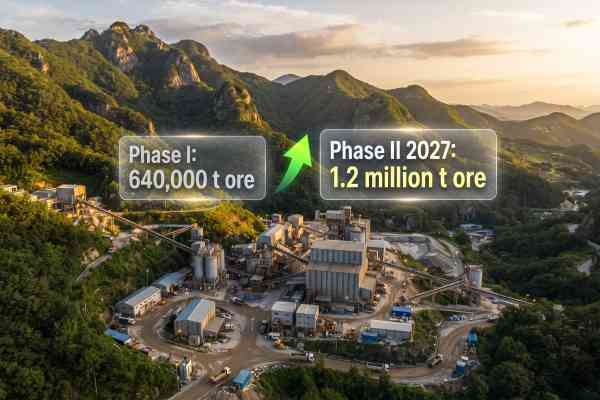
Commented by Nico Popp on October 8th, 2026 | 07:00 CEST
Tungsten Supply Crisis: Almonty Reshapes Defense Supply Chains – Rheinmetall Needs Reliable Sources, Tungsten West Wins Funding
Requirements from the US Department of Defense are forcing Western industry to rethink its approach to critical raw materials: Starting in January 2027, US procurement regulations will prohibit the use of Chinese-sourced tungsten in tungsten powders, heavy alloys, and defense components manufactured from them, and will require a complete chain of custody traceability back to the mining site. According to the US Geological Survey, China controls about 80% of global mine production and, due to export controls, has recently even become a net importer of tungsten metal and ore. As a result, the defense industry faces an acute supply shortage. Producers outside China are doing everything they can to secure long-term supply chains for Western customers. As a leading tungsten company, Almonty stands out in particular with promising projects and a full pipeline.
Read
Commented by André Will-Laudien on October 7th, 2026 | 09:10 CEST
Bridging the Skies: The European-Canadian Drone Offensive with Volatus Aerospace, Boeing, RTX and DroneShield
"If Russia is not stopped, its war machine will sooner or later turn against us," German Chancellor Friedrich Merz has warned. The current security situation is very serious, and it would certainly be preferable to avoid being drawn into such a conflict. As modern warfare is no longer fought exclusively on the ground, the global aerospace and defence industry is undergoing one of the biggest transformations in its history. Relations between Germany and Canada are also developing in a remarkably positive direction, a testament to the inner strength of the NATO alliance. The new strategic alliance aims to break through existing technological barriers and set new standards for the defence sector. At the heart of this initiative is the integration of cutting-edge sensor technology, artificial intelligence, and state-of-the-art platforms. Innovative systems for airspace surveillance and threat detection are becoming increasingly important for securing critical infrastructure. For investors, this development creates opportunities to gain exposure to a highly dynamic, rapidly evolving growth market.
Read
Commented by Carsten Mainitz on October 7th, 2026 | 08:40 CEST
Spot the Next Stock Catalyst Early: Key Milestones for Lahontan Gold, Evotec and Deutz
Get in before the stock takes off! The key is to identify the trigger for the next share-price move early enough. Lahontan Gold is working to restart a historic gold mine in Nevada and recently made an attractive acquisition. Biotech company Evotec is fighting to turn its operations around and rebuild investor confidence. Deutz is expanding its industrial business into energy and defense, taking the company into new dimensions of growth. What does this mean for investors? Where are the most compelling opportunities for stock pickers?
Read
Commented by Tarik Dede on October 7th, 2026 | 08:30 CEST
Two Years of Hormuz Tension? Stocks Like Shell, Zefiro Methane and TotalEnergies Stand to Gain
Created and Published on Behalf of Zefiro Methane Corp.
The energy world turned its attention to London just a few days ago for the Energy Intelligence Forum. The message from the Thames was hardly encouraging for either industry or households. Amin Nasser, CEO of Saudi Aramco, emphasized that even after the Strait of Hormuz is fully reopened, it could take up to two years to rebuild global oil and diesel inventories to normal levels. The fact that global inventories of crude oil and refined products, particularly diesel, are at dangerously low levels is becoming increasingly apparent at the pump. But two years also means that the oil and refining industries could have a prolonged period of strong earnings ahead. This is especially relevant as Ukraine is currently inflicting significant damage on Russian refineries. Against this backdrop, investors should consider how to position themselves for the years ahead. Today, we take a closer look at opportunities across the oil market, from the clean-up specialist Zefiro Methane and refining giant Shell to French energy champion TotalEnergies.
Read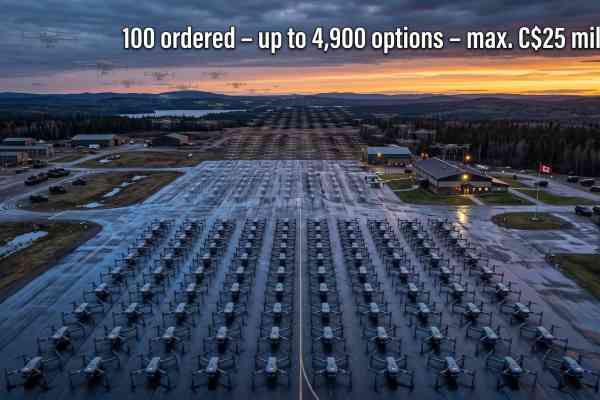
Commented by Nico Popp on October 6th, 2026 | 07:45 CEST
Canada's Billion-Dollar Drone Race: How Volatus Aerospace and Draganfly Are Challenging US Giant AeroVironment
To reduce its dependence on defence imports, the Canadian government under Prime Minister Carney is pushing to build its own drone industry, prioritizing domestic suppliers over future US imports. This reorientation is forcing domestic manufacturers to take action: For both civilian and military contractors, the key question now is who can reliably scale up the planned mass production. We take a look at this development and its key players.
Read
Commented by André Will-Laudien on October 6th, 2026 | 07:40 CEST
Commodities in Overdrive: BHP and Rio Tinto Cash In While Almonty Targets Critical Metals in Greenland
What investors are witnessing in the markets now amounts to an almost tectonic shift. Energy and commodity prices are surging, while interest rates have climbed to levels not seen in seven years. The East is embracing protectionism, while the US-led West is taking an increasingly assertive stance. In this capitalist imperialism of deep pockets, the US president's territorial claims over Greenland, administered by Denmark, have added another layer of geopolitical tension. These trends extend beyond the traditional mining business and are causing significant turmoil in futures markets. The geopolitical fault line runs right through the Arctic, where Greenland, thanks to gigantic deposits such as the Tanbreez project, is in the crosshairs of the Pentagon and Western security agencies. China continues to control large parts of the global supply chain, but the strategic agreement between Washington and Copenhagen is erecting a powerful barrier. At the same time, tungsten prices on the world market are soaring, outpacing almost all other critical minerals. This indispensable industrial metal, essential for the defense industry and the AI chip sector, is subject to drastic export restrictions. These supply bottlenecks are driving Western buyers to the brink of despair. A wild mix of megalomania, panic, and sabre-rattling. Where do the opportunities lie for investors with strong nerves?
Read
Commented by André Will-Laudien on October 6th, 2026 | 07:00 CEST
Defence Boom Meets Critical Metals: Rheinmetall, Renk, Globex Mining and Hensoldt in Focus
The geopolitical turning point is bringing two sectors to the forefront: defence and critical metals. One cannot exist without the other! Consequently, this fateful alliance has triggered an unprecedented supercycle in the financial markets that extends far beyond the traditional high-tech and defence conglomerates. European defence heavyweights such as Rheinmetall, Renk, and sensor specialist Hensoldt are enjoying historic order backlogs and benefiting from government rearmament programs worth billions. This is now bringing the fundamental basis of this boom sharply into focus for investors. After all, producing defence systems of all kinds depends entirely on a secure supply of strategic and critical metals. However, massive demand for military hardware is clashing with global supply chains under extreme strain from raw material shortages and the accelerating subsidy race in the West. This is where exploration and licensing companies like Globex Mining come into their own—they possess a diversified portfolio of strategic properties in politically stable regions and secure the foundations of industrial independence. Since no modern air defence system or military microchip network can exist without copper, silver, nickel, or rare earth elements, the mining and defence technology sectors are inextricably linked on the stock market. For forward-thinking investors, this symbiosis offers rare leverage.
Read