

At home in Southern Germany, the passionate stock exchange expert has been accompanying the capital markets for about twenty years. With a soft spot for smaller companies, he is constantly on the lookout for exciting investment stories. That it depends thereby less on large names, but on the future potential and whether the market also recognizes these perspectives, was one of its first learnings at the stock exchange.
On these pages, Nico examines current events at listed companies and takes a closer look at companies that are traded under the radar of the market, in addition to well-known securities.
In order to be able to take advantage of speculative opportunities on the stock exchange, Nico not only focuses on a balanced asset allocation of defensive and opportunity-oriented securities, but also on an intact risk management. "In addition to position size and entry in several tranches, investors should also develop a sense of timing and get to know a stock better before investing," says the columnist.
Commented by Nico Popp

Commented by Nico Popp on October 21st, 2026 | 05:35 CEST
Data as the New Currency: The Strategies of Amazon, Alphabet, Reddit and Aspermont
Data archives are becoming a crucial resource for artificial intelligence. As tech giants compete for exclusive information and publishers explore new ways to monetise online content, specialist data providers are gaining prominence. Alphabet's licensing programmes for news content and the controversial licensing agreements of platforms such as Reddit mark a new phase in the commercial use of digital content. In this environment, Aspermont is positioning itself by transforming its historical mining archive into a data and analytics platform. We examine the latest developments and the opportunities they present.
Read
Commented by Nico Popp on October 21st, 2026 | 05:27 CEST
Newmont's Production Decline and Barrick Mining's African Focus Fuel Interest in DRC Gold
Goldman Sachs analysts expect gold to reach USD 5,400 by the end of 2027, while J.P. Morgan, in a February note, even set a 2027 target of USD 6,300. This environment, coupled with US national debt exceeding USD 40 trillion, is supporting the gold price. At the same time, industry leaders such as Newmont are struggling with declining production volumes. This is forcing major mining companies to realign their strategies on the African continent, where project developers like DRC Gold, with exploration areas in the immediate vicinity, are coming into focus.
Read
Commented by Nico Popp on October 20th, 2026 | 10:04 CEST
Time Limit, Not a Free Pass: What the EU’s Pesticide Decision Means for Bayer, BASF and MustGrow Biologics
Created and Published on Behalf of MustGrow Biologics Corp.
On September 30, 2026, the Council of the European Union took a position against indefinite authorisations for synthetic plant protection products and set a maximum term of 15 years for initial authorisations and 25 years for renewals. The member states intend indefinite approvals to be reserved in future for substances with a proven low risk. The member states aim to reach a provisional agreement with the European Parliament by the end of 2026. Regular reassessment of active substances will therefore remain in place for the agrochemical industry, while biological alternatives gain in importance. We analyse the development and present three companies.
Read
Commented by Nico Popp on October 20th, 2026 | 05:42 CEST
Enel, NextEra Energy and RE Royalties: Solar Power as a Source of Revenue
When energy companies such as Enel acquire solar parks and NextEra Energy expands its portfolio of renewable energy projects, it highlights what these businesses are really focused on: predictable returns from renewable energy assets are in greater demand than ever. RE Royalties' business model is built around precisely this concept. The financier participates in revenues from similar projects without necessarily owning them outright at scale. To fund its growing project pipeline, RE Royalties is currently exploring strategic options, including a potential sale of the business.
Read
Commented by Nico Popp on October 20th, 2026 | 05:33 CEST
Rio Tinto, Glencore, Power Metallic Mines: Copper Offensive Meets Growing Demand for Raw Materials
Created and Published on Behalf of Power Metallic Mines
Electrification and the rapid expansion of grid infrastructure are driving demand for strategic metals needed to support the energy transition. Major banks such as Goldman Sachs expect the copper market to slip into a supply deficit from 2027. While established industry giants such as Rio Tinto and Glencore are investing billions to counter declining ore grades, major mining companies are increasingly looking to promising exploration companies to replenish their project pipelines. In Québec, Power Metallic Mines is positioning itself as a potential supplier to the North American market, with high-grade copper discoveries and an economic assessment now getting underway.
Read
Commented by Nico Popp on October 16th, 2026 | 05:39 CEST
Aqarios Quantum Technologies, IBM and D-Wave: Who Will Win the Race to Bring Quantum Computing to Industry?
The global race to make quantum computers commercially viable is accelerating. Government bodies and tech giants are investing large sums in the technology. Industry is already seeking quantum-computing-based solutions. A clear divide is emerging in the market: on one side are the builders of extremely expensive computers; on the other, developers of highly specialised software that makes the hardware usable in everyday factory operations. We examine the trend and show which companies could be of interest to investors.
Read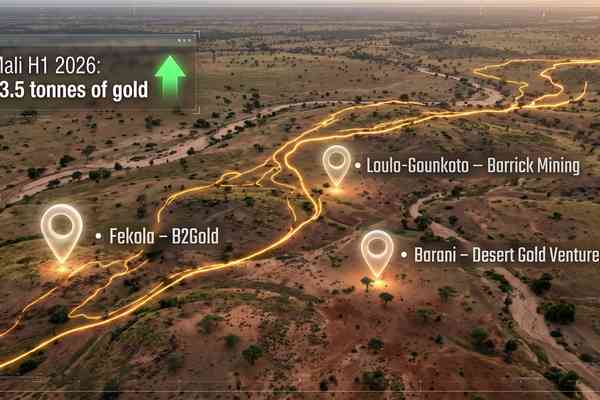
Commented by Nico Popp on October 16th, 2026 | 05:26 CEST
B2Gold, Barrick Mining and Desert Gold: Gold rush despite geopolitical hurdles
Gold production in Mali is booming. According to data from the mining ministry reported by Reuters, industrial gold production rose by around 30% to 23.5 tonnes in the first half of 2026, exceeding the government's forecast despite logistical difficulties and geopolitical tensions. While major gold producers, many of which also have projects in Mali, negotiate with the government and make strategic decisions, a nimble exploration company is advancing its large-scale project in the immediate vicinity. We examine the situation in Mali and explain how Desert Gold is progressing towards production at its SMSZ property.
Read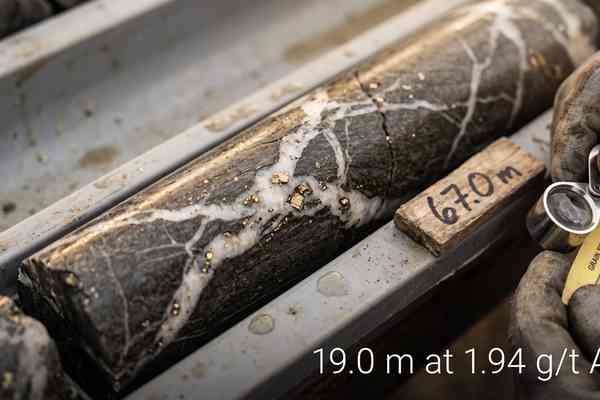
Commented by Nico Popp on October 15th, 2026 | 05:31 CEST
Gold Rush in Côte d’Ivoire: Kobo Resources Drills in the Shadow of Endeavour Mining and Fortuna Mining
Côte d'Ivoire is emerging as the growth engine of the African gold industry. While neighbouring countries such as Mali and Burkina Faso face geopolitical upheaval, the country stands out for reliable permitting and direct connections to power grids and major roads. The government aims to increase annual gold production significantly within a decade, from 59 tons in 2025 to 100 tons. According to Mining Minister Sangafowa-Coulibaly, a refinery with a capacity of around 100 tons of gold is also set to begin operations in Abidjan by the end of the first half of 2027. After an all-time high of USD 5,589 in January 2026 and a correction to just below USD 4,000 in June, gold is once again trading well above that level, delivering high margins for producers. We examine the developments and highlight opportunities.
Read
Commented by Nico Popp on October 14th, 2026 | 05:22 CEST
High-Purity Pellets: How Strategic Resources Could Solve Steel’s Challenges – and How thyssenkrupp and Rio Tinto Respond
Europe's steel industry faces a dilemma: the costs of the sustainable transformation are rising, while regulatory requirements are becoming increasingly stringent. Some flagship hydrogen-based steel projects have already significantly exceeded their budgets. At the same time, the European Union (EU) is tightening its import rules. The industry's technological future depends heavily on high-purity iron ore pellets, a key raw material for modern direct reduction plants. We examine the challenges facing the sector and highlight potential opportunities.
Read
Commented by Nico Popp on October 13th, 2026 | 05:34 CEST
Nevada’s M&A Carousel Is Spinning: Newmont, Barrick Mining and Lahontan Gold Reposition Themselves
Within a month, the gold price fell about 7% to USD 4,136 per ounce. Despite this correction, transaction pace in Nevada's Walker Lane trend remains high. Major mining groups are using the still-attractive price level to clean up their balance sheets. At the same time, agile development companies are securing strategically important properties through targeted acquisitions. The rationale is clear: Acquiring existing ounces in the ground is often cheaper than making new discoveries. Astute investors can benefit from developments in Nevada.
Read