

At home in Southern Germany, the passionate stock exchange expert has been accompanying the capital markets for about twenty years. With a soft spot for smaller companies, he is constantly on the lookout for exciting investment stories. That it depends thereby less on large names, but on the future potential and whether the market also recognizes these perspectives, was one of its first learnings at the stock exchange.
On these pages, Nico examines current events at listed companies and takes a closer look at companies that are traded under the radar of the market, in addition to well-known securities.
In order to be able to take advantage of speculative opportunities on the stock exchange, Nico not only focuses on a balanced asset allocation of defensive and opportunity-oriented securities, but also on an intact risk management. "In addition to position size and entry in several tranches, investors should also develop a sense of timing and get to know a stock better before investing," says the columnist.
Commented by Nico Popp
Commented by Nico Popp on August 11th, 2026 | 07:05 CEST
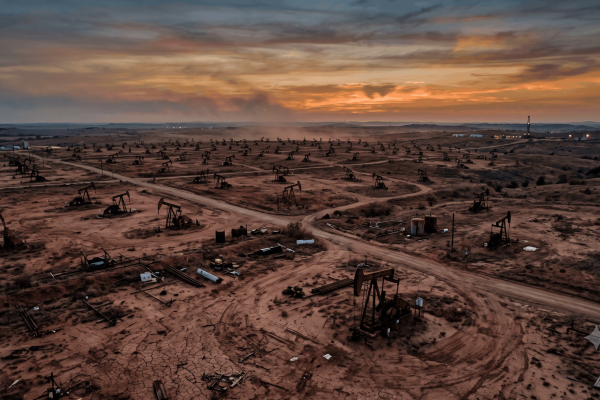
Why the Greenhouse Gas Methane Threatens Baker Hughes and Shell – and How Zefiro Methane Is Capturing a Billion-Dollar Market
Across the United States, inconspicuous, rusted steel pipes can often be found protruding from the ground away from major roads. Although officially classified as orphaned, these former oil and gas wells represent a significant environmental liability: more than 2 million unplugged wells have been left behind by oil and gas operators over the decades. They continue to release methane, a highly potent greenhouse gas. According to US authorities, these emissions are expected to be addressed as quickly as possible. This is turning a legacy environmental problem into a potentially multi-billion-dollar niche market. In this article, we explain the background and take a closer look at Zefiro Methane, a potential beneficiary of this emerging market.
Read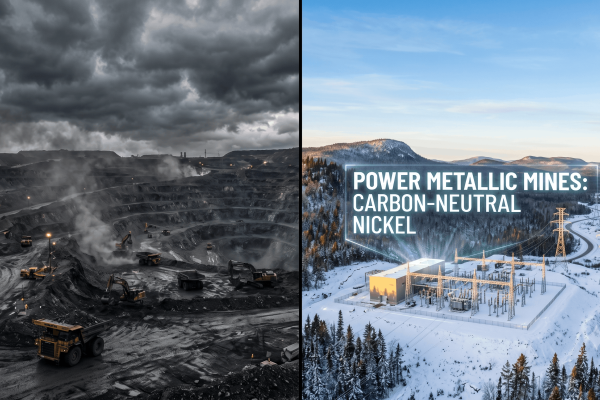
Commented by Nico Popp on August 10th, 2026 | 07:25 CEST
German AI Winners technotrans and Deutz—Why the Hype Is at Risk, and the Role Power Metallic Mines Could Play
Data centers are experiencing a massive global boom, both in the United States and elsewhere around the world. However, the resulting waste heat and unexpected power-grid failures need to be managed. This is where specialized German equipment manufacturers are increasingly stepping in, supplying sophisticated cooling systems and backup power generators to customers even in the US. For Germany, this is very good news. But there is a major caveat: suppliers to the AI industry depend on critical raw materials. Without large quantities of copper, nickel, and platinum group metals, the expansion of AI and power grids will stall. In this article, we take a closer look at German companies positioned to benefit from the AI boom, as well as a potential Canadian raw-material supplier that could also score points through its focus on sustainability.
Read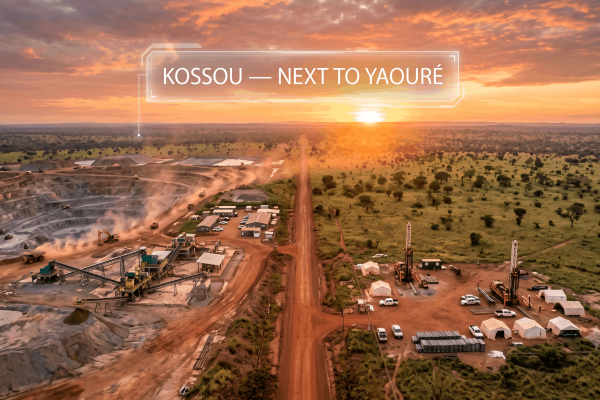
Commented by Nico Popp on August 7th, 2026 | 08:40 CEST
A New Gold Story in the West: How Endeavour Mining and Perseus Mining Are Expanding in West Africa – Could Kobo Resources Be the Next Gold Discovery?
Anyone traveling through West Africa sees a region in the midst of transformation. For years, traditional mining jurisdictions such as Guinea, Ghana, and Burkina Faso dominated gold production, while Côte d'Ivoire remained largely overlooked despite its substantial mineral endowment. That picture is now changing. Reliable infrastructure, an increasingly attractive regulatory framework, and growing investor confidence are drawing fresh capital into the country. As established mining operations seek to replenish their reserves, agile exploration companies are positioning themselves to discover and develop the next generation of gold mines in Côte d'Ivoire. For investors, this evolving landscape is creating compelling new opportunities.
Read
Commented by Nico Popp on August 7th, 2026 | 08:25 CEST
Hedge Funds Bet on Hydrogen: Nel ASA Under Pressure, Amazon Gains Momentum, and First Hydrogen Targets a Promising Niche
Industry is under increasing pressure to address climate change. The regulatory framework is already in place, and emissions targets have been clearly defined. Yet even large industrial groups are reaching the limits of what they can achieve during the energy transition. Siemens Energy, for example, is reportedly considering spinning off a majority stake in its Transformation of Industry division under the project name "Voyager". The business includes, among other things, compressors, steam turbines, energy storage systems, and electrolysers. The move highlights the growing pressure on industrial companies to sharpen their strategic focus. In the global race to capture market share in energy transition technologies, success increasingly depends on lean organizational structures, specialization, and the willingness to rethink traditional business models. The restructuring of the hydrogen and energy sectors has long since begun; we examine the market and highlight potential beneficiaries.
Read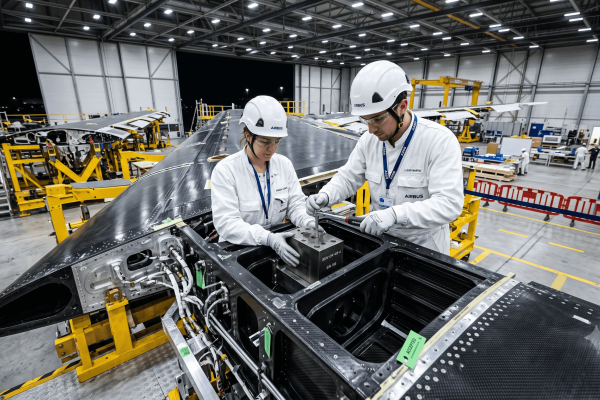
Commented by Nico Popp on August 6th, 2026 | 07:00 CEST
Europe Facing a Tungsten Shock? Airbus and Siemens Under Pressure—Could Almonty Double?
Walking through the production facilities of European industrial giants such as Airbus or Siemens, it is easy to overlook just how fragile many of their supply chains have become. On Tuesday, Switzerland's Neue Zürcher Zeitung (NZZ) assessed the situation with regard to the EU: Western industry is caught in a dangerous cycle of dependency from which it can hardly free itself on its own. Since China significantly tightened export controls on tungsten in February 2025, tungsten prices have surged, in some cases rising seven to ninefold. Meanwhile, European initiatives such as the Critical Raw Materials Act (CRMA) have struggled to gain traction due to limited funding and lengthy permitting processes. Without reliable alternative suppliers, manufacturing operations across Europe could face serious disruptions. In this article, we examine the current market dynamics and take a closer look at Almonty, one of the West's leading tungsten producers, which is widely viewed as a potential beneficiary of the tightening global supply situation.
Read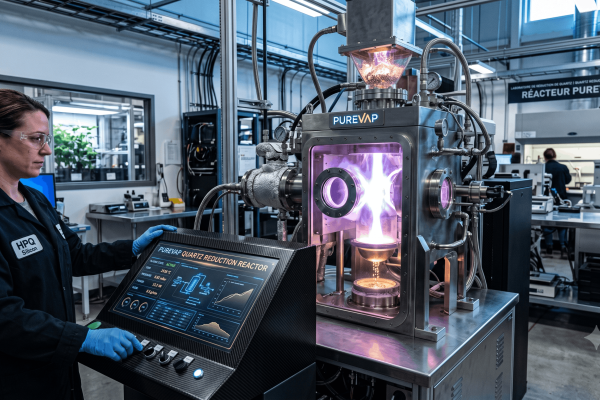
Commented by Nico Popp on August 5th, 2026 | 07:30 CEST
Battery Revolution: CATL Pulls Further Ahead, SGL Carbon Bows Out, and HPQ Silicon Targets Promising Niches
Faster and, above all, with greater range—whether in electric vehicles or smartphones: performance and endurance are key factors in winning over customers. But the race for the best specs is becoming increasingly fierce, and many details of battery technology play a crucial role. The potential of graphite as an anode material appears to have been exhausted; instead, silicon is gaining ground. We shed light on current trends in battery technology and introduce the companies involved.
Read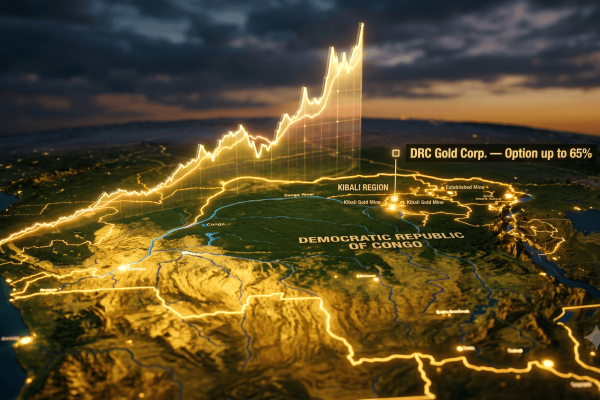
Commented by Nico Popp on August 5th, 2026 | 07:15 CEST
Gold Rush in the Congo: AngloGold Ashanti and Barrick Mining Must Step Up Their Game—Could DRC Gold Be the Biggest Winner?
Deep in the eastern rainforests of the Democratic Republic of the Congo (DRC), in the Haut-Uélé province, few would expect to find the operations of global mining companies. Yet this remote region has emerged as one of the world's most promising areas for gold production. Although public infrastructure is often underdeveloped, major mining companies overcome these challenges by building roads, power lines, and other essential infrastructure themselves when necessary. The region's exceptional geological potential is simply too attractive to ignore. In this article, we introduce companies operating in the DRC and highlight opportunities for investors.
Read
Commented by Nico Popp on August 4th, 2026 | 11:00 CEST
Agribusiness Sector Heats Up: BASF, MustGrow Biologics, and Corteva—Where Growth Is Scaling and What Analysts Recommend
Created and Published on Behalf of MustGrow Biologics Corp.
Investments in the agribusiness sector are often viewed as resilient long-term opportunities, driven by steadily growing global food demand. However, the industry's outlook is becoming increasingly complex. Climate change and tightening regulations are forcing agricultural companies to adapt continuously. To feed an estimated 9.7 billion people by 2050, experts believe global food production must increase significantly despite a shrinking amount of arable land. At the same time, regulators around the world are moving to phase out conventional crop protection products. The EU aims to have 25% of agricultural land under organic farming by 2030 and has already banned many conventional crop protection products. These developments are creating significant opportunities for biological alternatives. We take a closer look at the market and the companies best positioned to benefit from these long-term trends.
Read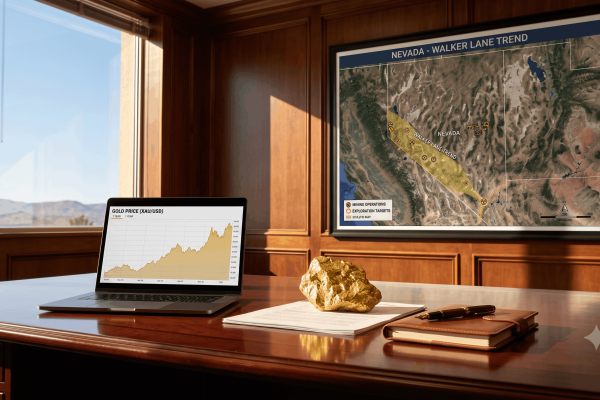
Commented by Nico Popp on August 3rd, 2026 | 07:50 CEST
Gold Sector Remains Optimistic: How Kinross Gold and Orla Mining Are Securing the Future—and Lahontan Gold's Hidden Ace
"Gold. Power. Greed." That was the title of a recent documentary aired by German broadcaster ZDF, exploring the enduring appeal of the precious metal. Investors seeking returns from precious metals often turn their attention first to giants such as Barrick Mining and other major producers. Yet while new discoveries may have only a limited impact on the share prices of established mining companies, positive exploration results can drive a very different level of momentum among smaller players. Agile exploration companies that can supply the processing plants of major producers—thanks to fresh capital, prime locations, and manageable costs—promise dynamic upside potential, as recently highlighted in the ZDF documentary. We introduce three exciting companies and highlight where investors can expect strong momentum.
Read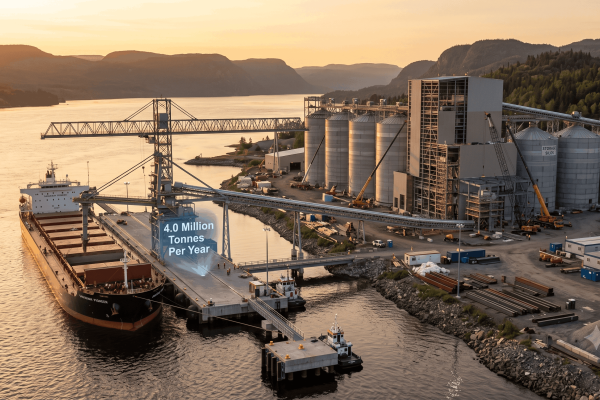
Commented by Nico Popp on August 3rd, 2026 | 07:35 CEST
Green Steel Marks a Turning Point: How Rio Tinto and Champion Iron Are Struggling with Logistics – Strategic Resources as a Beacon of Hope
When steel mills are running at full capacity, the industry is satisfied—at least that was the case for many decades. Nowadays, however, what exactly goes into the furnaces is becoming increasingly important. The transition to low-emission steel is increasingly challenging traditional supply chains. Companies that want to produce sustainably and "green" today need clean raw materials. The major players in the steel industry have already recognized this. Raw material producers must therefore also rethink their approach. Innovative companies from Canada have recognized the signs of the times and are fully committed to meeting the steel industry's new requirements. We shine a spotlight on this development and introduce some exciting companies.
Read