

At home in Southern Germany, the passionate stock exchange expert has been accompanying the capital markets for about twenty years. With a soft spot for smaller companies, he is constantly on the lookout for exciting investment stories. That it depends thereby less on large names, but on the future potential and whether the market also recognizes these perspectives, was one of its first learnings at the stock exchange.
On these pages, Nico examines current events at listed companies and takes a closer look at companies that are traded under the radar of the market, in addition to well-known securities.
In order to be able to take advantage of speculative opportunities on the stock exchange, Nico not only focuses on a balanced asset allocation of defensive and opportunity-oriented securities, but also on an intact risk management. "In addition to position size and entry in several tranches, investors should also develop a sense of timing and get to know a stock better before investing," says the columnist.
Commented by Nico Popp

Commented by Nico Popp on July 23rd, 2026 | 07:50 CEST
Panic in the Multi-Billion-Dollar Market: Novo Nordisk and Halozyme Therapeutics Face Headwinds—BioNxt Solutions Nears a Turning Point
The global pharmaceutical market is worth hundreds of billions of dollars. Yet one of the industry's most surprising realities is that success increasingly depends not only on the active ingredient itself but also on how it is delivered. This does not refer to the cardboard box, but to the dosage form. Whenever patents expire, and blockbuster drugs face competition, innovative biotech companies seize the opportunity. New drug delivery technologies can transform well-known substances into more effective medicines, reduce side effects, and open up entirely new treatment options for patients. While established pharmaceutical giants spend vast sums defending market exclusivity, agile second-tier biotech companies are driving innovation through next-generation drug delivery platforms.
Read
Commented by Nico Popp on July 23rd, 2026 | 07:40 CEST
The Patent Cliff Could Cost Billions: How Bayer and Merck & Co. Respond—and How Vidac Pharma Is Gaining Momentum
Leading oncology centers have long recognized that the fight against cancer cannot be won with just one active ingredient. It is increasingly clear that lasting treatment success depends on combining multiple therapeutic approaches. For years, oncologists relied heavily on conventional chemotherapy. Yet tumours consistently prove resilient and demand more complex therapies. Since patents on many active ingredients are expiring anyway, new, complementary forms of therapy are gaining prominence. One of these therapies targets the disrupted energy metabolism of cancer cells and shows promise. We examine the market and introduce an exciting biotech company that few experts are familiar with.
Read
Commented by Nico Popp on July 22nd, 2026 | 08:00 CEST
The Race for the Arctic Region: Rheinmetall Needs Steel, Champion Iron Expands into Europe, Strategic Resources with Two Promising Projects
The green transformation of heavy industry is already challenging and is hitting industrial companies hard in times of crisis. Now geopolitics is adding to the mix—resilient supply chains are especially critical in the defence sector. Anyone who wants to reliably produce tanks, heavy military vehicles, or artillery, even in the midst of an absolute crisis, must rely on politically stable regions for the necessary raw materials and intermediate goods. The traditional distinction between civilian raw material extraction and military value creation is increasingly blurring in the current complex landscape. Civilian industry also benefits when political decision-makers expedite processes for national security reasons. We highlight three companies in the defence and steel sectors and point out opportunities for investors.
Read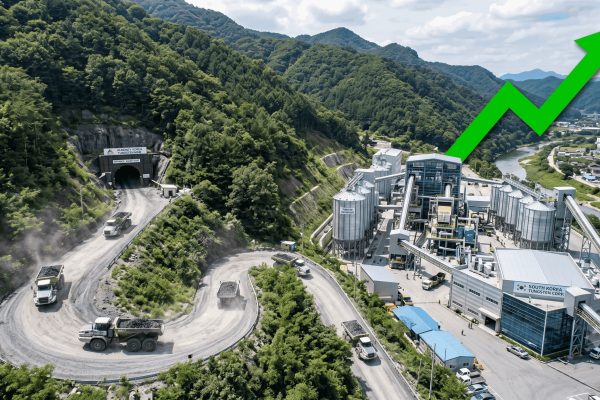
Commented by Nico Popp on July 22nd, 2026 | 07:40 CEST
Why the Tungsten Shortage Threatens SpaceX and Siemens Healthineers—and How Almonty Is Becoming the West's Top Supplier
When technical necessity meets scarcity, it is not just engineers who take notice—the capital markets, too, have long been grappling with supply chains and their vulnerability to crises. This is particularly evident in the case of tungsten. This heavy metal is equally essential for modern space travel and innovative medical technology. Because Beijing is tightening the reins on tungsten exports, a metal also considered military-grade, the high-tech industry, from SpaceX to Siemens Healthineers, is feeling the heat. The search for crisis-resistant sources of raw materials is becoming a matter of survival for these corporations. Almonty, the leading Western tungsten producer, is perfectly positioned to benefit from this situation.
Read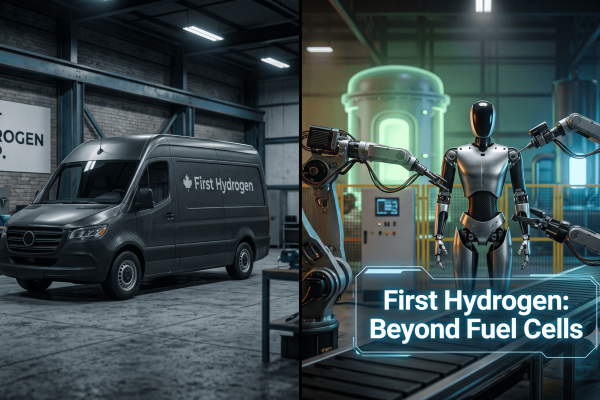
Commented by Nico Popp on July 21st, 2026 | 07:05 CEST
Hydrogen Slump and "Tesla Fantasy": How Plug Power, Ballard Power, and First Hydrogen Aim to Regain Momentum
The hydrogen ramp-up in the industrial sector has reached a critical juncture. On the one hand, the scarcity of fossil fuels is driving the need to invest now; on the other hand, the struggling economy is wary of the associated costs. While climate targets remain firmly in place despite recent adjustments within the EU, and the International Energy Agency (IEA) projects global hydrogen demand to reach a staggering 17,500 terawatt-hours by mid-century, the hydrogen industry is facing mounting pressure. In Germany, policymakers are intensifying this pressure through the national implementation of the EU's RED III Directive. This directive stipulates that, starting in 2026, fuel suppliers must demonstrate compliance with mandatory minimum quotas for renewable fuels. According to calculations by Provaris Energy, failure to comply could result in penalties of EUR 120 per gigajoule, equivalent to an effective surcharge of up to EUR 15 per kilogram of hydrogen. With domestic hydrogen production capacity expected to remain constrained, the pressure to act is mounting. Is the hydrogen economy finally gaining momentum? We take a closer look at the industry and highlight several key companies that could benefit from the next phase of development.
Read
Commented by Nico Popp on July 20th, 2026 | 07:30 CEST
Battery Crisis Threatens AeroVironment and Kratos Defence—How HPQ Silicon Could Benefit
It is wartime. Anyone aiming to dominate the skies must think beyond aerodynamics and sensor technology when it comes to drones. The greatest driver of innovation lies in the chemical composition of batteries. As demand for drones across commercial, industrial, and military applications continues to surge, conventional lithium-ion batteries are reaching their limits. The bottleneck lies in the material itself: graphite anodes result in shorter flight times and higher weight. To overcome these limitations, the industry is undergoing a paradigm shift toward silicon-based anodes. This technology significantly increases battery capacity and performance, enabling an entirely new generation of drone applications. We take a closer look at the technology behind this transformation and highlight several companies that stand to benefit.
Read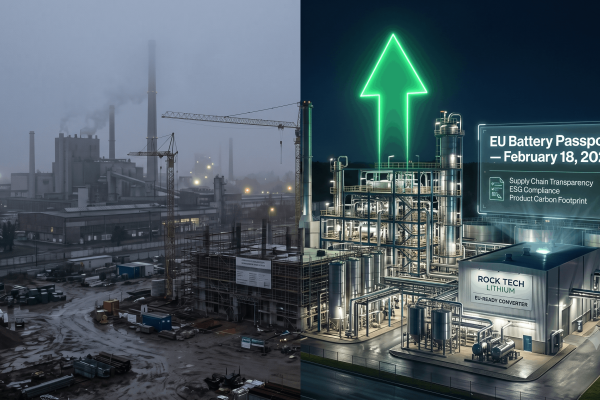
Commented by Nico Popp on July 17th, 2026 | 07:30 CEST
The End of the Auto Industry Looms: Will Mercedes-Benz & Co. Find a Way Out? BYD as a Role Model, Rock Tech Lithium as a Problem-Solver
The auto industry is in the midst of a deep crisis, as evidenced not only by the news from Volkswagen. The availability of battery raw materials has become a critical factor for automakers. According to a survey by industry experts at Benchmark Minerals, global demand for lithium-ion batteries rose by 29% in 2025 to a total of 1.59 terawatt-hours. While stationary battery storage was the fastest-growing segment, the electric vehicle sector remains the dominant driver of demand in terms of volume. This trend is intensifying global competition for critical raw materials. China is leading the way here. The country controls an estimated 85% of global battery production and processes around 70% of the world's lithium. This poses a risk for Western automakers. They need to develop their own solutions. We analyze the situation and explore a potential solution.
Read
Commented by Nico Popp on July 17th, 2026 | 07:10 CEST
Defense Giants Shaken by Consumer Drones: Rheinmetall and AeroVironment Under Pressure as Volatus Aerospace Strengthens the Supply Chain
The defence industry is booming and evolving rapidly. While established defence contractors are reaping the benefits of record orders for conventional weapons systems, autonomous systems and AI-powered networks are also increasingly benefiting. The market for military drones is growing at double-digit rates and, according to current market forecasts, is expected to reach a volume of USD 80 to 100 billion by 2030. But these billions are far from being allocated. Even though Ukrainian-made drones were disparaged as "housewife drones" not long ago, the reality is that Ukraine is extremely agile when it comes to new developments. It is not uncommon for prototypes to be deployed within days. The Ukrainians are also at the forefront when it comes to costs. Cheap, mass-produced disposable systems are increasingly replacing conventional defence products. We examine this trend and highlight three exciting companies.
Read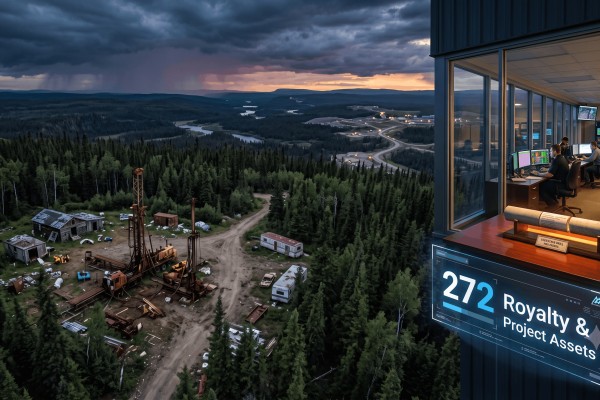
Commented by Nico Popp on July 16th, 2026 | 07:15 CEST
Everyone Has to Pay—Why Investors Could Profit: The Toll Secret of InterDigital and AbbVie, Plus Globex Mining's Portfolio of 272 Resource Projects
The global economy is like a jungle, with toll booths waiting at every turn—anyone who wants to pass has to pay. A recent example is the rebranding of Siemens Energy to Omterra: even after being spun off from the Siemens Group, the company still has to pay for the right to use its former parent company's name. This toll-booth business model exists across many industries. Companies that own assets, technologies, or rights that others need can generate highly profitable, recurring revenue streams. We take a closer look at three compelling business models and highlight investment opportunities that could prove especially rewarding during periods of economic and technological transformation.
Read
Commented by Nico Popp on July 16th, 2026 | 07:05 CEST
Turning Data into Returns: The Strategies Behind Palantir and S&P Global—How Aspermont Combines Data and Commodities
Digitalization is creating a veritable flood of data. But raw data in its unstructured form has no economic value. It is like a raw material that must first be refined and contextualized through in-depth industry expertise. Anyone who wants to stay competitive today must base their decisions on high-quality, processed data. Industry estimates consistently show that data analysts and data scientists spend, on average, more than 50% of their daily work time searching for and formatting data sets. It is no wonder that, according to market researchers, the global data monetization market is projected to grow to as much as USD 25 billion by 2034. In this article, we explore who is leading the way in this fast-paced environment and what innovative approaches are available.
Read