

At home in Southern Germany, the passionate stock exchange expert has been accompanying the capital markets for about twenty years. With a soft spot for smaller companies, he is constantly on the lookout for exciting investment stories. That it depends thereby less on large names, but on the future potential and whether the market also recognizes these perspectives, was one of its first learnings at the stock exchange.
On these pages, Nico examines current events at listed companies and takes a closer look at companies that are traded under the radar of the market, in addition to well-known securities.
In order to be able to take advantage of speculative opportunities on the stock exchange, Nico not only focuses on a balanced asset allocation of defensive and opportunity-oriented securities, but also on an intact risk management. "In addition to position size and entry in several tranches, investors should also develop a sense of timing and get to know a stock better before investing," says the columnist.
Commented by Nico Popp
Commented by Nico Popp on July 15th, 2026 | 08:30 CEST
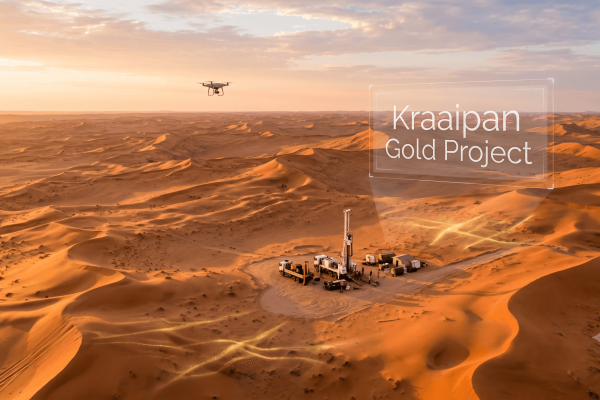
Built on Sand? Barrick Mining Under Pressure, Rio Tinto Facing Headwinds, and North Arrow Minerals in a Strong Position
The demand for strategic metals, the challenging geopolitical environment, and new exploration methods—these factors are prompting established corporations and smaller exploration companies to adapt their business models in the face of these multifaceted challenges. While the major producers are streamlining their portfolios, which have grown over the years and are sometimes complex, smaller companies are demonstrating agility by divesting marginal projects and focusing on promising deposits in politically stable regions. We examine these developments and highlight exciting companies.
Read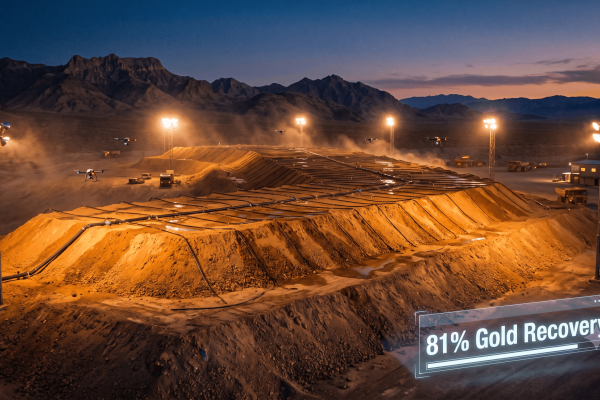
Commented by Nico Popp on July 15th, 2026 | 08:20 CEST
Gold Giants Reposition: Newmont Raises Its Dividend, Orla Mining Merges, and Lahontan Gold Gets Ready for the Next Stage
The gold market has been quite volatile in recent months. Companies in the sector are benefiting from the uncertain landscape on the one hand, but are also struggling with operational challenges on the other. After hitting an all-time high of over USD 5,600 per ounce at the start of the year, the precious metal corrected significantly and is currently trading at around USD 4,000–4,150, after oil price spikes linked to the Middle East and interest rate concerns had temporarily pushed the price below USD 4,000. Central banks around the world are taking decisive action to support gold, with projected net purchases of up to 850 metric tons for the full year. Yet while producers' profit margins in the first quarter were impressive, averaging 35%, the industry's proven reserves continue to shrink. Because new greenfield discoveries are few and far between, established mining districts in politically stable regions such as the US state of Nevada or Canada are taking center stage. We shed light on this trend and highlight exciting companies.
Read
Commented by Nico Popp on July 14th, 2026 | 07:20 CEST
Nothing but Trouble with Green Energy: 2G Energy Looks Ahead – A.H.T. Syngas in Turnaround, Concerns at Plug Power
Energy providers are under pressure from two sides: on the one hand, AI data centers and the ongoing electrification of mobility and industry are consuming increasing amounts of electricity; on the other hand, lawmakers are demanding climate protection and decarbonization. But when the wind stops blowing and the sun disappears behind the clouds, problems loom. Batteries can barely cushion the load volatility in the distribution grid. One solution is molecular energy carriers such as syngas or hydrogen, which deliver energy exactly where it is needed, regardless of the weather. New, innovative business models often rely on decentralized solutions and stand to benefit the most. We shed light on the market and introduce companies.
Read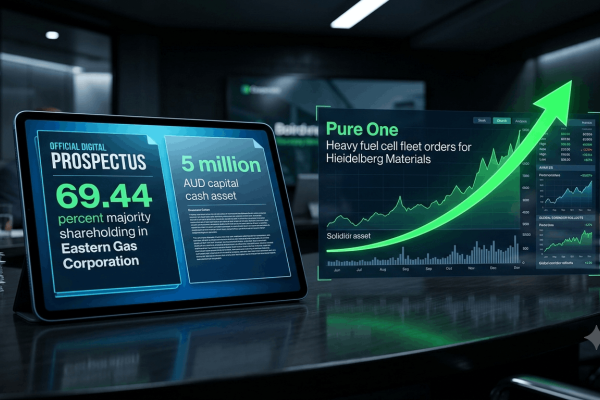
Commented by Nico Popp on July 14th, 2026 | 07:10 CEST
Daimler Truck Warns of Charging Station Shortages: NEL Refines Its Strategy While Pure One Rethinks the Entire Approach
The transformation of heavy-duty road transport remains an uphill battle. While increasingly stringent regulations are pushing vehicle manufacturers toward zero-emission technologies, the rollout of charging and hydrogen infrastructure across EU member states continues to lag far behind. The shortcomings are particularly evident along Europe's highways and major freight corridors: for transport operators, an emissions-free truck offers limited value if reliable charging stations or hydrogen refueling infrastructure are unavailable. Against this backdrop of ambitious regulation and slow infrastructure development, agile technology providers are finding new opportunities. We take a closer look at pragmatic solutions and examine where the most promising investment opportunities may emerge.
Read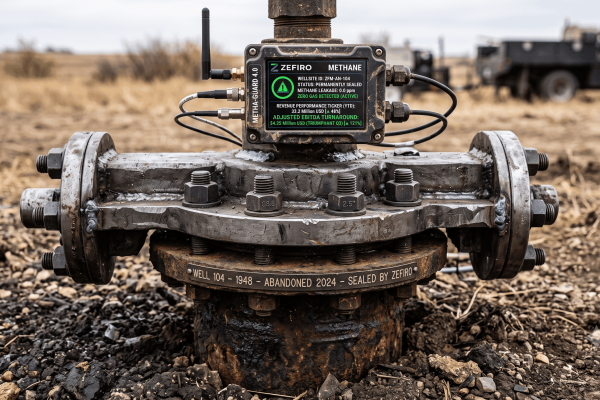
Commented by Nico Popp on July 13th, 2026 | 07:05 CEST
Returns and Climate Protection: Zefiro Methane on a Growth Trajectory – A Hidden Gem in the Shadow of RWE and Siemens Energy
Things are changing in the energy sector. New strategies at established companies are meeting the innovative business models emerging in response to pressing challenges. While major corporations are switching to renewable energy and investing in the necessary grid infrastructure, an often-overlooked challenge is coming into focus: the remediation of environmental legacies left by the fossil fuel industry. The current developments in the energy sector are best illustrated by the trio of RWE, Siemens Energy, and Zefiro Methane. We explain the latest trends and highlight opportunities.
Read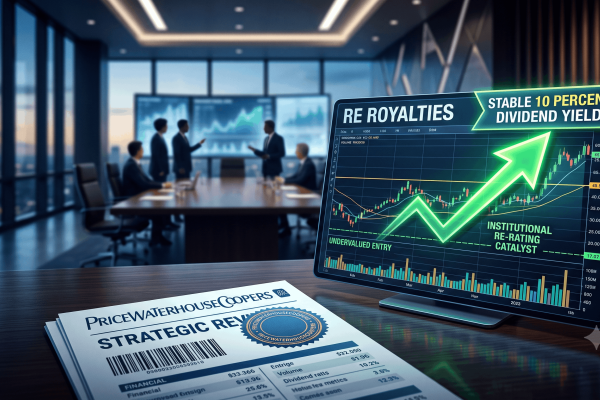
Commented by Nico Popp on July 13th, 2026 | 06:55 CEST
Solar Industry Chaos: First Solar and SMA Solar Face Headwinds – Is RE Royalties Poised for a Breakthrough?
The energy transition is like a wild roller-coaster ride. While the understandable desire to protect the climate continues to pour billions into clean energy, the solar industry is simultaneously grappling with tariff disputes, intense price competition, and persistent overcapacity. These challenges have put significant pressure on many companies across the sector. But off the beaten path, opportunities are emerging for investors. While suppliers of solar panels and inverters are struggling, innovative companies like RE Royalties are finding success in protected niches. Increasingly, market observers argue that long-term success will depend not only on expanding production capacity, but also on the ability to navigate a rapidly evolving regulatory and financing landscape. Today, we take a closer look at several companies in the sector and highlight one opportunity in particular.
Read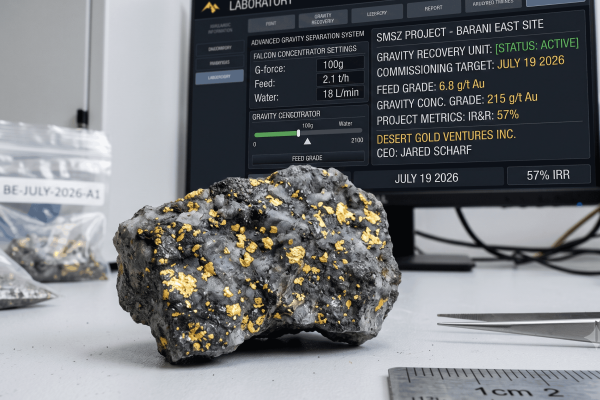
Commented by Nico Popp on July 9th, 2026 | 07:25 CEST
Immediate Cash Flow: Desert Gold Is Making the Big Leap and Barrick Mining and B2Gold Continue to Bet on Mali
When people think of West Africa, geopolitical unrest or rugged terrain often comes to mind. Yet right here, in the deep geological layers of the famous Senegal-Mali Shear Zone, a lot is happening for the gold market. Following a period of profound political tensions and a sweeping overhaul of its laws, Mali is experiencing an unprecedented resurgence as a mining destination. The operating environment for international resource companies is shifting away from unpredictable confrontation, toward stable cooperation and increased domestic value creation. This is attracting powerful corporations and savvy investors alike, as the raw material buried beneath the desert dust promises stable returns amid growing global uncertainty. Mali is transforming from a crisis hotspot into a hotspot for investors looking to place a bold bet on the most precious of all metals. We present a particularly attractive opportunity and shed light on the market.
Read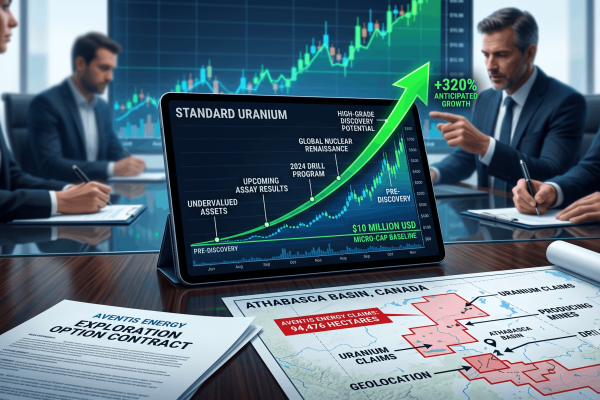
Commented by Nico Popp on July 9th, 2026 | 07:00 CEST
Why the Base Load Bottleneck Threatens SpaceX and Amazon—and How Standard Uranium Stands to Benefit
When you pick up your smartphone from your nightstand in the morning, you rarely give a thought to the massive infrastructure behind the scenes. But the brave new digital world of global data streams and machine-learning algorithms has an energy-hungry, and sometimes dirty, secret. Artificial intelligence consumes so much electricity that power grids are collapsing one after another. When computing power needs to keep pace with AI innovations, solar farms are no longer enough. Base load power is needed—and nuclear power provides it. So high-tech needs uranium, and that is exactly what brings the tech elite together with resource companies. We explain the connections and highlight the opportunities.
Read
Commented by Nico Popp on July 8th, 2026 | 07:30 CEST
Overcoming the Range Limitation: SpaceX Thinks Big, Siemens Energy Believes in AI, and First Hydrogen Solves Earthly Problems
When street sweepers make their rounds in major German cities on Saturday mornings, we usually still hear a monotonous diesel hum in our ears. But behind the scenes, a transformation has long been underway. Climate neutrality is forcing fleet operators to rethink their approach. The mantra: move away from diesel and toward new technologies. However, all-battery-powered trucks often reach their limits in multi-shift operations due to insufficient range and hours-long charging times. This is where innovative technologies like hydrogen come into play. We introduce three exciting companies and highlight opportunities for investors.
Read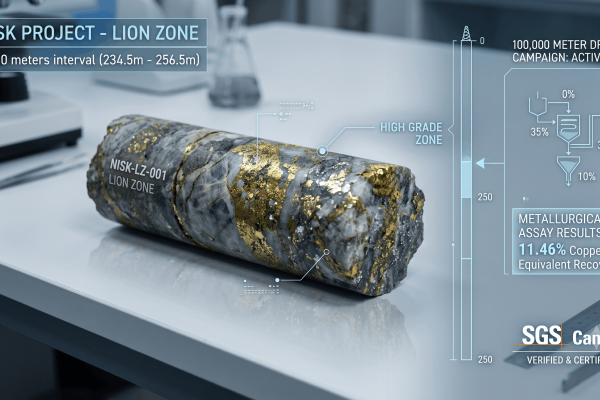
Commented by Nico Popp on July 8th, 2026 | 07:05 CEST
Canada and Europe Are Jointly Securing Raw Materials: Why BMW and Volkswagen Should Keep an Eye on Power Metallic Mines
The automotive industry's transition to electric mobility is disrupting traditional supply chains. While efficient assembly used to be the key factor, in the era of electric vehicles, secure, environmentally responsible access to critical minerals matters most. Above all, strict legal requirements, such as the European Supply Chain Due Diligence Act, are forcing automakers to fully document the origin of their raw materials all the way back to the mine. In this complex landscape, Canada has emerged as one of the most important partners for European industry. The standards and mineral content are just right here—we introduce the market and potential beneficiaries.
Read