

At home in Southern Germany, the passionate stock exchange expert has been accompanying the capital markets for about twenty years. With a soft spot for smaller companies, he is constantly on the lookout for exciting investment stories. That it depends thereby less on large names, but on the future potential and whether the market also recognizes these perspectives, was one of its first learnings at the stock exchange.
On these pages, Nico examines current events at listed companies and takes a closer look at companies that are traded under the radar of the market, in addition to well-known securities.
In order to be able to take advantage of speculative opportunities on the stock exchange, Nico not only focuses on a balanced asset allocation of defensive and opportunity-oriented securities, but also on an intact risk management. "In addition to position size and entry in several tranches, investors should also develop a sense of timing and get to know a stock better before investing," says the columnist.
Commented by Nico Popp

Commented by Nico Popp on June 29th, 2026 | 07:00 CEST
Hydrogen Is Gaining Ground in Emerging Markets - How the Transition Can Succeed: Trimble, Nel, dynaCERT
While the long-term goal of completely emission-free mobility remains, opinions on the path to achieving it vary widely. Especially in light of the sluggish economy and major challenges, more and more economies are turning to pragmatic solutions. Many technological and infrastructural hurdles can be circumvented in this way. Since the conversion of large commercial vehicle fleets to battery or fuel cell systems is likely to take decades for well-known reasons, transition technologies are gaining importance. We shed light on the market and introduce three promising players.
Read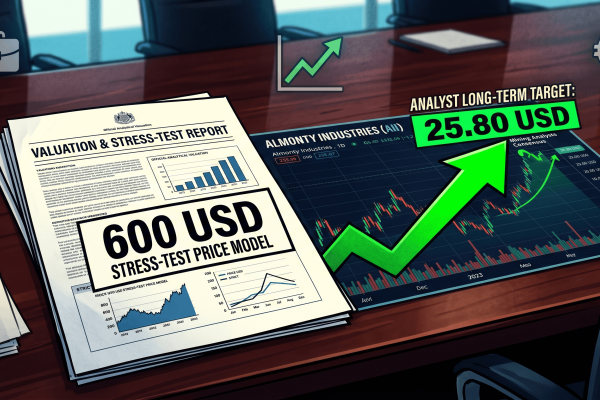
Commented by Nico Popp on June 26th, 2026 | 07:15 CEST
This Investment Scenario Will Last for Years: Tungsten Giant Almonty and the Demand from Hensoldt, RENK, and Others
On January 1, 2027, the US Department of Defense's import ban on tungsten products from China, Russia, North Korea, and Iran will take effect. Because tungsten is considered an almost irreplaceable element in defense technology, semiconductors, and the aerospace industry, this ban is creating significant time pressure across these sectors. At the same time, the EU is also tightening requirements for raw material sovereignty with the Critical Raw Materials Act (CRMA). China is exacerbating the situation with export restrictions on dual-use materials. As a result, the global tungsten market is sliding into a severe structural shortage. We take a look at where the opportunities lie for investors—and which companies to watch.
Read
Commented by Nico Popp on June 25th, 2026 | 07:35 CEST
Commodity Concerns at General Motors and Amazon – Why Power Metallic Mines Is One of the World's Most Promising Juniors
The era of raw materials is already here: geopolitical tensions and future technologies are driving the market. The traditional procurement model based on global spot markets is increasingly reaching its limits. It is being replaced by direct participation of leading industrial and technology conglomerates in mining and raw materials companies. Increasingly, this is happening even at very early-stage development companies. Companies such as Power Metallic Mines are responding to this trend and, even before production begins, are developing into platforms for ESG-compliant supply chains. We take a closer look at the market and the associated opportunities.
Read
Commented by Nico Popp on June 24th, 2026 | 08:15 CEST
DR Congo Tightens Regulatory Reins: Implications for Barrick Mining and Ivanhoe Mines – DRC Gold Could Benefit
The mining sector in the Democratic Republic of the Congo (DRC) is forcing resource companies to rethink their strategies. Under the banner of "mineral sovereignty," the Central African nation is transforming from a mere supplier into a regulated player that demands equity stakes, local value-added quotas, and strict regulatory enforcement. In particular, a ministerial circular dated January 30, 2026, casts a long shadow: By July 31, all active mine operators must demonstrate a minimum Congolese ownership stake of 10%, to be split equally between private investors and employee ownership. Since virtually no foreign corporation has fully met these criteria to date, the pressure for consolidation within the country is increasing significantly. In this complex situation, it becomes clear that long-standing country expertise, geological know-how, and effective networks are crucial for economic success. We shed light on the situation and highlight a potential beneficiary.
Read
Commented by Nico Popp on June 23rd, 2026 | 07:20 CEST
Emissions as a Profit Booster: The Business Models of Equinor and Linde—and How Zefiro Methane Excels In a Niche Market
Rising costs for renewable energy projects, shifting geopolitical conditions, and increasingly stringent emissions regulations are forcing energy companies to adapt. While utility companies' business models were once relatively conservative, success today depends on optimizing every aspect of operational performance—down to the smallest decimal point. In this context, emissions-related costs are becoming a key area of focus. Companies can not only reduce expenses but also generate financial benefits through effective emissions management. Greenhouse gas mitigation and carbon capture technologies have long since evolved into standalone, highly profitable business segments. We examine the market and highlight promising companies.
Read
Commented by Nico Popp on June 22nd, 2026 | 07:05 CEST
HALEU Enrichment Bottleneck Threatens Cameco and Amazon—American Atomics Benefits
The electricity demand of AI data centers cannot be met by renewable energy alone—even the greatest idealists have come to understand this by now. The result is an unprecedented renaissance of nuclear energy. The latest "Red Book Report" from the OECD Nuclear Energy Agency (NEA) and the International Atomic Energy Agency shows that, with accelerated reactor expansion, existing mining capacity would not be sufficient to meet demand in the medium term. Decades of underinvestment in mining projects have led to a supply deficit, while geopolitical risks and severe production bottlenecks at the world's largest producer, Kazatomprom, are further exacerbating the situation. As a result, established players in the nuclear value chain are under pressure to act. Investors are capitalizing on this to make investments in secure jurisdictions.
Read
Commented by Nico Popp on June 22nd, 2026 | 06:35 CEST
Verbio, E.ON, and A.H.T. Syngas: Market Leaders and Challengers
The recent energy price shock and regulatory requirements are accelerating the transition to low-carbon alternatives to fossil fuels. As a result, the energy industry is transforming. To achieve the industry's ambitious decarbonization goals, energy providers are increasingly focusing on modular systems for utilizing biogenic residues. Major market leaders are increasingly securing technological scalability through acquisitions, as building green business models organically is a lengthy and risky process. Multi-billion-dollar acquisitions in the biomass and biogas sectors are driving a wave of consolidation. Decentralized solutions for generating baseload electricity and hydrogen have long been a key pillar of the energy transition. We highlight three companies.
Read
Commented by Nico Popp on June 19th, 2026 | 07:35 CEST
How MustGrow Biologics Benefits from Agrochemical Realignment with Patented Bioactive Technology – Pressure on Bayer and Corteva
Created and published on behalf of MustGrow Biologics Corp.
Extreme heat waves, increasingly degraded soils, and strict regulatory limits on synthetic chemical crop protection products—global agricultural markets are facing a critical period of adjustment. Once temperatures cross the critical threshold of 30 °C, most agricultural crops begin to suffer drastic yield losses, as sterile pollen and weakened cell walls cause irreparable damage to plant biology. According to the joint report by the Food and Agriculture Organization of the United Nations (FAO) and the World Meteorological Organization (WMO) titled "Extreme Heat and Agriculture," even individual heat waves can cause agricultural productivity to plummet by up to 50%. For most major crops, yield losses are already a threat at temperatures as low as 30 °C. The frequency, intensity, and duration of extreme heat events have increased significantly over the past 50 years. These ecological stressors are shifting growing conditions in both temperate and Mediterranean zones, forcing the entire agricultural value chain to rethink its approach.
Read
Commented by Nico Popp on June 18th, 2026 | 07:35 CEST
The Secret Mechanism That Kills Cancer Cells: What Revolution Medicines and Merck & Co. Need to Learn from Vidac Pharma
There is, without exaggeration, a looming "patent cliff" of enormous scale: an estimated USD 236 billion in annual revenue losses are forcing the biopharmaceutical industry to find new paths forward. Pharma giants must replace dwindling blockbuster revenues by strategically acquiring innovative oncology platforms, as conventional cancer therapies are increasingly reaching their limits. This innovation pressure is triggering a consolidation wave in which research-driven biotech companies with protected mechanisms of action are moving into the center of potential takeover activity. In particular, intracellular and metabolic treatment approaches are rapidly gaining importance in the fight against treatment-resistant cancers. We take a look at Revolution Medicines' successes and identify the next potential high-flyer.
Read
Commented by Nico Popp on June 18th, 2026 | 07:25 CEST
The Simple Path to Inflation-Protected Cash Flows: Why JPMorgan Chase and Altius Minerals Are Eyeing Globex Mining
Persistent geopolitical uncertainty, rising inflation, and tighter lending standards by commercial banks mean that even the mining sector is no longer operating under ideal conditions. Since missing production targets can trigger significant share price declines, major commodity companies are constantly searching for new deposits. At the same time, rising development costs are making mine operations more expensive, while the US Federal Reserve is adopting a more restrictive stance in light of inflation data. In this market environment, the royalty and streaming model is gaining importance because gross revenue royalties can provide inflation-protected cash flows without direct operational risks. We present a potential beneficiary of this trend and explain how the model works.
Read