

At home in Southern Germany, the passionate stock exchange expert has been accompanying the capital markets for about twenty years. With a soft spot for smaller companies, he is constantly on the lookout for exciting investment stories. That it depends thereby less on large names, but on the future potential and whether the market also recognizes these perspectives, was one of its first learnings at the stock exchange.
On these pages, Nico examines current events at listed companies and takes a closer look at companies that are traded under the radar of the market, in addition to well-known securities.
In order to be able to take advantage of speculative opportunities on the stock exchange, Nico not only focuses on a balanced asset allocation of defensive and opportunity-oriented securities, but also on an intact risk management. "In addition to position size and entry in several tranches, investors should also develop a sense of timing and get to know a stock better before investing," says the columnist.
Commented by Nico Popp
Commented by Nico Popp on May 22nd, 2026 | 07:00 CEST
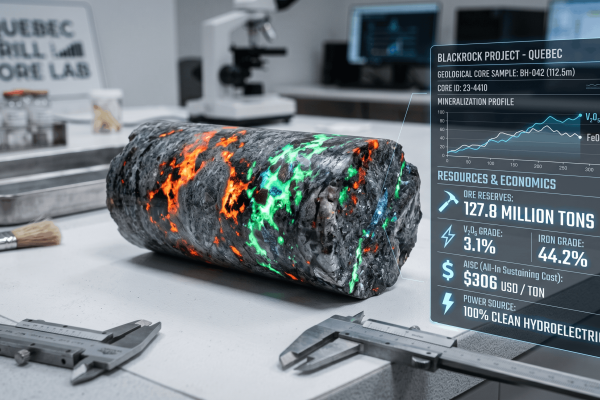
Panic in the Steel Sector - Geopolitical Dependencies Threaten Production: Strategic Resources, ArcelorMittal, and thyssenkrupp in Focus
Enormous regulatory pressure to decarbonize, escalating punitive tariffs, and a looming supply shortage of critical alloy metals are driving profound changes in the steel industry. The conversion of traditional blast furnaces to electric arc furnaces powered by electricity poses a challenge for corporations. The recycling of simple steel scrap can cause disruptive copper impurities to accumulate in the melt. The industry urgently requires massive quantities of high-purity pig iron for dilution to continue producing high-quality steel. However, since the supply chains for vanadium, a critical metal for the energy transition and alloys, are almost entirely controlled by autocratic states, Western companies are under pressure to act. Fortunately, the Canadian commodities company Strategic Resources is positioning itself as a supplier from multiple secure jurisdictions.
Read
Commented by Nico Popp on May 21st, 2026 | 07:40 CEST
A Turning Point—But the Right One! Autonomous Warfare Forces Defence Giants to Act: Volatus Aerospace, Palantir, and DroneShield in the Spotlight
Security can no longer be taken for granted in Western democracies, and the geopolitical upheavals of recent years have prompted governments worldwide to act. Yet growing criticism of multi-billion-dollar defence spending often overlooks one key reality: today's investments are largely the consequence of political inaction over the past decade. Against this backdrop, an end to the global security and defence boom is highly unlikely. Modern conflicts can escalate rapidly into asymmetric, software- and drone-driven confrontations, placing increasing pressure on traditional defence contractors to adapt. To compensate for shortcomings in autonomous flight control and AI, established defence contractors are increasingly relying on inorganic growth and turning to technology pioneers. We take a closer look at this rapidly evolving market and present one particularly compelling stock opportunity.
Read
Commented by Nico Popp on May 21st, 2026 | 07:30 CEST
Battery Raw Materials Urgently Needed: Ford and BMW Under Pressure – Analysts Praise Power Metallic Mines
Declining ore grades in established mines, increasing geopolitical tensions, including conflicts and challenging regulatory requirements, are putting the supply of critical battery raw materials under strain, creating significant challenges for the automotive industry. While demand for lithium, nickel, and cobalt continues to rise sharply as electrification progresses, the mining sector is facing a structural productivity crisis. According to analyses by the Organization for Economic Cooperation and Development (OECD), mining productivity has halved since the late 1990s. As a result, automakers on both sides of the Atlantic are being forced to strengthen supply chain resilience through direct partnerships and strategic investments in emerging resource projects. The Canadian mining company Power Metallic Mines is positioning itself as a potential key partner in this evolving landscape.
Read
Commented by Nico Popp on May 20th, 2026 | 08:30 CEST
Disruption in the Agricultural Sector: Why Corteva and Deere & Company Are Keeping an Eye on MustGrow Biologics
Created and published on behalf of MustGrow Biologics Corp.
High energy prices, soil degradation, and consumer preference for organic products—the growing pressure on traditional agricultural chemicals poses an existential challenge to established market leaders. Those who do not embrace biological alternatives now risk falling behind due to growing regulatory requirements and increasing resistance. Driven by historically high energy prices, which make the production of conventional fertilizers more expensive, agricultural businesses are facing cost pressures. This economic predicament is becoming a catalyst for innovation: major corporations are investing billions in digital solutions and biologically active ingredients. We shed light on this trend and introduce exciting companies.
Read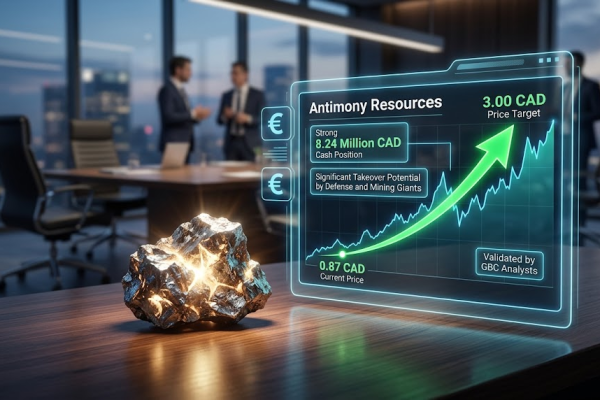
Commented by Nico Popp on May 20th, 2026 | 08:00 CEST
The Defence and Commodities Crisis: Lockheed Martin, Glencore, and Antimony Resources' Unique Opportunity
Created and published on behalf of Antimony Resources Corp.
Export restrictions and skyrocketing commodity prices – the shifting geopolitical availability of strategic metals is posing challenges for the Western defence industry. While raw material procurement was for decades merely a logistical task within the framework of a functioning globalized economy, secure access to conflict-free deposits now determines the defence capabilities of Western nations. The significance of this structural shift is particularly evident in the case of antimony, an indispensable key component for civilian technologies and defence equipment. Since the United States has no domestic antimony production, the development of new mining projects in stable North American jurisdictions is of the utmost importance. In this market environment, the Canadian mining company Antimony Resources is coming into the spotlight of global defence and raw materials corporations.
Read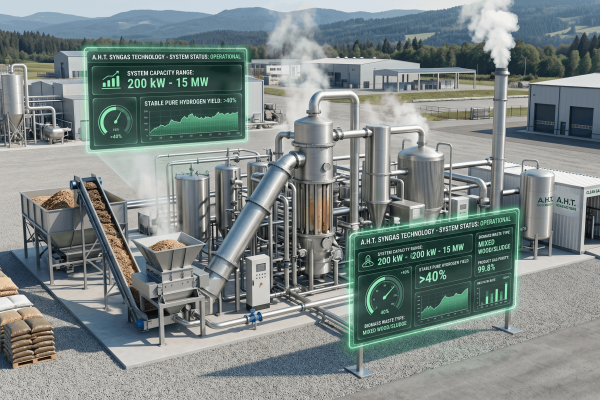
Commented by Nico Popp on May 19th, 2026 | 07:30 CEST
Bottlenecks in the Hydrogen Network: What Linde and BASF Could Learn from A.H.T. Syngas
The "green" transformation of the European chemical industry is in danger of failing. Although the Federal Network Agency approved the German core hydrogen network—which is set to grow gradually to 9,040 km of hydrogen pipelines between 2025 and 2032—the actual rollout of this critical hydrogen route is not proceeding as planned. Without the rapid expansion of key hydrogen pipelines, the industry's transformation goals are virtually unattainable. While the infrastructure is slow in coming, regulatory pressure continues to intensify under the European RED III Directive. As delays mount in large-scale infrastructure projects, energy-intensive industrial companies are increasingly being forced to explore alternative solutions. Decentralized solutions are emerging as viable options. One company that could attract growing attention from both industry players and investors is A.H.T. Syngas.
Read
Commented by Nico Popp on May 19th, 2026 | 07:05 CEST
Supply Chain Collapse in Battery Raw Materials: Why Panasonic, Porsche, and Others Are Increasingly Dependent on HPQ Silicon's Silicon Technology
While the majority of investors are still focused on fluctuating energy prices, experienced investors have long been positioning themselves in the niche market of advanced silicon anodes. The reason is clear: traditional graphite anodes are reaching their performance and capacity limits in electric vehicles—particularly in the premium segment. Anyone aiming to enable driving ranges of well over 500 km combined with ultra-fast charging for spontaneous long-distance travel will ultimately have to rely on a shift in cell chemistry toward high-purity silicon. However, since the industrial-scale production of this raw material relies on an extremely energy-intensive, environmentally harmful supply chain that is almost entirely controlled by China, global market leaders like Panasonic are under pressure to reorganize their supply chains. This is precisely where the innovative company HPQ Silicon could become highly relevant.
Read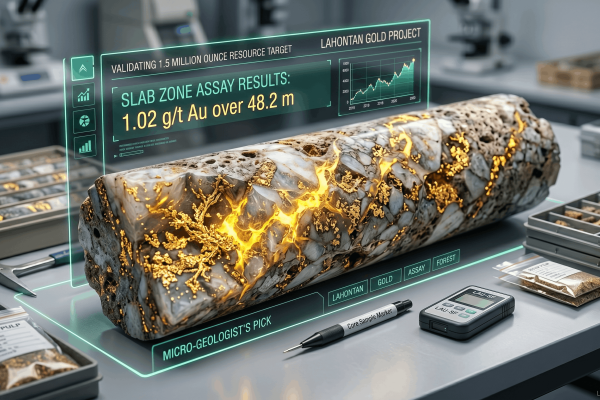
Commented by Nico Popp on May 18th, 2026 | 07:25 CEST
Gold's Comeback at Walker Lane: Why the Reactivation of Historic Mines in Nevada Is Putting Pressure on the Majors – Lahontan Gold, Newmont, Kinross Gold in Focus
Gold remains in demand even in challenging times. But as greenfield exploration becomes increasingly risky due to rising regulatory hurdles and skyrocketing costs, the mining industry is shifting its strategy. In Nevada, one of the top mining jurisdictions, value creation is shifting away from the risky search for the next undiscovered mega-deposit toward the reactivation of historic world-class assets. The Walker Lane Trend in western Nevada has emerged as the most dynamic region for the comeback of former producers. We take a closer look at Walker Lane and highlight three companies.
Read
Commented by Nico Popp on May 18th, 2026 | 06:55 CEST
West Africa: A Gold Hotspot! What Makes This Region Unique - Desert Gold, Barrick Mining, Endeavour Mining
Without control over high-grade deposits, mines cannot operate sustainably in the long run – this holds true even in the promising West African gold belt. While many market participants are distracted by short-term geopolitical headlines and view countries like Mali rather critically, experienced players focus on geology and grades as the decisive factors. In the current market environment, momentum is shifting away from speculative projects and toward advanced properties with significant potential for future production. As the world's leading growth region, West Africa is at the center of this trend, with the Senegal-Mali Shear Zone (SMSZ) standing out in particular for its geology. We highlight three exciting companies and take a closer look at one promising gold prospector.
Read
Commented by Nico Popp on May 15th, 2026 | 09:05 CEST
Tailwinds from the US and EU: How Zefiro Methane Is Becoming a Problem-Solver for ExxonMobil and BASF
Anyone aiming to protect the climate must control and prevent harmful emissions. While decarbonization has focused for years almost exclusively on carbon dioxide (CO₂), methane is increasingly coming into the spotlight. Over a 20-year period, this gas's global warming potential is around 80 times higher than that of CO₂. In the US, millions of abandoned and orphaned oil and gas wells pose a major problem as they continue to emit methane, often decades after production has ceased. This is where Zefiro Methane's business model comes in, which could now take on a completely new long-term dimension due to stricter EU regulations. The key terms here are LNG imports and sustainability across supply chains. We shed light on Zefiro Methane's unique situation and outline the potential opportunity in the stock.
Read