

At home in Southern Germany, the passionate stock exchange expert has been accompanying the capital markets for about twenty years. With a soft spot for smaller companies, he is constantly on the lookout for exciting investment stories. That it depends thereby less on large names, but on the future potential and whether the market also recognizes these perspectives, was one of its first learnings at the stock exchange.
On these pages, Nico examines current events at listed companies and takes a closer look at companies that are traded under the radar of the market, in addition to well-known securities.
In order to be able to take advantage of speculative opportunities on the stock exchange, Nico not only focuses on a balanced asset allocation of defensive and opportunity-oriented securities, but also on an intact risk management. "In addition to position size and entry in several tranches, investors should also develop a sense of timing and get to know a stock better before investing," says the columnist.
Commented by Nico Popp

Commented by Nico Popp on August 20th, 2026 | 06:55 CEST
AI in the SMB Sector as an Opportunity: Indus Holding and Sartorius Are Already Doing It, Miivo AI Targets Smaller Companies
Created and Published on Behalf of Miivo AI.
For decades, journalists have been writing about digitalization, but artificial intelligence has truly taken things to the next level. AI has long been recognized as a driver of value creation and efficiency. Yet while major technology and software companies tend to design their products with global corporations in mind, the SMB sector—the backbone of the economy—is facing a dilemma: small and medium-sized businesses need to increase productivity, but in practice they often struggle with complex IT systems and high implementation costs. Companies that provide SMBs with lean, tailor-made solutions can secure access to a vast future market. We take a closer look at the current landscape and highlight the opportunities.
Read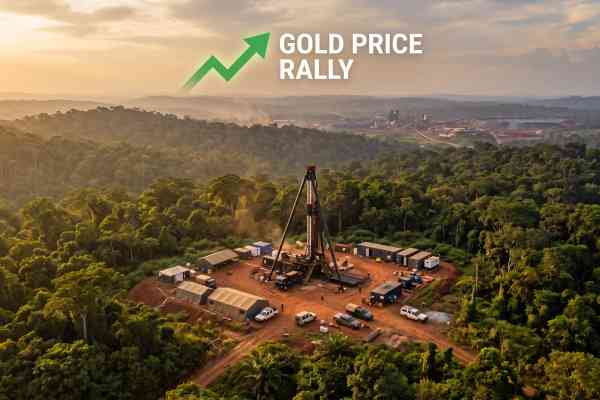
Commented by Nico Popp on August 19th, 2026 | 07:00 CEST
Gold Revolution: Newmont and Equinox Reshape Their Strategies, DRC Gold with the Next Mega-Mine?
When the gold price goes on a roller-coaster ride, the mining industry picks up steam as well. While industry giants such as Newmont are sharpening their focus and mid-sized producers like Equinox are exploring their options, plenty is happening behind the scenes at smaller exploration companies such as DRC Gold. Those with promising projects located near major mines may be looking to capitalize on an exit, particularly at a time when gold prices are rising again. We introduce the three companies mentioned above and take a closer look at DRC Gold, which is pursuing opportunities in the Congo and is regarded by some market insiders as a hidden gem.
Read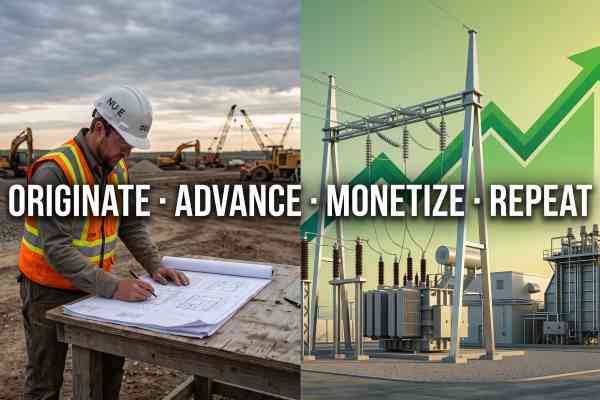
Commented by Nico Popp on August 18th, 2026 | 08:35 CEST
The Easy Path to Carbon-Free Computing Power: How NU E Power Aims to Make Things Easier for Companies Like Amazon and SAP
Created and Published on Behalf of NU E Power Corp.
Computing power for artificial intelligence requires enormous amounts of energy. But that is not the only challenge: power grids are already overloaded in many areas, and the combination of data centers, air conditioning systems and EV charging stations is putting additional strain on infrastructure. As a result, technology companies are increasingly factoring energy supply directly into their plans for new data centers. Ideally, that power should be sustainable while also providing reliable baseload capacity. Since energy infrastructure requires regulatory approval and suitable locations are scarce, an interesting market has emerged around powering data centers. We take a look at the situation and examine not only tech giants Amazon and SAP but also newcomer NU E Power.
Read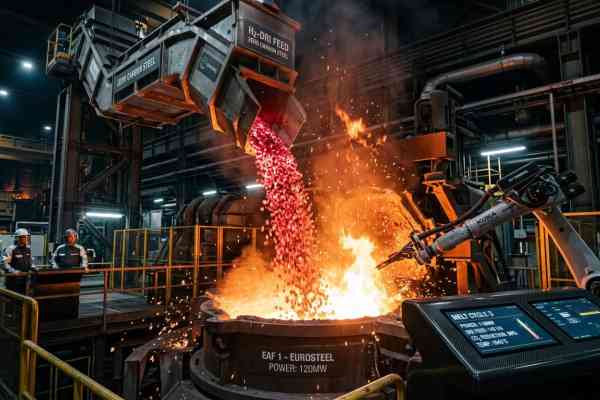
Commented by Nico Popp on August 17th, 2026 | 07:45 CEST
Steel Transformation in Jeopardy: How Strategic Resources Plans to Support thyssenkrupp and Salzgitter
Smoking chimneys and hot blast furnaces have defined industrial regions in Germany and elsewhere for decades. But the era of the traditional steel industry is coming to an end. Anyone driving through European industrial centers today sees mostly construction sites—the climate-neutral future is already casting its shadow. The industry is also moving away from traditional steelmaking processes due to emissions regulations and high prices for emissions allowances. But the shift away from coke brings new problems: without pure intermediate products for the steel industry, the transformation risks failing. We shed light on the situation and highlight potential beneficiaries.
Read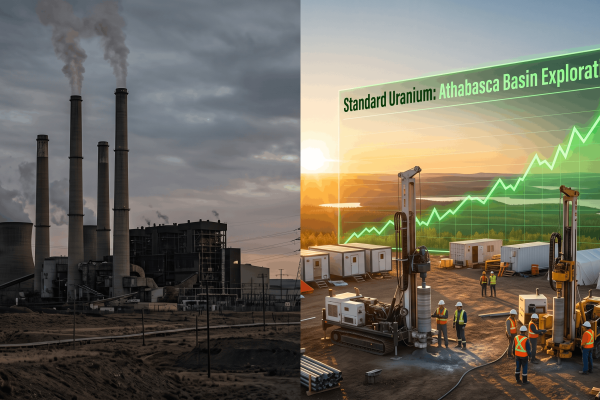
Commented by Nico Popp on August 14th, 2026 | 07:35 CEST
Data Centers and Nuclear Energy: Microsoft Invests, NexGen Plans to Mine Uranium, Standard Uranium Holds Promise
Electricity has to keep flowing — especially in the age of AI. Data centers are being built around the world, but these facilities require enormous amounts of electricity. They also cannot simply wait for the sun to shine or the wind to blow. So what is the solution? Alongside gas-fired power plants, nuclear power is increasingly making a comeback. It is climate-neutral and capable of providing reliable baseload power. We take a closer look at three companies involved in supplying energy for data centers and highlight potential opportunities for investors.
Read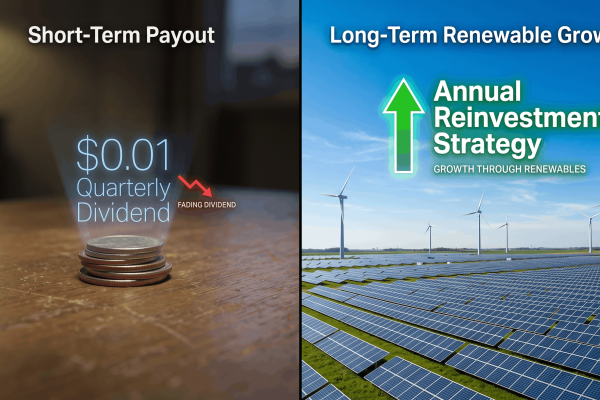
Commented by Nico Popp on August 14th, 2026 | 07:25 CEST
Sustainable Dividend Kings: Schneider Electric, Munich Re, and RE Royalties
Wars, inflation, and a faltering industrial sector—many investors must have rubbed their eyes in disbelief at the DAX's recent record-breaking run. But instead of pulling all their chips off the table and selling stocks, it might make sense to invest more defensively in uncertain times. As a rule, dividends already provide a safety cushion against price fluctuations. When companies also have a strong ESG profile, investors can often sleep even more soundly. We examine three companies and highlight their opportunities.
Read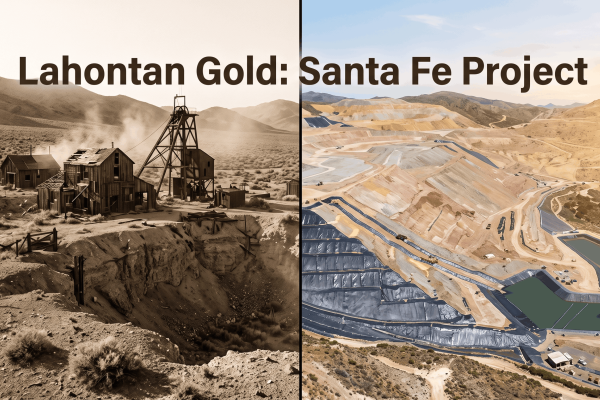
Commented by Nico Popp on August 13th, 2026 | 07:20 CEST
Heap Leaching as a Profit Driver: Is Lahontan Gold the Missing Piece of the Puzzle for Equinox and Kinross Gold?
As mining production costs rise and traditional processing plants become less and less economical, gold producers are coming under pressure. The solution lies in a process that is currently making a comeback: heap leaching. By foregoing the particularly expensive fine grinding process and instead directly leaching the rock with diluted solutions on sealed surfaces, producers can significantly reduce costs. This opens up entirely new prospects for ore deposits with lower grades that were previously considered unprofitable. We present several companies and the opportunities they offer investors.
Read
Commented by Nico Popp on August 13th, 2026 | 07:00 CEST
The Ups and Downs of Hydrogen: Nel ASA and thyssenkrupp nucera Under Pressure, Can dynaCERT Break Through?
The idea that industry and logistics could become completely climate-neutral sectors within just a few years has always been unrealistic. Different conditions among companies and markets make such a textbook transformation unlikely. The reality in Europe shows that many of the industry’s ambitious plans are stalling. Investors are holding back, permits can take time, and in some regions the necessary hydrogen infrastructure is still lacking. However, there are practical interim solutions, for example in the mobility sector. We provide insights and highlight, in particular, a promising development in Southeast Asia.
Read
Commented by Nico Popp on August 12th, 2026 | 07:00 CEST
Stocks for Life? How Netflix, BMW and Aspermont Build Customer Loyalty and Recurring Revenue
Recurring revenue is the ultimate goal. In practice, this is often achieved with basic consumer goods like toothpaste or with strong brands. People who have been buying Nike running shoes for years are more likely to remain loyal to the brand. Providers like Netflix take the concept of recurring revenue to the extreme—here, the subscription automatically renews for another month. If you do not cancel, you keep paying. BMW would also love to have such loyal customers. But the competition never sleeps. We take a closer look at three companies that would love to keep their customers for life.
Read
Commented by Nico Popp on August 11th, 2026 | 07:25 CEST
Germany in the Crosshairs: Regulations Slow Down Hensoldt and DroneShield – Is Volatus Aerospace Heading for a Boom in Orders?
A threat is increasingly looming over industrial facilities in Germany, keeping European security authorities on edge: drones. While unmanned aerial vehicles could still be dismissed as harmless toys just a few years ago, the targeted surveillance of critical infrastructure using professional drones paints a completely different picture today. In 2023 alone, authorities recorded at least 446 drone sightings over German military sites, while the number of incidents involving critical infrastructure rose to well over 1,000 by the end of 2025, according to the Federal Criminal Police Office. When unmanned systems spy on Bundeswehr facilities unnoticed or collect precise data on gas pipelines, caution is warranted—and this was true even before the incident involving a drone loaded with explosives at Leipzig Airport. We explore potential solutions and highlight exciting companies.
Read