

At home in Southern Germany, the passionate stock exchange expert has been accompanying the capital markets for about twenty years. With a soft spot for smaller companies, he is constantly on the lookout for exciting investment stories. That it depends thereby less on large names, but on the future potential and whether the market also recognizes these perspectives, was one of its first learnings at the stock exchange.
On these pages, Nico examines current events at listed companies and takes a closer look at companies that are traded under the radar of the market, in addition to well-known securities.
In order to be able to take advantage of speculative opportunities on the stock exchange, Nico not only focuses on a balanced asset allocation of defensive and opportunity-oriented securities, but also on an intact risk management. "In addition to position size and entry in several tranches, investors should also develop a sense of timing and get to know a stock better before investing," says the columnist.
Commented by Nico Popp

Commented by Nico Popp on September 7th, 2026 | 08:20 CEST
Almonty: Analysts Speak Out – Airbus and Sandvik Need to Diversify Their Tungsten Supply
When huge turbines roar on the tarmac and passenger jets weighing several tonnes take off, few people think about how modern aeroplanes are manufactured and what is crucial to the process. Yet one extremely durable metal can determine the pace of modern aviation: tungsten. Without tungsten, the aviation industry's assembly lines could grind to a sudden halt. With a density close to that of gold and the highest melting point of any element, this critical metal can withstand extreme conditions. It is therefore essential not only in aerospace but also in a range of other future technologies, including fusion energy. Yet while the West is developing and building the latest-generation aircraft, China controls more than 80% of global tungsten production. This concentration of supply represents a highly dangerous strategic risk—but there is a solution.
Read
Commented by Nico Popp on September 7th, 2026 | 08:05 CEST
Environmental Damage and Billion-Dollar Market: How Zefiro Methane Outshines BP and Baker Hughes in US Drill Sites
Created and Published on Behalf of Zefiro Methane Corp.
Anyone traveling through the rolling hills of Pennsylvania would hardly suspect that an environmental time bomb lies beneath the idyllic forests. Yet that is precisely where the invisible legacy of more than 160 years of oil and gas production is buried. Methane, a gas that is gradually heating the planet, is escaping from countless orphaned and abandoned wells. There are millions of these abandoned wells across the United States. While Washington releases funding and major corporations draw up plans on the drawing board, a small but highly specialized company is tackling the problem at its source and positioning itself as a solution provider. Zefiro Methane plugs abandoned wells and even generates carbon credits. We analyze the trend and take a closer look at the companies involved.
Read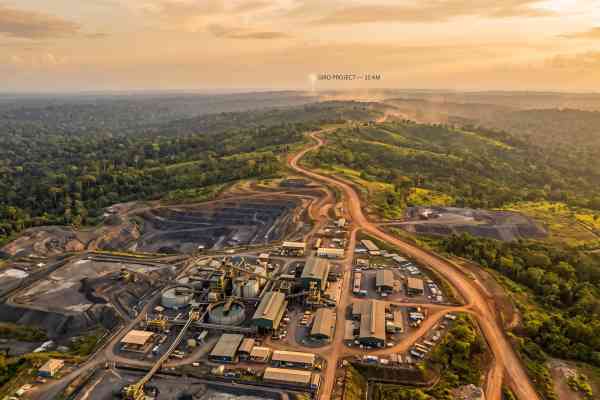
Commented by Nico Popp on August 31st, 2026 | 07:00 CEST
Gold Rush—But Which One Is Better? DRC Gold, Ivanhoe Mines and Newmont in the Spotlight
As central banks around the world resume buying gold and geopolitical turmoil shakes confidence in fiat currencies, one thing is clear: humanity's oldest form of currency is experiencing a renaissance. After a breathtaking record-breaking run that pushed the gold price to USD 5,600 per ounce at the beginning of the year, followed by a correction, gold has recently climbed dynamically back above the USD 4,600 threshold. But for gold investors, there has long been more to the market than just bullion and ETPs. Companies in the gold sector are profiting from the rally and, under certain circumstances, can even offer leverage on the precious metal. We introduce some exciting business models and take a look at Africa as well.
Read
Commented by Nico Popp on August 31st, 2026 | 06:50 CEST
Hunger for Critical Metals at SpaceX and Beyond: How Globex Mining Differs from Berkshire Hathaway
Rocket launches are simply fascinating: the brilliant light, tremendous thrust, and nervous anticipation during the countdown captivate us. Yet many future technologies would be unthinkable without raw materials and their smart processing. Tech giants have long been turning their attention to Earth's mineral resources and thinking ahead about supply security. We take a closer look at SpaceX and examine which resource companies are already securing the deposits of tomorrow. Three business models put to the test.
Read
Commented by Nico Popp on August 25th, 2026 | 07:00 CEST
Goodbye to Chemical Pesticides: Bayer Partner MustGrow Biologics Makes Progress – Has Bioceres Overreached?
Created and Published on Behalf of MustGrow Biologics Corp.
Agriculture is at a turning point. Strict environmental regulations are increasingly pushing chemical crop-protection products off the fields. At the same time, the effects of climate change are creating additional challenges. This puts farmers in a difficult position: on the one hand, they need to secure yields, while on the other, they must comply with increasingly stringent regulations. The solution could lie in biological alternatives to conventional chemical pesticides. This market is growing rapidly and opening up opportunities for innovative companies. We take a look at the latest trends and highlight some exciting companies.
Read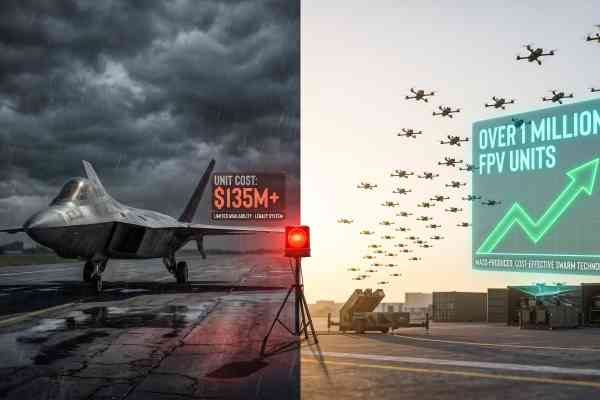
Commented by Nico Popp on August 25th, 2026 | 06:45 CEST
Drone War Coming to Our Doorstep? BAE Systems, Volatus Aerospace and Kratos Defense Set for a Boom?
More and more drones are being spotted and neutralized in NATO territory—some now even equipped with explosives. The relentless war of attrition between Russia and Ukraine, along with the aggressor’s threats, are forcing strategists in the West to rethink their approach. Costly weapons systems are no longer sufficient when swarms of inexpensive drones overwhelm air defenses. What began as a necessity-driven commitment to drones has long since evolved into a full-fledged industry in the West. We present key players and current developments.
Read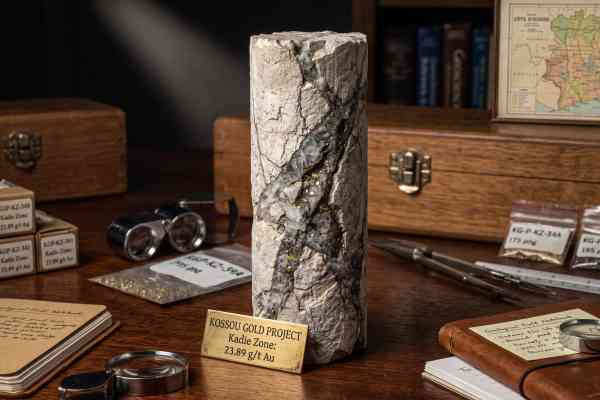
Commented by Nico Popp on August 24th, 2026 | 07:55 CEST
Government Debt Threatens Us All: Barrick Mining, Montage Gold and Hidden Gem Kobo Resources in Focus
As the debt spiral spins faster and faster and interest rates put entire nations under pressure, the time has come for tangible assets. Globally, a mountain of debt totaling over USD 350 billion is piling up—more than three times the total global economic output. As confidence in unbacked fiat currency wanes and even central banks turn to gold, retail investors are also seeking refuge in precious metals. We show that companies in the precious metals sector also offer opportunities and present three examples.
Read
Commented by Nico Popp on August 24th, 2026 | 07:40 CEST
Robot Frenzy Surrounding Yushu Technology, SpaceX Rides the Starlink Wave, First Hydrogen Takes a Risk
When bold visions become reality, even the typically sober financial markets regularly go into a frenzy. The spectacular debut of Chinese robotics pioneer Yushu Technology on the Shanghai Stock Exchange has shown the market just how high a valuation premium forward-looking technology concepts can command. Whether it is bipedal machines, interplanetary spaceflight, or zero-emission freight transport: venture capitalists and individual investors reward companies that consciously blaze new trails. We introduce three such companies.
Read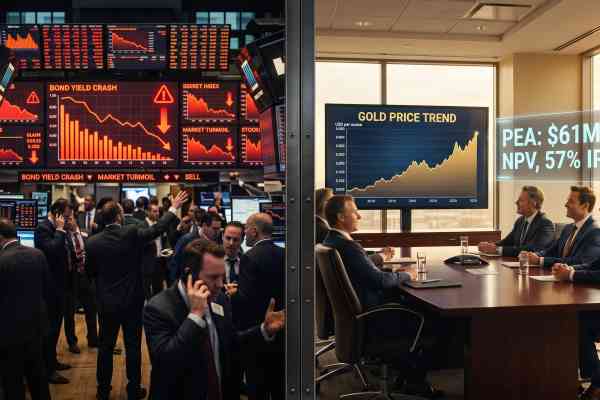
Commented by Nico Popp on August 20th, 2026 | 07:20 CEST
US Debt Alarms Bank of America and JPMorgan – Could Desert Gold's Massive Leverage Offer Crisis Protection?
When an economy lives beyond its means, many ultimately pay the price: the currency loses value, the economy suffers, and the stock market becomes more volatile. In the US, the national debt now stands at nearly USD 40 trillion, as Handelsblatt warned in its Wednesday edition. According to the report, the US Treasury is increasingly attempting to address the problem by issuing debt securities with ever-shorter maturities, with all the associated risks. Alarm bells have long been ringing in the financial markets. Those looking to protect their wealth should consider tangible assets. Gold could once again become an attractive option—we present an exciting opportunity and shed light on the current state of the financial system.
Read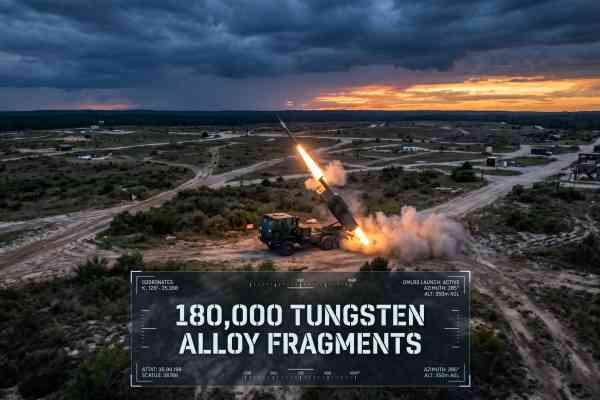
Commented by Nico Popp on August 20th, 2026 | 07:05 CEST
Tungsten Shock for Sandvik and Lockheed Martin – Almonty in a Perfect Position
When military equipment or industrial tools reach their performance limits, a highly sought-after heavy metal often comes to the rescue. With a melting point of 3,422 °C, tungsten withstands even extreme heat and has a density nearly identical to that of gold. Yet it is precisely with this key raw material, tungsten, that Western industrialized nations are coming under pressure. Beijing controls over 80% of global production and has significantly tightened export controls in recent years. Since China itself became a net importer in 2025 and the Western defense industry faces strict procurement bans, a race is underway for mining capacity in secure jurisdictions. This is where Almonty Industries comes into play, as it is considered a leading Western tungsten producer. We take a closer look at the market.
Read