

At home in Southern Germany, the passionate stock exchange expert has been accompanying the capital markets for about twenty years. With a soft spot for smaller companies, he is constantly on the lookout for exciting investment stories. That it depends thereby less on large names, but on the future potential and whether the market also recognizes these perspectives, was one of its first learnings at the stock exchange.
On these pages, Nico examines current events at listed companies and takes a closer look at companies that are traded under the radar of the market, in addition to well-known securities.
In order to be able to take advantage of speculative opportunities on the stock exchange, Nico not only focuses on a balanced asset allocation of defensive and opportunity-oriented securities, but also on an intact risk management. "In addition to position size and entry in several tranches, investors should also develop a sense of timing and get to know a stock better before investing," says the columnist.
Commented by Nico Popp

Commented by Nico Popp on October 9th, 2026 | 07:05 CEST
HPQ Silicon, Rheinmetall and Wacker Chemie: Silicon Batteries for the French Military?
Digitalization is also making its way into the defence sector. This is evident, not least, from developments in Ukraine. Modern communication devices, networked combat operations, and constant data streams are driving up power consumption even among infantry units. Existing graphite-based batteries are reaching their limits, and every additional gram of equipment restricts mobility in the field. Switching to silicon-based anodes promises longer operational times without adding weight. We examine this development and highlight opportunities for investors.
Read
Commented by Nico Popp on October 8th, 2026 | 07:40 CEST
ExxonMobil, Shell and Zefiro Methane: EU Considers Postponing Methane Regulations—US Well Remediation Market Grows Regardless
Created and Published on Behalf of Zefiro Methane Corp.
The European Commission plans to postpone the proposed methane reporting requirements for oil and gas imports by one year. Member states and the European Parliament must still approve this. Regardless, the market for remediating orphaned wells is growing in the US. Specialized service providers are plugging dilapidated production wells, largely financed through government programs. Regulation is by no means the only driver: Methane continuously escapes from countless abandoned wells, creating local pressure to act. We explain the situation and highlight the companies profiting from it.
Read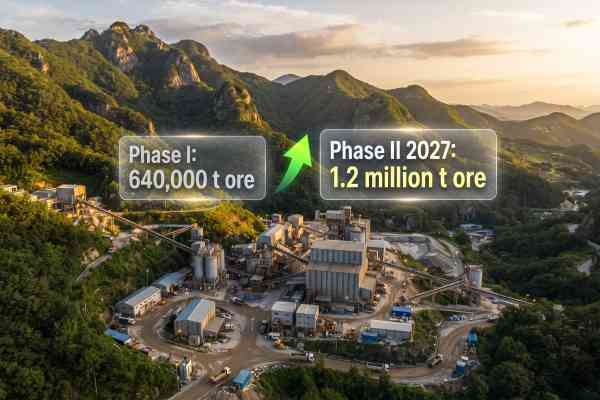
Commented by Nico Popp on October 8th, 2026 | 07:00 CEST
Tungsten Supply Crisis: Almonty Reshapes Defense Supply Chains – Rheinmetall Needs Reliable Sources, Tungsten West Wins Funding
Requirements from the US Department of Defense are forcing Western industry to rethink its approach to critical raw materials: Starting in January 2027, US procurement regulations will prohibit the use of Chinese-sourced tungsten in tungsten powders, heavy alloys, and defense components manufactured from them, and will require a complete chain of custody traceability back to the mining site. According to the US Geological Survey, China controls about 80% of global mine production and, due to export controls, has recently even become a net importer of tungsten metal and ore. As a result, the defense industry faces an acute supply shortage. Producers outside China are doing everything they can to secure long-term supply chains for Western customers. As a leading tungsten company, Almonty stands out in particular with promising projects and a full pipeline.
Read
Commented by Nico Popp on October 7th, 2026 | 09:15 CEST
Aspermont, S&P Global and Alphabet: Specialized Data Poses a Challenge Even for Tech Giants
Generative artificial intelligence is fundamentally changing how information is obtained and siphoning organic web traffic away from traditional media platforms. As search engines utilize AI-generated answers, such as AI Overviews, the traditional advertising business of websites is losing its foundation. Publishers are becoming increasingly dependent on others, but specialized B2B information providers are carving out a lucrative niche. Deep industry knowledge built up over time still offers added value, as it is indispensable for reliable industrial applications and not easily replaceable. We shed light on this trend and highlight some exciting companies.
Read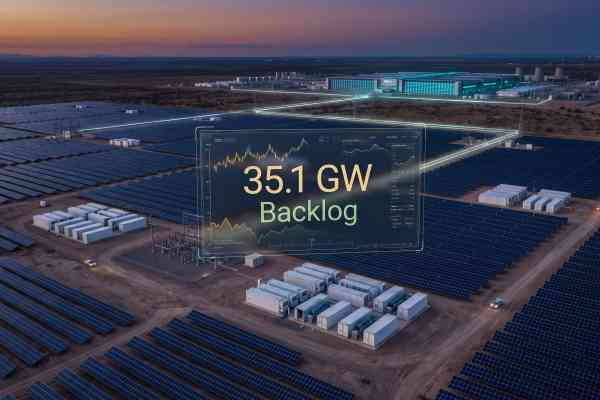
Commented by Nico Popp on October 7th, 2026 | 07:00 CEST
RE Royalties, NextEra Energy and First Solar: Royalties as a Financing Alternative in the US Solar Market
Regulation is reshaping the US solar market. With tax reform significantly reducing government incentives or tying them to strict deadlines, numerous projects are being put on hold. At the same time, tariffs that can exceed 200% depending on the manufacturer are making Chinese modules less attractive and putting further pressure on the US solar market as a whole. Major industry players are cushioning these cost increases through long-term supply agreements. However, developers of decentralized systems are coming under pressure due to tight liquidity. This is creating opportunities for alternative capital providers such as RE Royalties. We take a closer look at these developments and examine the opportunities and risks.
Read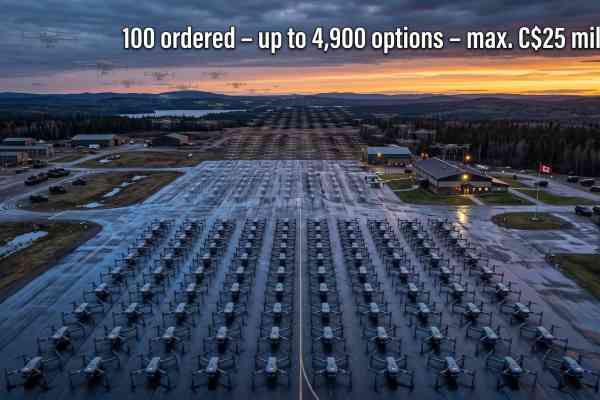
Commented by Nico Popp on October 6th, 2026 | 07:45 CEST
Canada's Billion-Dollar Drone Race: How Volatus Aerospace and Draganfly Are Challenging US Giant AeroVironment
To reduce its dependence on defence imports, the Canadian government under Prime Minister Carney is pushing to build its own drone industry, prioritizing domestic suppliers over future US imports. This reorientation is forcing domestic manufacturers to take action: For both civilian and military contractors, the key question now is who can reliably scale up the planned mass production. We take a look at this development and its key players.
Read
Commented by Nico Popp on October 6th, 2026 | 07:35 CEST
Fighting Skin Cancer: How Vidac Pharma, Biofrontera and Regeneron Target Different Stages
At the recent annual meeting of the European Academy of Dermatology and Venereology in Vienna, the focus was on new approaches to treating extensive skin damage. The fight against skin cancer is shifting: It is no longer just about combating developed tumors, but about stopping the disease before it breaks out. Destroying diseased cells early on spares patients from major surgeries and eases the burden on the healthcare system. We present the latest developments and opportunities for investors.
Read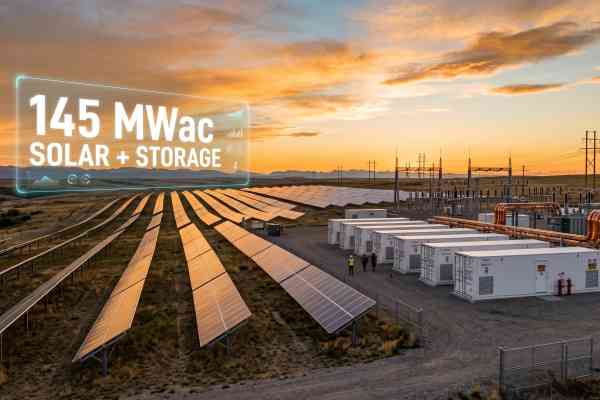
Commented by Nico Popp on October 3rd, 2026 | 05:50 CEST
AI Boom and Grid Bottlenecks: Meta, BCE and NU E Power Compete for Electricity Capacity in Canada
Created and Published on Behalf of NU E Power Corp.
The rapid rise of artificial intelligence is driving unprecedented demand for electricity and pushing even the power grids of industrialized nations to their limits. In the past, data centres required relatively manageable amounts of capacity; today, modern facilities demand grid connections on the scale of around 1,000 MW. Canada is becoming a focus for technology companies due to its cool climate and vast expanses of land. However, regional power grids are struggling to cope with this additional load. This is creating fierce competition for energy, grid connections, and even land. We examine this trend and the companies involved in this evolving energy landscape.
Read
Commented by Nico Popp on October 2nd, 2026 | 09:50 CEST
Formycon and the Patent Cliff: Why Expiring Patents at Novartis and Merck Present an Opportunity for the German Biotech Industry
Even pharmaceutical giants are coming under pressure. The key term here is the patent cliff. According to industry estimates, between 2025 and 2030, active pharmaceutical ingredients with a global sales volume of approximately USD 300 billion will lose their exclusive patent protection. This turning point is forcing even pharmaceutical giants to rethink their strategies. Specialized developers will then bring biosimilars to market—equivalent and more affordable alternatives for healthcare systems. One well-known biosimilar provider is the German company Formycon. We examine the market and outline what makes Formycon's investment story compelling. But first, we look at two international pharmaceutical companies.
Read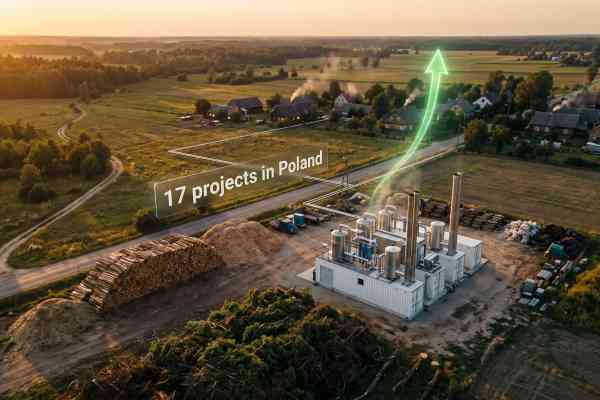
Commented by Nico Popp on October 1st, 2026 | 07:45 CEST
Decentralized Instead of Power Shortages: A Comparison of Siemens Energy, 2G Energy and A.H.T. Syngas
When the power grid reaches its limits and power shortages loom, even wind turbines and solar farms are of no help. What is needed then is controllable generation, and combined heat and power (CHP) is considered a key bridging technology. Growing energy demand from industry and AI infrastructure calls for systems that can balance fluctuating feed-in from renewable energy sources. Solutions range from gigawatt-scale power plants to decentralized compact systems. We introduce three companies and shed light on this trend.
Read