February 27th, 2026 | 07:10 CET
Western antimony axis ensures returns: How Antimony Resources, US Antimony, and Hensoldt are securing defense capabilities
In the current tense geopolitical environment, securing global supply chains for critical minerals has become a matter of national security. Antimony is now at the heart of modern defense technology. With China's dominance in this area remaining unchallenged for decades and the country imposing far-reaching export restrictions, urgent action is needed. The West, led by the US and Canada, is currently building a self-sufficient supply chain, as analysts at the Boston Consulting Group emphasize in their publication on ecosystems in the supply chain for critical minerals. This chain extends from exploration in Canada to industrial scaling in the US to the final production of sensor systems in Europe and other industrialized countries. Antimony Resources, the United States Antimony Corporation, and Hensoldt play a critical role in Western defense. Consulting firms such as PwC have pointed out in their outlook for the current year that massive sums are flowing into the defense sector in North America to secure raw material sovereignty. We explain where the greatest opportunities for investors lie.
time to read: 3 minutes | Author: Nico Popp
ISIN: ANTIMONY RESOURCES CORP | CA0369271014 , UNITED STATES ANTIMONY CORP | US9115491030 , HENSOLDT AG INH O.N. | DE000HAG0005
Table of contents:
Author

Nico Popp
At home in Southern Germany, the passionate stock exchange expert has been accompanying the capital markets for about twenty years. With a soft spot for smaller companies, he is constantly on the lookout for exciting investment stories.
Tag cloud
Shares cloud
Antimony Resources and the Super Project in Canada
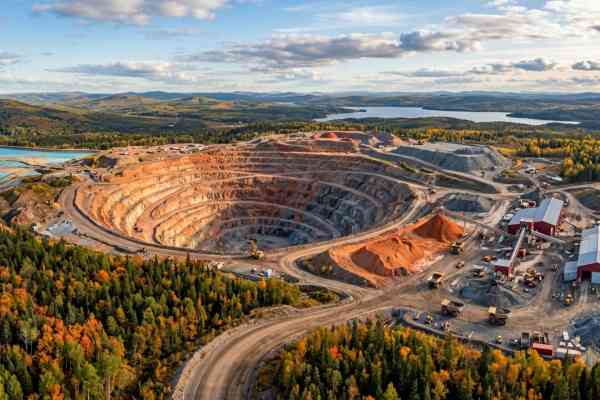
The key to solving Western problems may lie in eastern Canada, where Antimony Resources has already attracted attention with developments at its Bald Hill project in New Brunswick. The company recently provided evidence of stibnite mineralization in the Marcus West Zone, which was exposed by mechanical trenching directly in the bedrock. Of particular note is the discovery of flaky stibnite, which, according to geologists, indicates high-grade mineralization and should facilitate the control of future work. CEO Jim Atkinson described the surface samples as highly mineralized and emphasized the technical quality of the material found. Historical trenches in the adjacent Central Zone have already yielded values of 2.90% Sb over 8.18 m, with peak grades of 8.47% Sb over 1.53 m. These results support the company's efforts to further explore the known Main Zone with a 10,000-meter drilling program and supplement it with shallow drilling.
A relevant competitive advantage of Antimony Resources is the location of the Bald Hill project in the mining-friendly jurisdiction of New Brunswick, which has excellent infrastructure. Experts at the Boston Consulting Group estimate the average time from discovery to production in the US to be around 29 years. In contrast, the Canadian legal framework offers a much more predictable timeline. The proximity to North American processing centers reduces logistical risks and freight costs, which is a decisive criterion for security of supply. In addition to antimony, rock samples show evidence of rare earth elements such as neodymium and praseodymium, which makes the project even more interesting for government funding programs. Antimony Resources' stated goal is to present an initial official resource estimate in accordance with industry standard NI 43-101 by the end of 2026, based on the current drilling programs.
US Antimony scales up midstream processing
While Canadian exploration secures the raw material base, United States Antimony Corporation (UAMY) is taking the step toward industrial independence in the midstream sector. As the only fully integrated antimony producer in North America, the company controls the processing between the raw ore and the industrially usable metal. The expansion of the smelter in Thompson Falls, Montana, is at the heart of the operational strategy. An investment of just under USD 15 million has increased the plant's processing capacity sixfold, with the new furnaces coming online in early 2026. In direct response to this massive expansion in production capacity, UAMY raised its own revenue forecast for the current fiscal year to USD 125 million in February 2026. This expansion comes at a strategically opportune time, as global antimony prices have risen significantly as a result of the shortage.
Hensoldt under pressure
Hensoldt is at the end of the western supply chain for antimony. As part of its "software-defined defense" strategy, the defense electronics group is turning antimony into concrete superiority on the battlefield. Indium antimonide is a semiconductor material that is irreplaceable as a detector material for infrared sensors in the mid-wavelength range. Analyses by publications such as Shephard Media show that these special sensors have ten times the sensitivity and 50% greater range than conventional silicon-based detectors. This performance enables sensors in reconnaissance vehicles such as the Luchs 2 to identify heat signatures over long distances, which offers an essential advantage in drone defense. The company is targeting revenue growth of 10% for 2026, backed by a record order backlog of EUR 7.1 billion from the third quarter of 2025.
Antimony Resources with valuation advantage
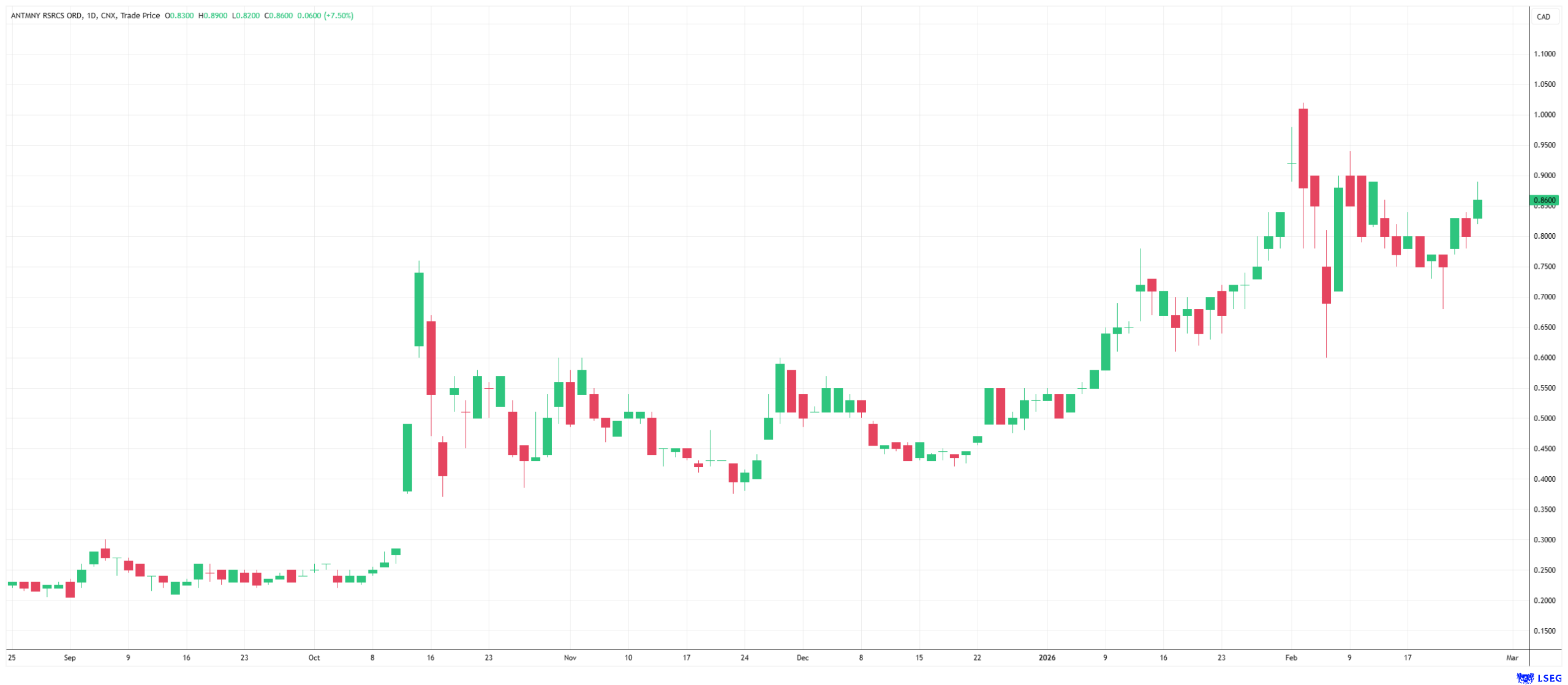
However, in order for companies such as Hensoldt to achieve their goals, which include tripling radar production capacity by 2027, a constant supply from North American mining and processing projects is essential. Without supplies from projects such as Bald Hill or facilities such as Thompson Falls, the European defense industry will find it difficult to realize its plans. While UAMY and Hensoldt are already billion-dollar companies, Antimony Resources, with a market capitalization of just over CAD 80 million, offers even more upside potential.
Watch YouTube videoConflict of interest
Pursuant to §85 of the German Securities Trading Act (WpHG), we point out that Apaton Finance GmbH as well as partners, authors or employees of Apaton Finance GmbH (hereinafter referred to as "Relevant Persons") currently hold or hold shares or other financial instruments of the aforementioned companies and speculate on their price developments. In this respect, they intend to sell or acquire shares or other financial instruments of the companies (hereinafter each referred to as a "Transaction"). Transactions may thereby influence the respective price of the shares or other financial instruments of the Company.
In this respect, there is a concrete conflict of interest in the reporting on the companies.
In addition, Apaton Finance GmbH is active in the context of the preparation and publication of the reporting in paid contractual relationships.
For this reason, there is also a concrete conflict of interest.
The above information on existing conflicts of interest applies to all types and forms of publication used by Apaton Finance GmbH for publications on companies.
Risk notice
Apaton Finance GmbH offers editors, agencies and companies the opportunity to publish commentaries, interviews, summaries, news and the like on news.financial. These contents are exclusively for the information of the readers and do not represent any call to action or recommendations, neither explicitly nor implicitly they are to be understood as an assurance of possible price developments. The contents do not replace individual expert investment advice and do not constitute an offer to sell the discussed share(s) or other financial instruments, nor an invitation to buy or sell such.
The content is expressly not a financial analysis, but a journalistic or advertising text. Readers or users who make investment decisions or carry out transactions on the basis of the information provided here do so entirely at their own risk. No contractual relationship is established between Apaton Finance GmbH and its readers or the users of its offers, as our information only refers to the company and not to the investment decision of the reader or user.
The acquisition of financial instruments involves high risks, which can lead to the total loss of the invested capital. The information published by Apaton Finance GmbH and its authors is based on careful research. Nevertheless, no liability is assumed for financial losses or a content-related guarantee for the topicality, correctness, appropriateness and completeness of the content provided here. Please also note our Terms of use.