
chemicals

Commented by Fabian Lorenz on October 27th, 2026 | 05:43 CET
Almonty Makes History! Will BASF Bid More for Evonik? Is tonies a Buy?
It is an upside-down world at Almonty at present. While its share price has halved in recent months, the tungsten producer is making operational history. For the first time in more than 30 years, a shipment of tungsten from the Sangdong mine in South Korea has been dispatched. Monthly shipments of around 200 tonnes of the critical raw material are expected to follow soon. Analysts forecast a sharp increase in earnings to USD 2.76 per share next year. The share is currently trading below USD 10. BASF, by contrast, may not be a bargain. The company wants to acquire Evonik and could increase its offer. Although analysts view the plan more positively, they remain cautious about the shares. Meanwhile, analysts recommend tonies as a Buy. Expectations for the upcoming results have risen following a 20% rally, but analysts anticipate strong growth.
Read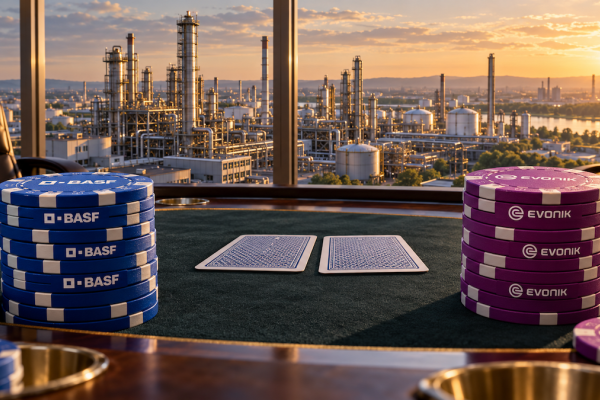
Commented by Fabian Lorenz on October 7th, 2026 | 08:50 CEST
Takeover Battle Intensifies: BASF, Evonik, Gerresheimer and Phenom Resources
The takeover battle surrounding BASF and Evonik is intensifying, and politicians are now getting involved as well. The state government is demanding job guarantees, while the leader of the SPD parliamentary group in North Rhine-Westphalia has voiced criticism and called on Minister President Hendrik Wüst to step up his efforts and provide greater clarity. Phenom Resources is a hot stock with takeover potential. The Canadian company is focused on gold and vanadium projects in the US state of Nevada. Its gold and copper assets are set to be spun off—but could a strategic partner make a move instead? Gerresheimer was already in the crosshairs of financial investors back in 2025. Since the failed takeover attempt, however, things have been relatively quiet. The company is currently restructuring and streamlining its business. That could eventually put it back on potential buyers' radar.
Read
Commented by Matthias Schomber on October 6th, 2026 | 07:30 CEST
From Legacy Issues to Growth Opportunities: Why BASF, Bayer and Zefiro Methane Are Worth Watching
Created and Published on Behalf of Zefiro Methane Corp.
BASF is working its way through a cost-cutting program and continues to attract investors with a strong dividend. In addition, the chemical giant plans to acquire its competitor Evonik. This strategic acquisition is intended to significantly expand its market power during challenging times. Whether it succeeds, however, remains to be seen. Bayer, too, is undergoing a painful restructuring to address its legacy issues and reduce debt, but offers bold investors attractive turnaround potential—provided much of this effort succeeds. The dynamics across the Atlantic are quite different. There, Zefiro Methane is turning the remediation of abandoned oil and gas wells in North America into a profitable growth business, with strong sales and a promising chart pattern.
Read
Commented by Matthias Schomber on September 30th, 2026 | 10:00 CEST
Billion-Dollar Poker, Margins & Cash Machine: Siemens Energy, Evonik and RE Royalties Could Be the Real Winners!
Evonik is at the centre of a billion-euro takeover bid that the target has rejected, leaving some investors wondering what comes next. Could a higher offer still emerge? Meanwhile, an industrial company that fought its way out of a deep crisis and saw its share price multiply is now facing renewed pressure. Can the tide turn once more? And then there is a relatively overlooked niche player offering high dividend yields. This is the mix of three companies featured in our latest article. We look at Siemens Energy's comeback after the dark years of the crisis and assess its outlook. We examine the background to BASF's rejected takeover approach for Evonik. Finally, we take a closer look at RE Royalties, which has paid out substantial dividends in the past and is approaching important technical chart levels. Read on as we examine the latest developments at all three companies and the opportunities and risks shaping their stories.
Read
Commented by Fabian Lorenz on September 30th, 2026 | 06:55 CEST
A Sensational Development in the M&A Carousel: Rheinmetall, BASF and Lahontan Gold
A sensational development is looming in the German chemical industry. BASF is considering acquiring speciality chemicals company Evonik. The Ludwigshafen-based company would thereby significantly expand its speciality chemicals business. Evonik has reacted cautiously. Analysts have responded positively. But some question marks remain. A small but strategically interesting acquisition is in the works in the gold sector. Lahontan Gold plans to acquire Emergent Metals outright, expanding its position in Nevada's Walker Lane gold district. Is this a move to prepare for a US IPO? Most recently, Lahontan increased its resource estimate and reaffirmed its goal of building a mine next year. And what about Rheinmetall? Its stock has fallen below EUR 1,000 again. The company is working to address its "dependence on the Bundeswehr" and its "old and heavy military equipment."
Read
Commented by Stefan Bode on September 16th, 2026 | 07:00 CEST
Look Closely, Make Money: Aixtron, ASML, Bayer, Infineon, Nvidia and Zefiro Methane
Created and Published on Behalf of Zefiro Methane Corp.
Amid abrupt share price declines, legacy burdens worth billions and new growth opportunities, the stock market is currently showing just how quickly investor sentiment and market expectations can shift. In these phases, significant opportunities can emerge when short-term nervousness discounts companies with attractive structural prospects. Investors who want to distinguish stock-market noise from real opportunities should look more closely at the background behind the latest headlines. After all, the most compelling opportunities often emerge precisely when the broader market is still reacting turbulently.
Read
Commented by Matthias Schomber on September 15th, 2026 | 07:45 CEST
Megatrends and Future Market Stocks For The Portfolio: Can BASF, Porsche and HPQ Silicon Deliver the Breakthrough?
Today, we take a closer look at three companies at pivotal decision points. First, we examine the chemical heavyweight BASF. The Ludwigshafen-based company is currently fighting tooth and nail for a global turnaround and surprising the markets with innovative new technologies. The technical level of EUR 55 is crucial here. Next, we turn our attention to the immense structural challenges facing Porsche AG and ask whether the automaker will succeed in making a breakthrough following Volkswagen's radical restructuring—or not. Last but not least, we focus on an exciting technology developer from North America: HPQ Silicon. With new milestones in the battery and drone industries, the company could soon attract more attention. The stock is currently trading at a level that would have been unthinkable just months ago. Read on to discover the opportunities these three stocks offer.
Read
Commented by Carsten Mainitz on September 9th, 2026 | 07:05 CEST
Hidden Opportunities? Why Zefiro Methane, Verbio and E.ON Could Be Worth a Closer Look Now
Created and Published on Behalf of Zefiro Methane Corp.
The energy transition is changing the way energy is generated, transported, and used. Policymakers and legislators are establishing frameworks to reduce greenhouse gas emissions. This is creating a structural megatrend – decarbonization – with far-reaching implications for markets and investments. In addition to CO₂, methane is increasingly coming into focus. Methane is released, among other things, during the extraction, processing, and transportation of natural gas and crude oil. When it escapes into the atmosphere through leaks, it is around 80 times more harmful than CO₂ over the medium term. Zefiro Methane is positioning itself at this critical juncture. As a market leader in many US states, the company is eliminating legacy pollution from the fossil fuel industry and is thus tapping into a market worth billions. Its order books are full, and analysts are bullish. Experts are equally positive on Verbio and E.ON. Which company will benefit most from the ongoing structural transformation?
Read
Commented by André Will-Laudien on August 26th, 2026 | 10:00 CEST
The Focus Is on Nutrition, Not Microchips: What Is on the Menu at McDonald's, Bayer, MustGrow and Kraft Heinz?
Created and Published on Behalf of MustGrow Biologics Corp.
The stock market is many things, but it is hardly sustainable. Trends change as quickly as the weather—chips are all the rage today, but tomorrow they are out of favor. Funnily enough, the lines of reasoning are similar whether the market is rising or falling. However, sustainability is of paramount importance in the food production sector and among publicly traded companies in it. This is because a consistent ESG focus in global food production has evolved from a mere image factor to an established guarantee of success. A recent study by the McKinsey Global Institute impressively demonstrates that companies with strong ESG structures have more resilient supply chains in the long term and enjoy significantly higher consumer loyalty. Giants like McDonald's and Kraft Heinz are driving this transformation by increasingly focusing on recyclable packaging, nature-based farming, and ethical sourcing of raw materials. However, this green transition would be virtually inconceivable without innovative suppliers and trailblazers at the base of the value chain. This is where the agricultural giant Bayer comes into play, laying the foundation for lower-emission crops through targeted investments in biological crop protection and regenerative agriculture. As an agile driver of innovation, the Canadian company MustGrow Biologics is tapping into this trend and revolutionizing the market with all-natural active ingredients derived from the mustard plant. It is worth taking a closer look at what really matters!
Read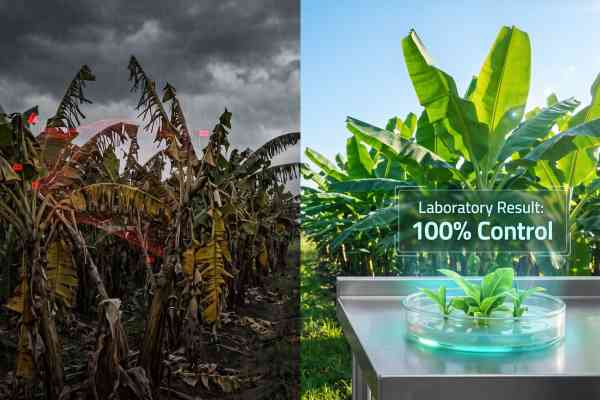
Commented by Nico Popp on August 25th, 2026 | 07:00 CEST
Goodbye to Chemical Pesticides: Bayer Partner MustGrow Biologics Makes Progress – Has Bioceres Overreached?
Created and Published on Behalf of MustGrow Biologics Corp.
Agriculture is at a turning point. Strict environmental regulations are increasingly pushing chemical crop-protection products off the fields. At the same time, the effects of climate change are creating additional challenges. This puts farmers in a difficult position: on the one hand, they need to secure yields, while on the other, they must comply with increasingly stringent regulations. The solution could lie in biological alternatives to conventional chemical pesticides. This market is growing rapidly and opening up opportunities for innovative companies. We take a look at the latest trends and highlight some exciting companies.
Read