
BASF SE NA

Commented by Nico Popp on October 20th, 2026 | 10:04 CEST
Time Limit, Not a Free Pass: What the EU’s Pesticide Decision Means for Bayer, BASF and MustGrow Biologics
Created and Published on Behalf of MustGrow Biologics Corp.
On September 30, 2026, the Council of the European Union took a position against indefinite authorisations for synthetic plant protection products and set a maximum term of 15 years for initial authorisations and 25 years for renewals. The member states intend indefinite approvals to be reserved in future for substances with a proven low risk. The member states aim to reach a provisional agreement with the European Parliament by the end of 2026. Regular reassessment of active substances will therefore remain in place for the agrochemical industry, while biological alternatives gain in importance. We analyse the development and present three companies.
Read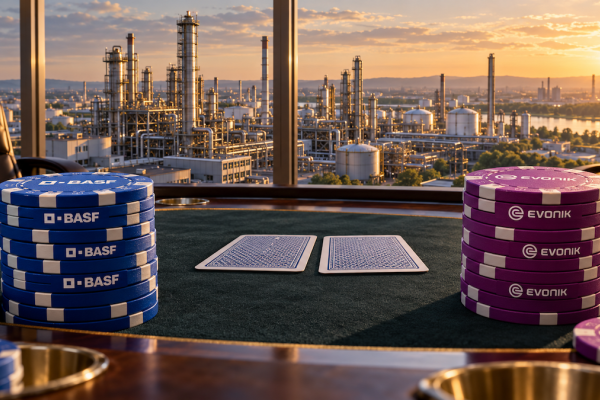
Commented by Fabian Lorenz on October 7th, 2026 | 08:50 CEST
Takeover Battle Intensifies: BASF, Evonik, Gerresheimer and Phenom Resources
The takeover battle surrounding BASF and Evonik is intensifying, and politicians are now getting involved as well. The state government is demanding job guarantees, while the leader of the SPD parliamentary group in North Rhine-Westphalia has voiced criticism and called on Minister President Hendrik Wüst to step up his efforts and provide greater clarity. Phenom Resources is a hot stock with takeover potential. The Canadian company is focused on gold and vanadium projects in the US state of Nevada. Its gold and copper assets are set to be spun off—but could a strategic partner make a move instead? Gerresheimer was already in the crosshairs of financial investors back in 2025. Since the failed takeover attempt, however, things have been relatively quiet. The company is currently restructuring and streamlining its business. That could eventually put it back on potential buyers' radar.
Read
Commented by Matthias Schomber on October 6th, 2026 | 07:30 CEST
From Legacy Issues to Growth Opportunities: Why BASF, Bayer and Zefiro Methane Are Worth Watching
Created and Published on Behalf of Zefiro Methane Corp.
BASF is working its way through a cost-cutting program and continues to attract investors with a strong dividend. In addition, the chemical giant plans to acquire its competitor Evonik. This strategic acquisition is intended to significantly expand its market power during challenging times. Whether it succeeds, however, remains to be seen. Bayer, too, is undergoing a painful restructuring to address its legacy issues and reduce debt, but offers bold investors attractive turnaround potential—provided much of this effort succeeds. The dynamics across the Atlantic are quite different. There, Zefiro Methane is turning the remediation of abandoned oil and gas wells in North America into a profitable growth business, with strong sales and a promising chart pattern.
Read
Commented by Armin Schulz on October 3rd, 2026 | 06:00 CEST
Bayer, MustGrow Biologics, BASF: From Yesterday's Crop Protection to Tomorrow's Biologicals
Created and Published on Behalf of MustGrow Biologics Corp.
Major agricultural companies are reshaping their businesses and increasingly looking to small specialists. On September 2, Bayer presented its goals for the agricultural business through 2029 to investors. The Leverkusen-based company aims to generate more than EUR 3 billion in free operating cash flow by then and to assume a leading global role in biologicals through partnerships. That could work in the favor of small developers like MustGrow Biologics. On September 14, BASF commissioned four banks to prepare for a potential initial public offering (IPO) of its agricultural division, which generated EUR 9.6 billion in revenue in 2025. We therefore take a closer look at Bayer, MustGrow Biologics and BASF.
Read
Commented by Jens Castner on September 30th, 2026 | 07:30 CEST
The Heart of the European Battery: How BASF, IBU-tec and HPQ Silicon Are Revolutionizing the Battery
The future of the European automotive industry will not be decided on the assembly line, but in the chemistry lab. Until now, battery cells—the heart of modern electric vehicles—have come almost exclusively from Asia. This dependency is dangerous, and politicians have warned about it for years: Europe urgently needs its own self-contained battery value chain. But to achieve this independence, it is not enough to simply build massive factories ("gigafactories") on greenfield sites. The real key lies in the molecular components: the cathode (the positive terminal) and the anode (the negative terminal). Three companies are demonstrating how this European supply chain can become a reality: DAX giant BASF is focusing on high-end chemicals for the premium range, while the mid-sized company IBU-tec, with its new mega-factory in Bitterfeld-Wolfen, is poised to become the European LFP cathode leader for the mass market. At the other end of the battery spectrum, the Canadian-French technology firm HPQ Silicon is using innovative silicon anodes to ensure future energy storage systems will be dramatically more powerful. This technological pincer movement could free the continent from Asia's stranglehold. Read on to find out what this means for investors.
Read
Commented by Fabian Lorenz on September 30th, 2026 | 06:55 CEST
A Sensational Development in the M&A Carousel: Rheinmetall, BASF and Lahontan Gold
A sensational development is looming in the German chemical industry. BASF is considering acquiring speciality chemicals company Evonik. The Ludwigshafen-based company would thereby significantly expand its speciality chemicals business. Evonik has reacted cautiously. Analysts have responded positively. But some question marks remain. A small but strategically interesting acquisition is in the works in the gold sector. Lahontan Gold plans to acquire Emergent Metals outright, expanding its position in Nevada's Walker Lane gold district. Is this a move to prepare for a US IPO? Most recently, Lahontan increased its resource estimate and reaffirmed its goal of building a mine next year. And what about Rheinmetall? Its stock has fallen below EUR 1,000 again. The company is working to address its "dependence on the Bundeswehr" and its "old and heavy military equipment."
Read
Commented by Stefan Feulner on September 15th, 2026 | 07:50 CEST
GE Aerospace, Strategic Resources, BASF: Supply Chains Are Becoming a Billion-Dollar Market
Defence, aviation, energy infrastructure, and high-tech are driving demand for specialty metals and high-performance materials. At the same time, concerns in the West are growing about dependence on a handful of supplier countries for critical raw materials and industrial inputs. As a result, billions are no longer flowing solely into new factories but increasingly into securing entire supply chains. Anyone who owns, processes, or uses raw materials to produce indispensable components is taking centre stage strategically.
Read
Commented by Matthias Schomber on September 15th, 2026 | 07:45 CEST
Megatrends and Future Market Stocks For The Portfolio: Can BASF, Porsche and HPQ Silicon Deliver the Breakthrough?
Today, we take a closer look at three companies at pivotal decision points. First, we examine the chemical heavyweight BASF. The Ludwigshafen-based company is currently fighting tooth and nail for a global turnaround and surprising the markets with innovative new technologies. The technical level of EUR 55 is crucial here. Next, we turn our attention to the immense structural challenges facing Porsche AG and ask whether the automaker will succeed in making a breakthrough following Volkswagen's radical restructuring—or not. Last but not least, we focus on an exciting technology developer from North America: HPQ Silicon. With new milestones in the battery and drone industries, the company could soon attract more attention. The stock is currently trading at a level that would have been unthinkable just months ago. Read on to discover the opportunities these three stocks offer.
Read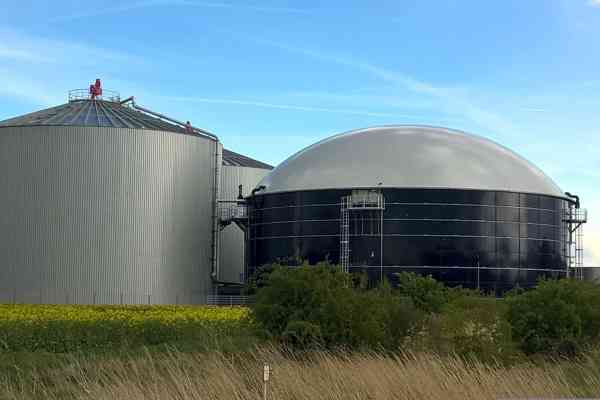
Commented by Armin Schulz on September 10th, 2026 | 08:25 CEST
Germany's Gas Gap Is Growing! BASF, A.H.T. Syngas and Verbio Could Turn the Shortage into an Opportunity
Gas prices are fluctuating, storage facilities are emptier than they have been since records began, and the old security fossil fuels provided is crumbling. While Germany nervously looks ahead to the heating season, industry has long since pulled the ripcord. Turning to domestic, low-carbon gases is no longer a "green fairy tale", but a hard business necessity. Technology for converting waste materials into energy is taking centre stage, and the first companies are already posting rising margins. Amid this tension between a supply crisis and a technological breakthrough, it is worth taking a closer look at BASF, A.H.T. Syngas, and Verbio.
Read
Commented by Carsten Mainitz on August 28th, 2026 | 07:35 CEST
Explosive News: Power Metallic Mines Nears a Decisive Milestone — How Are BASF and BYD Performing?
AI and electrification require enormous amounts of copper. According to the International Energy Agency, a supply shortfall of approximately 6.6 million metric tons is projected by 2035. New mines and functioning recycling loops will therefore be equally indispensable. Power Metallic Mines could arrive at exactly the right time with its polymetallic Nisk project in Québec. The company's initial mineral resource estimate, expected soon, will reveal the deposit's industrial significance and whether the stock is poised for a revaluation. Chemicals giant BASF is strategically positioning itself in raw materials and recycling while gaining additional appeal through the planned spin-off of its agricultural business. BYD demonstrates just how rapidly international demand is growing, with Europe playing an increasingly important role. Who holds the best cards?
Read