
BatteryMetals
Commented by Nico Popp on July 20th, 2026 | 07:30 CEST
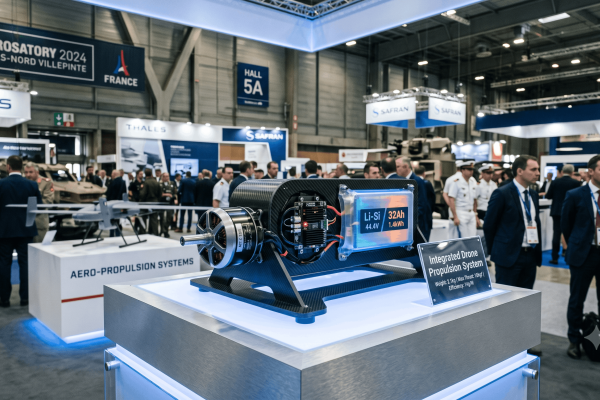
Battery Crisis Threatens AeroVironment and Kratos Defence—How HPQ Silicon Could Benefit
It is wartime. Anyone aiming to dominate the skies must think beyond aerodynamics and sensor technology when it comes to drones. The greatest driver of innovation lies in the chemical composition of batteries. As demand for drones across commercial, industrial, and military applications continues to surge, conventional lithium-ion batteries are reaching their limits. The bottleneck lies in the material itself: graphite anodes result in shorter flight times and higher weight. To overcome these limitations, the industry is undergoing a paradigm shift toward silicon-based anodes. This technology significantly increases battery capacity and performance, enabling an entirely new generation of drone applications. We take a closer look at the technology behind this transformation and highlight several companies that stand to benefit.
Read
Commented by Nico Popp on July 17th, 2026 | 07:30 CEST
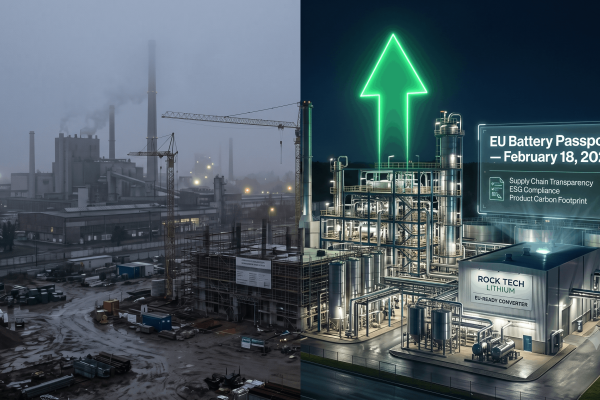
The End of the Auto Industry Looms: Will Mercedes-Benz & Co. Find a Way Out? BYD as a Role Model, Rock Tech Lithium as a Problem-Solver
The auto industry is in the midst of a deep crisis, as evidenced not only by the news from Volkswagen. The availability of battery raw materials has become a critical factor for automakers. According to a survey by industry experts at Benchmark Minerals, global demand for lithium-ion batteries rose by 29% in 2025 to a total of 1.59 terawatt-hours. While stationary battery storage was the fastest-growing segment, the electric vehicle sector remains the dominant driver of demand in terms of volume. This trend is intensifying global competition for critical raw materials. China is leading the way here. The country controls an estimated 85% of global battery production and processes around 70% of the world's lithium. This poses a risk for Western automakers. They need to develop their own solutions. We analyze the situation and explore a potential solution.
Read

Commented by André Will-Laudien on July 13th, 2026 | 07:50 CEST
The Unexpected Lithium Rally 2.0: Mercedes, Porsche AG, Rock Tech Lithium, and BASF in Focus
It has finally happened! The looming global power shortage is unexpectedly becoming a massive catalyst for a new boom in the commodities market, once again propelling lithium stocks into the spotlight. The renowned Fraunhofer Institute has reached the clear conclusion that European demand for high-purity lithium hydroxide will increase sixfold by 2030. Analysts explicitly emphasize that only companies with closed, regional supply chains will be able to successfully circumvent the looming production bottlenecks caused by power and raw material shortages. This is because Western industrialized nations aim to drastically reduce their dependence on Asia and rely on their own raw material reserves. For investors, this fundamental transformation builds a highly attractive bridge to the next generation of beneficiaries. While automotive groups such as Mercedes and Porsche are now radically securing their supply chains through partnerships, Rock Tech is poised to move into supplier status in the near future. The chemical company BASF, an indispensable partner for cathode materials, is also part of the picture. Savvy investors are using the current consolidation phase to position themselves early among the winners of this megatrend.
Read

Commented by Fabian Lorenz on July 13th, 2026 | 07:40 CEST
Time to Exit Gerresheimer? TKMS Earns a Buy Rating as HPQ Silicon Attracts Growing Interest
Should investors sell shares of Gerresheimer? That is what some analysts are now recommending. Yet, following accounting issues, the delayed release of the annual report, speculation surrounding the BaFin audit, and changes in the executive board, things had recently settled down somewhat at the packaging specialist for the pharmaceutical and cosmetics industries. The stock had even staged a solid recovery. HPQ Silicon, meanwhile, could be poised for a revaluation. The technology company is entering the commercialization phase with several products, and its latest positive results have significantly increased interest from potential industry partners. Strategic options include joint ventures, licensing agreements, royalty-based production partnerships, and in-house production facilities. Against this backdrop, the stock appears to offer further upside potential. The same may be true for thyssenkrupp Marine Systems (TKMS). Following its recent multi-billion-dollar contract from Canada, analysts have raised both their earnings estimates and price targets. The order is expected to secure the company's production backlog well into the 2040s.
Read

Commented by Tarik Dede on July 9th, 2026 | 07:10 CEST
Three Stocks for a Strategic Portfolio? Samsung, Rock Tech Lithium, and SpaceX
This week saw a significant warning sign on global stock markets. In the Persian Gulf, the warring parties are once again exchanging fire. The price of oil rose, temporarily halting its downward trend. Meanwhile, some surprising developments are also unfolding in South Korea. The Kospi, the country's leading index, which is heavily weighted toward semiconductor stocks, is showing enormous volatility. Trading halts are occurring almost daily because share prices are moving too sharply up or down. And on Wall Street, volatility in the chip sector has recently increased, too. Share prices have seen significant profit-taking. Meanwhile, the space exploration stock SpaceX is becoming Wall Street's darling. Today, we take a look at the stocks of Samsung Electronics, Rock Tech Lithium, and SpaceX.
Read

Commented by Matthias Schomber on July 8th, 2026 | 07:45 CEST
Despite the World Cup and FIFA Scandal: Mega-Deals at SAP, Adidas Outpaces Rivals, HPQ Silicon Adds Drone Capabilities
The international financial markets are currently offering truly remarkable opportunities, exciting turning points and potential for a rebound. While the software company SAP is radically realigning its corporate structure around artificial intelligence, thereby putting investors' patience to the test, the sporting goods manufacturer Adidas is leaving the competition in the dust, despite all contrary opinions. Not even the German national team's bitter World Cup exit could slow down the Herzogenaurach-based company on the stock market, especially since the ongoing World Cup is generating negative headlines anyway. On Tuesday, FIFA, the world soccer governing body, had to defend itself at length regarding the controversial suspended sentence handed down to US forward Folarin Balogun, after a phone call between US President Donald Trump and FIFA President Gianni Infantino had caused a stir. This incident illustrates just how closely politics, business, and sports are currently intertwined—and how even decisions seemingly unrelated to sports can impact the public perception of major brands like Adidas. Far from the big DAX stage, there is an interesting development at a smaller player from Canada. HPQ Silicon is working on the future of battery technology and innovative drone propulsion systems, securing smart partnerships. It could be on the verge of a breakout based on chart patterns. We take a detailed look at these three stocks and highlight where greater potential may still lie dormant.
Read
Commented by Armin Schulz on July 8th, 2026 | 07:20 CEST
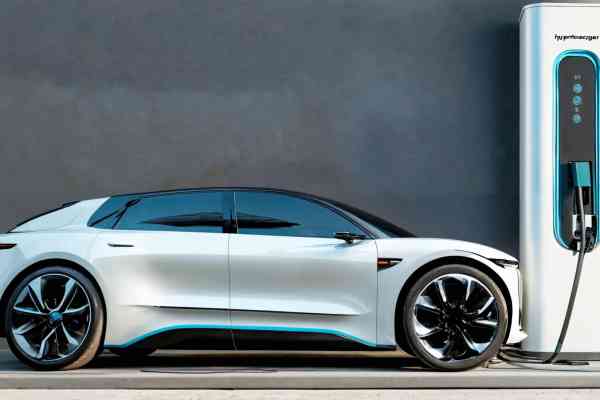
The Underrated Return Pillar: BYD, Rock Tech Lithium and Mercedes-Benz – Lithium Storage Boom Opening Up Opportunities
Green electromobility is technically ready to go, yet the true Achilles' heel of the electric revolution lies not on the road but in the raw-material supply. While politicians speak of sovereignty, the market is grappling with exploding demand for battery raw materials. This situation is amplified by energy storage for power grids. Anyone who now grasps the bigger picture recognizes the decisive shift in power in the global race between Chinese dominance and the West's drive for independence. This is exactly where the e-car giant BYD, the emerging lithium producer Rock Tech Lithium and the traditional group Mercedes-Benz come in, with opposing but equally trailblazing strategies.
Read

Commented by Carsten Mainitz on July 7th, 2026 | 07:40 CEST
Disruption at the Core of Big Tech and EVs – How HPQ Silicon Could Shape Micron and BYD
The future of artificial intelligence infrastructure and electric mobility will not be determined by software alone. Both megatrends are increasingly encountering physical limitations that require breakthroughs in materials science rather than in computing power. In the battery industry, conventional graphite anodes are emerging as a bottleneck for further improvements in energy density and charging performance. At the same time, the semiconductor industry is searching for the next generation of materials to enable faster, more efficient chip architectures as traditional scaling approaches reach their limits. The solution to both challenges lies in the same element: silicon. This is precisely where HPQ Silicon has positioned itself. The Canadian company is developing technologies that could play a key role in the production of high-purity silicon and advanced silicon-based materials, offering disruptive potential across multiple industries, from semiconductors to next-generation batteries.
Read
Commented by Armin Schulz on July 1st, 2026 | 07:35 CEST
The Battery Industry in Flux: Why HPQ Silicon, BASF, and BYD Are Well-Positioned
The battery industry is undergoing a fundamental transformation. The era of rhetoric focused solely on unit volume and range is giving way to a new sense of realism. The focus is now on the hard facts of raw material security, process stability, and cost efficiency. After all, true industrial leadership stems not solely from vision, but from mastery of scaling and the supply chain. In this environment, the players who translate technological innovations into commercial realities are gaining the upper hand. This shift in value creation makes the trio of HPQ Silicon, BASF, and BYD an exciting one in the market.
Read
Commented by Nico Popp on July 1st, 2026 | 07:10 CEST
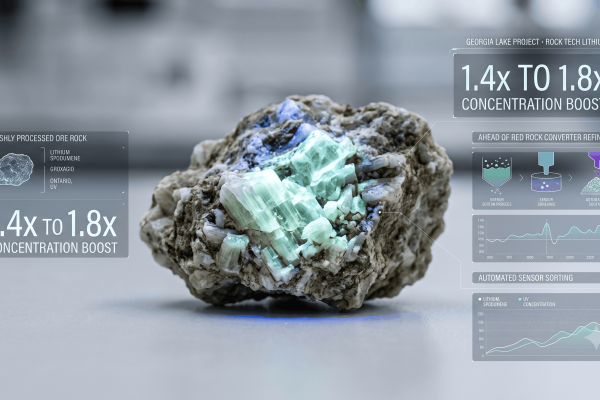
What VW and Mercedes-Benz Must Do Immediately: Lithium as a Constant in Battery Technology – Rock Tech Lithium in an Exciting Phase
Mass layoffs and poor quarterly results are spreading fear in southwestern Germany, the heart of the automotive industry. And rightly so. The German automotive industry faces not only the mammoth task of transformation but also the challenge of sourcing critical battery raw materials. Over 80% of the lithium hydroxide needed in Europe currently comes from Chinese refineries. However, legal requirements such as the European Critical Raw Materials Act (CRMA) call for the establishment of local structures for mining and processing in order to break the critical dependence on China. A German-Canadian company could offer the solution.
Read