
Electromobility

Commented by Matthias Schomber on July 10th, 2026 | 07:20 CEST
Missiles in the Middle East! War Fears Push Oil Prices Higher, Xiaomi and BYD Battle for Market Share – Is This dynaCERT's Moment?
The global geopolitical situation remains tense. The ceasefire between the United States and Iran has effectively collapsed. The night before last, US forces once again struck around 90 targets in Iran, and Tehran responded with attacks on US bases in Bahrain and Kuwait. The Strait of Hormuz, one of the world's most important oil transport routes, is once again nearly at a standstill, and oil prices are rising noticeably. Amid this tense environment, a power struggle of its own is raging on the stock markets. While Asian heavyweights like Xiaomi and BYD are poaching customers from one another in a ruthless price war, investors are also turning their attention to smaller companies that could benefit from rising oil prices. One such company is Canadian cleantech firm dynaCERT, whose emissions-reduction technology appears well aligned with current market trends. From a technical perspective, the stock is also approaching an important inflection point. Today, we take a closer look at three very different stocks: BYD, Xiaomi, and dynaCERT.
Read
Commented by Armin Schulz on July 10th, 2026 | 07:00 CEST
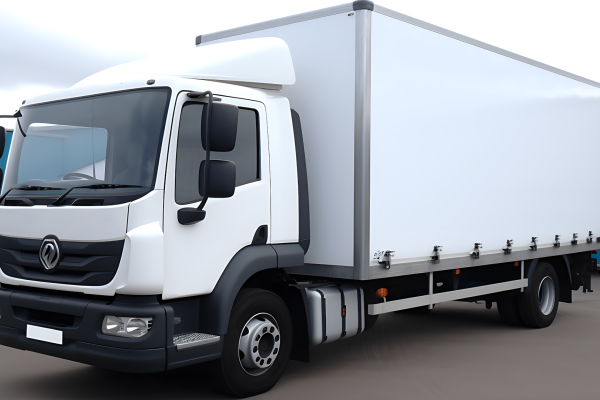
Zero-Emission Commercial Vehicles in 2026: Why Daimler Truck, Pure One, and Plug Power Are Benefiting from the Logistics Revolution
Since July 2025, the EU has mandated a gradual decarbonization of heavy-duty transportation, and the logistics industry is grappling with the right technology. Batteries or hydrogen? The answer is: both. The complexity of long-haul transport requires a mix of propulsion systems and a robust infrastructure. While batteries excel in short-distance travel, hydrogen offers the potential for heavy loads and fast refueling. Three key players exemplify this transformation: the vehicle giant Daimler Truck, the cleantech specialist Pure One, and the infrastructure pioneer Plug Power.
Read
Commented by Armin Schulz on July 8th, 2026 | 07:20 CEST
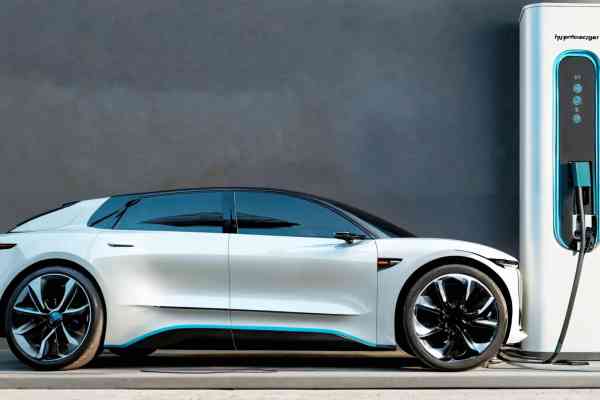
The Underrated Return Pillar: BYD, Rock Tech Lithium and Mercedes-Benz – Lithium Storage Boom Opening Up Opportunities
Green electromobility is technically ready to go, yet the true Achilles' heel of the electric revolution lies not on the road but in the raw-material supply. While politicians speak of sovereignty, the market is grappling with exploding demand for battery raw materials. This situation is amplified by energy storage for power grids. Anyone who now grasps the bigger picture recognizes the decisive shift in power in the global race between Chinese dominance and the West's drive for independence. This is exactly where the e-car giant BYD, the emerging lithium producer Rock Tech Lithium and the traditional group Mercedes-Benz come in, with opposing but equally trailblazing strategies.
Read
Commented by Nico Popp on July 8th, 2026 | 07:05 CEST
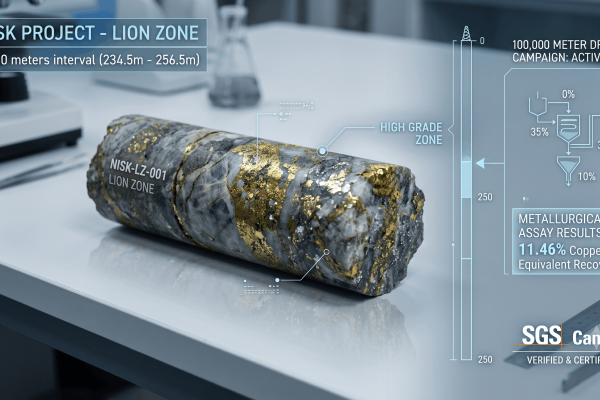
Canada and Europe Are Jointly Securing Raw Materials: Why BMW and Volkswagen Should Keep an Eye on Power Metallic Mines
The automotive industry's transition to electric mobility is disrupting traditional supply chains. While efficient assembly used to be the key factor, in the era of electric vehicles, secure, environmentally responsible access to critical minerals matters most. Above all, strict legal requirements, such as the European Supply Chain Due Diligence Act, are forcing automakers to fully document the origin of their raw materials all the way back to the mine. In this complex landscape, Canada has emerged as one of the most important partners for European industry. The standards and mineral content are just right here—we introduce the market and potential beneficiaries.
Read

Commented by Carsten Mainitz on July 7th, 2026 | 07:40 CEST
Disruption at the Core of Big Tech and EVs – How HPQ Silicon Could Shape Micron and BYD
The future of artificial intelligence infrastructure and electric mobility will not be determined by software alone. Both megatrends are increasingly encountering physical limitations that require breakthroughs in materials science rather than in computing power. In the battery industry, conventional graphite anodes are emerging as a bottleneck for further improvements in energy density and charging performance. At the same time, the semiconductor industry is searching for the next generation of materials to enable faster, more efficient chip architectures as traditional scaling approaches reach their limits. The solution to both challenges lies in the same element: silicon. This is precisely where HPQ Silicon has positioned itself. The Canadian company is developing technologies that could play a key role in the production of high-purity silicon and advanced silicon-based materials, offering disruptive potential across multiple industries, from semiconductors to next-generation batteries.
Read
Commented by Matthias Schomber on July 7th, 2026 | 07:00 CEST
Auto and Combustion-Engine Crisis Meets Nuclear Power: Volkswagen and BMW Under Pressure - American Atomics on the Verge of a Breakout?
Germany's automotive industry has reached yet another low point in its ongoing crisis. Thousands of jobs are at risk. The country has long since surrendered its technological leadership to the Chinese. Policymakers have already driven the final nail into the coffin, and the casket is practically halfway into the ground. Yet, as the saying goes, hope dies last. Perhaps Volkswagen, BMW, and Germany's other automakers can still turn the tide and stage something of a resurrection. Or the grave may simply be filled in, marking the beginning of a prolonged decline—or even a permanent one. Volkswagen and BMW continue to struggle with structural challenges, shrinking margins, and weakening international markets. Investors should increasingly reconsider where they allocate their capital. Traditional safe bets no longer offer the same reassurance, and attention is inevitably shifting toward entirely different sectors benefiting from strong political support. This is precisely where the US uranium industry could emerge as a major beneficiary, with smaller players such as American Atomics also seeking to position themselves to help meet the world's rapidly growing energy demand. It is a paradigm shift that undoubtedly carries significant risks—but also presents tangible opportunities.
Read

Commented by André Will-Laudien on July 6th, 2026 | 07:25 CEST
Crash? No Thanks: The Auto Sector Ahead of a Turnaround! 133% with BYD, VW, North Arrow Minerals and BMW
In recent months, hardly any other sector on the stock market has managed to become as unpopular as the automotive sector. Margin battles and restructurings, including mass layoffs, are making the rounds across Europe. This downward trend stems primarily from structural overcapacity and mistimed ramp-up of electromobility. Now the German kings of the combustion engine are facing the aggressive market entry of state-subsidized Chinese competitors. European manufacturers, in particular, are thus caught in a fatal pincer crisis of falling sales and rising investment costs. Analysts therefore predominantly rate the traditional business models of the OEMs as risky and are lowering their future expectations. Institutional investors are abruptly shifting their portfolios into less cyclical, higher-margin growth sectors. The result: the broad European auto index lost around 12% over the last 12 months, with individual manufacturers down as much as 17 to 37%. Is there still hope for the titans on 4 wheels?
Read

Commented by Matthias Schomber on July 2nd, 2026 | 07:35 CEST
Job Cuts at Mercedes-Benz, AI Momentum at Infineon, and Breakout Potential for Zefiro Methane
The global economy and its various industries are currently being shaken up in real time. On the one hand, Mercedes-Benz is struggling with declining margins and serious internal problems, with many jobs at stake. On the other hand, Infineon is making record investments and riding the current wave of artificial intelligence. Apart from these two, Zefiro Methane is emerging as a highly exciting environmental and infrastructure specialist, completely shaking up a billion-dollar industry. We take a detailed look at the current crisis at Mercedes-Benz, Infineon's "crazy" rise, the latest news, and Zefiro Methane's technical breakout potential. Read on and join us in discovering tomorrow's potential stock winners.
Read
Commented by Armin Schulz on July 1st, 2026 | 07:35 CEST
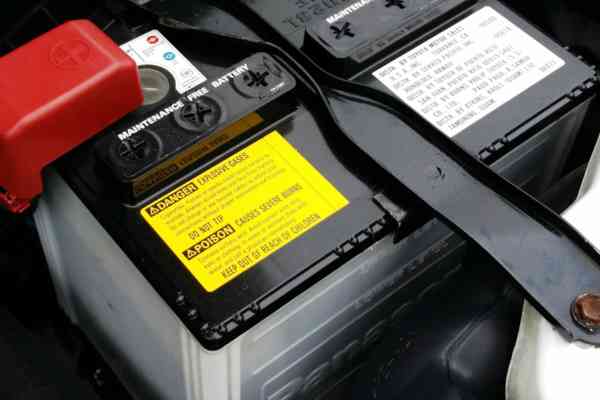
The Battery Industry in Flux: Why HPQ Silicon, BASF, and BYD Are Well-Positioned
The battery industry is undergoing a fundamental transformation. The era of rhetoric focused solely on unit volume and range is giving way to a new sense of realism. The focus is now on the hard facts of raw material security, process stability, and cost efficiency. After all, true industrial leadership stems not solely from vision, but from mastery of scaling and the supply chain. In this environment, the players who translate technological innovations into commercial realities are gaining the upper hand. This shift in value creation makes the trio of HPQ Silicon, BASF, and BYD an exciting one in the market.
Read
Commented by Nico Popp on July 1st, 2026 | 07:10 CEST
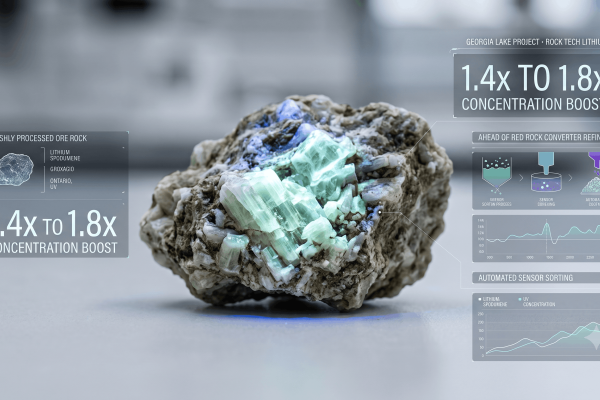
What VW and Mercedes-Benz Must Do Immediately: Lithium as a Constant in Battery Technology – Rock Tech Lithium in an Exciting Phase
Mass layoffs and poor quarterly results are spreading fear in southwestern Germany, the heart of the automotive industry. And rightly so. The German automotive industry faces not only the mammoth task of transformation but also the challenge of sourcing critical battery raw materials. Over 80% of the lithium hydroxide needed in Europe currently comes from Chinese refineries. However, legal requirements such as the European Critical Raw Materials Act (CRMA) call for the establishment of local structures for mining and processing in order to break the critical dependence on China. A German-Canadian company could offer the solution.
Read