
Electromobility

Commented by Carsten Mainitz on July 7th, 2026 | 07:40 CEST
Disruption at the Core of Big Tech and EVs – How HPQ Silicon Could Shape Micron and BYD
The future of artificial intelligence infrastructure and electric mobility will not be determined by software alone. Both megatrends are increasingly encountering physical limitations that require breakthroughs in materials science rather than in computing power. In the battery industry, conventional graphite anodes are emerging as a bottleneck for further improvements in energy density and charging performance. At the same time, the semiconductor industry is searching for the next generation of materials to enable faster, more efficient chip architectures as traditional scaling approaches reach their limits. The solution to both challenges lies in the same element: silicon. This is precisely where HPQ Silicon has positioned itself. The Canadian company is developing technologies that could play a key role in the production of high-purity silicon and advanced silicon-based materials, offering disruptive potential across multiple industries, from semiconductors to next-generation batteries.
Read
Commented by Matthias Schomber on July 7th, 2026 | 07:00 CEST
Auto and Combustion-Engine Crisis Meets Nuclear Power: Volkswagen and BMW Under Pressure - American Atomics on the Verge of a Breakout?
Germany's automotive industry has reached yet another low point in its ongoing crisis. Thousands of jobs are at risk. The country has long since surrendered its technological leadership to the Chinese. Policymakers have already driven the final nail into the coffin, and the casket is practically halfway into the ground. Yet, as the saying goes, hope dies last. Perhaps Volkswagen, BMW, and Germany's other automakers can still turn the tide and stage something of a resurrection. Or the grave may simply be filled in, marking the beginning of a prolonged decline—or even a permanent one. Volkswagen and BMW continue to struggle with structural challenges, shrinking margins, and weakening international markets. Investors should increasingly reconsider where they allocate their capital. Traditional safe bets no longer offer the same reassurance, and attention is inevitably shifting toward entirely different sectors benefiting from strong political support. This is precisely where the US uranium industry could emerge as a major beneficiary, with smaller players such as American Atomics also seeking to position themselves to help meet the world's rapidly growing energy demand. It is a paradigm shift that undoubtedly carries significant risks—but also presents tangible opportunities.
Read
Commented by André Will-Laudien on July 6th, 2026 | 07:25 CEST
Crash? No Thanks: The Auto Sector Ahead of a Turnaround! 133% with BYD, VW, North Arrow Minerals and BMW
In recent months, hardly any other sector on the stock market has managed to become as unpopular as the automotive sector. Margin battles and restructurings, including mass layoffs, are making the rounds across Europe. This downward trend stems primarily from structural overcapacity and mistimed ramp-up of electromobility. Now the German kings of the combustion engine are facing the aggressive market entry of state-subsidized Chinese competitors. European manufacturers, in particular, are thus caught in a fatal pincer crisis of falling sales and rising investment costs. Analysts therefore predominantly rate the traditional business models of the OEMs as risky and are lowering their future expectations. Institutional investors are abruptly shifting their portfolios into less cyclical, higher-margin growth sectors. The result: the broad European auto index lost around 12% over the last 12 months, with individual manufacturers down as much as 17 to 37%. Is there still hope for the titans on 4 wheels?
Read
Commented by Matthias Schomber on July 2nd, 2026 | 07:35 CEST
Job Cuts at Mercedes-Benz, AI Momentum at Infineon, and Breakout Potential for Zefiro Methane
The global economy and its various industries are currently being shaken up in real time. On the one hand, Mercedes-Benz is struggling with declining margins and serious internal problems, with many jobs at stake. On the other hand, Infineon is making record investments and riding the current wave of artificial intelligence. Apart from these two, Zefiro Methane is emerging as a highly exciting environmental and infrastructure specialist, completely shaking up a billion-dollar industry. We take a detailed look at the current crisis at Mercedes-Benz, Infineon's "crazy" rise, the latest news, and Zefiro Methane's technical breakout potential. Read on and join us in discovering tomorrow's potential stock winners.
Read
Commented by Armin Schulz on July 1st, 2026 | 07:35 CEST
The Battery Industry in Flux: Why HPQ Silicon, BASF, and BYD Are Well-Positioned
The battery industry is undergoing a fundamental transformation. The era of rhetoric focused solely on unit volume and range is giving way to a new sense of realism. The focus is now on the hard facts of raw material security, process stability, and cost efficiency. After all, true industrial leadership stems not solely from vision, but from mastery of scaling and the supply chain. In this environment, the players who translate technological innovations into commercial realities are gaining the upper hand. This shift in value creation makes the trio of HPQ Silicon, BASF, and BYD an exciting one in the market.
Read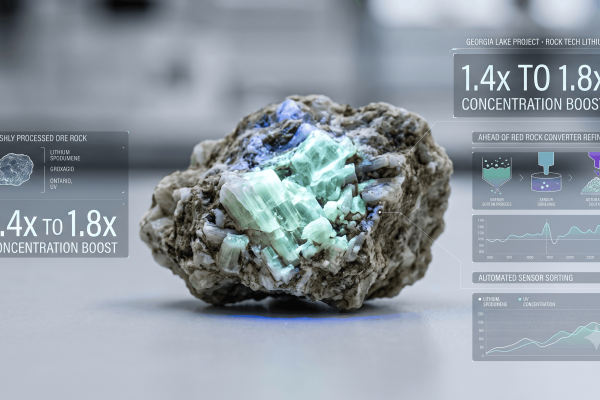
Commented by Nico Popp on July 1st, 2026 | 07:10 CEST
What VW and Mercedes-Benz Must Do Immediately: Lithium as a Constant in Battery Technology – Rock Tech Lithium in an Exciting Phase
Mass layoffs and poor quarterly results are spreading fear in southwestern Germany, the heart of the automotive industry. And rightly so. The German automotive industry faces not only the mammoth task of transformation but also the challenge of sourcing critical battery raw materials. Over 80% of the lithium hydroxide needed in Europe currently comes from Chinese refineries. However, legal requirements such as the European Critical Raw Materials Act (CRMA) call for the establishment of local structures for mining and processing in order to break the critical dependence on China. A German-Canadian company could offer the solution.
Read
Commented by Matthias Schomber on July 1st, 2026 | 07:00 CEST
Volkswagen in Crisis, Rheinmetall Plummets: Could Volatus Aerospace Be the One to Benefit?
Drones have forever changed the face of modern warfare and are forcing nations around the globe to make drastic adjustments. Driven by the sometimes harsh lessons learned from the war in Ukraine, South Korea is now also planning a radical military reform. In the future, each of the country's 500,000 active-duty soldiers is to be trained as a drone pilot to counter the ever-growing threat from North Korea. Meanwhile, the military escalation in Europe continues to accelerate. As the Ukrainian Navy uses agile combat boats in the Black Sea to intercept Russian drones and protect the vital ports of Odesa, concerns are mounting in Moscow. Fearing Ukrainian counterstrikes, the Kremlin is tightening its defensive perimeter by deploying additional S-400 air defence systems, reportedly even on the grounds of a foundation linked to Russian President Vladimir Putin's daughter. In our latest report, we examine how the rise of unmanned weapon systems is fueling a global arms race and what it could mean for the shares of Volkswagen, Rheinmetall, and Volatus Aerospace.
Read
Commented by Jens Castner on June 30th, 2026 | 07:40 CEST
Diesel Is Dead, Long Live Diesel: What Is Next for Volkswagen, Traton, dynaCERT, and Cummins
Since the diesel scandal a good ten years ago, Volkswagen has been lurching from one crisis to the next. Now, plant closures and massive job cuts loom. Meanwhile, its commercial vehicle subsidiary, Traton, is grappling with the key question: Should its diesel fleet be replaced? An innovative company from Toronto takes the position that nothing needs to be replaced at all: dynaCERT improves the efficiency and emissions of engines that have long been on the road. And Cummins, of all companies, a US giant that builds precisely such engines, provides the unintended proof that the transition away from the internal combustion engine will take a very long time. We take a look at what this means for investors.
Read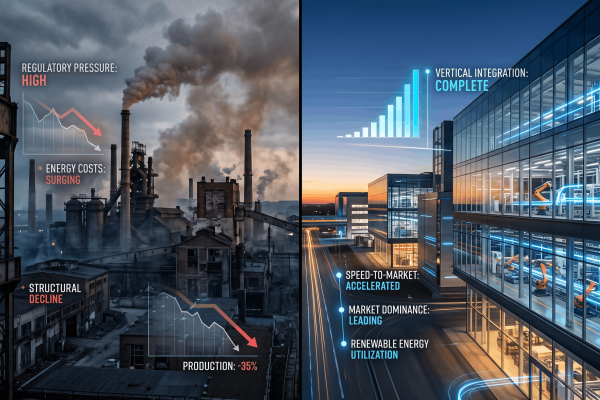
Commented by Nico Popp on June 30th, 2026 | 07:05 CEST
For Industry, It Is a Matter of Survival: thyssenkrupp Under Pressure, BYD With Advantages - Can Strategic Resources Provide the Rescue?
Many long-established industrial companies are facing intense pressure: their business models are undergoing structural change, supply chains are being reorganized, and international competition is increasing. European heavy industry, in particular, is at a turning point, as higher energy costs in Europe, especially in Germany, and stricter decarbonization requirements force companies to adapt their production processes. At the same time, Asian technology groups are pushing aggressively into global markets, often with fully vertically integrated structures and clear advantages in the race for raw materials. This is placing immense pressure on traditional European companies to restructure and innovate. We examine the overall situation and highlight potential opportunities for investors.
Read
Commented by André Will-Laudien on June 26th, 2026 | 07:55 CEST
Battery Boom 3.0: The Future Is 100% Electric! VW, BYD, Stellantis, and HPQ Silicon at the Eye of the Storm
Things are a bit bumpy on the stock market right now. While the high-tech sector is now showing clear signs of slowing down, chip stocks—led by Micron and AMD—are really stepping on the gas again. At the heart of this are massive investments in data centers and new AI infrastructure. This is putting the spotlight on companies whose innovative ideas have the potential to disrupt an entire sector. One example is HPQ Silicon, which addresses several critical areas for future energy and industrial value creation. For VW, BYD, and Stellantis, too, the focus has long since shifted from mere market share to dominance in the global battery race. For the automotive industry, the challenges of the moment could not be greater. After all, they need reliable access to raw materials and strong end markets. Ultimately, however, success is determined by the often fickle consumer. Investors, too, have always been highly selective in their choices. We reveal a few criteria for separating the winners from the rest.
Read