
RHEINMETALL AG

Commented by Nico Popp on November 3rd, 2026 | 05:22 CET
Rock Tech Lithium, Vulcan Energy and Rheinmetall: Lithium meets defence
Security policy and the energy transition are becoming increasingly intertwined. At the centre is lithium, which is crucial for both civilian electric mobility and new weapons systems. Reports of a potential investment by Rheinmetall in the German-Canadian lithium developer Rock Tech Lithium have cast a spotlight on this possible new collaboration. Meanwhile, in south-western Germany, Vulcan Energy is demonstrating how far the company has already progressed towards European production. We put the background into context.
Read
Commented by Carsten Mainitz on November 2nd, 2026 | 05:21 CET
NSJ Antimony, Rheinmetall, Infineon: Whoever controls the bottlenecks will be among the winners!
Created and published on behalf of NSJ Antimony Corp.
Modern armed forces need ammunition; data centres need a high-performance power supply. Across industries, reliable industrial supply chains are becoming increasingly important. This puts companies that develop critical raw materials or build important production capacity in the spotlight. Equipped with fresh capital, NSJ Antimony is advancing its antimony project in Canada. The critical metal is indispensable for flame retardants, the defence industry, ammunition, electronics and certain energy storage systems, among other things. Defence giant Rheinmetall is due to release important news this month, including quarterly figures and an updated medium-term forecast. The semiconductor manufacturer is investing heavily in capacity to power the AI era. Which share is ahead?
Read
Commented by Armin Schulz on October 29th, 2026 | 05:43 CET
Almonty Industries, Rheinmetall and SpaceX: Tungsten as the backbone of armaments and spaceflight
Rearmament begins in the mine, not the factory. According to the September Position Paper from the German Mechanical Engineering Industry Association (VDMA), raw materials such as tungsten are indispensable in armaments, aviation and many other sectors. The close link between defence and space became clear on October 1. That day, Rheinmetall Italia and Argotec launched their first joint satellite for military airspace surveillance aboard a SpaceX Falcon 9. Raw materials, defence and spaceflight all depend on the same supply chain. Companies that can close critical gaps are in demand. We therefore take a closer look at Almonty Industries, Rheinmetall and SpaceX.
Read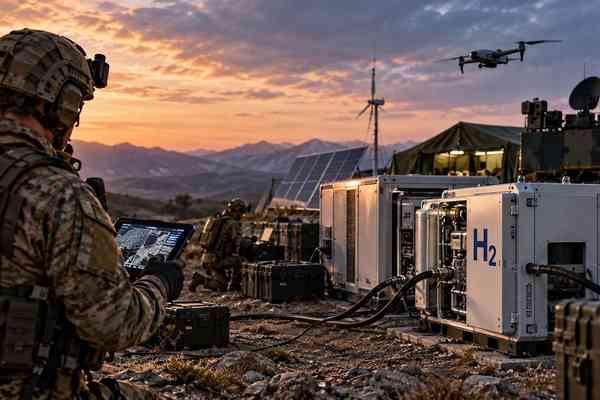
Commented by Fabian Lorenz on October 29th, 2026 | 05:29 CET
Defence industry bets on hydrogen? Rheinmetall, Nel ASA, SFC Energy and HPQ Silicon aim to benefit
Created and Published on Behalf of HPQ Silicon
Will hydrogen achieve a breakthrough in the defence industry of all places? Demand for decentralised energy solutions for drones, military bases and mobile command centres is increasing. This is less about climate protection than about security of supply and independence from vulnerable supply chains. Policymakers have also recognised the potential. In Europe and the US, government funding is flowing into the development of new hydrogen technologies for military applications. Listed companies could benefit from this. HPQ Silicon reports success in securing government funding for an innovative hydrogen technology. SFC Energy is expanding its defence business with a new partner in the Middle East. Rheinmetall and Nel ASA aim to jointly advance the decentralised production of synthetic fuels. Is a new, billion-dollar market emerging here for hydrogen companies?
Commented by Nico Popp on October 28th, 2026 | 05:45 CET
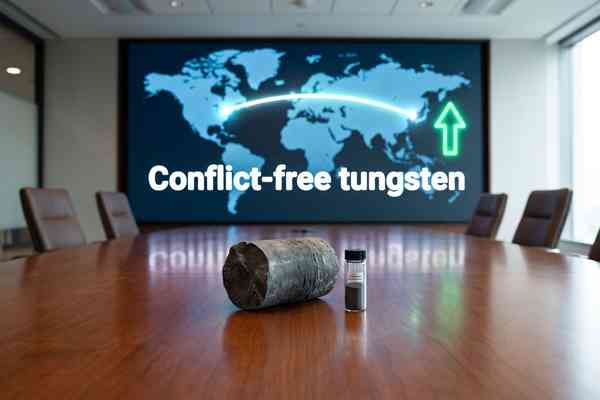
Split in the Tungsten Market: How Almonty, MP Materials and Rheinmetall Are Responding
The tungsten market is currently splitting into two distinct segments. While Chinese ammonium paratungstate (APT) prices are falling significantly, according to the Shanghai Metals Market, Western tungsten prices remain largely stable. Meanwhile, Washington's regulatory procurement requirements are forcing Western industrial companies to realign their supply chains. From 2027, new US legislation will prohibit the Department of Defense from using tungsten sourced from geopolitically sensitive countries such as China, Russia, Iran and North Korea. This legislation decouples Western prices from the Asian market and puts secure supply sources in sharper focus.
Read
Commented by Carsten Mainitz on October 26th, 2026 | 05:29 CET
Share prices are falling, business is growing: What opportunities do Almonty, Rheinmetall and Renk shares offer investors?
The euphoria has apparently faded. Following sharp share price declines, Almonty, Rheinmetall and Renk are increasingly back in focus. With demand trends intact, are these new entry opportunities? After all, without raw materials there is no ammunition; without drive systems there are no mobile armed forces. Almonty has commenced commercial operations at the Sangdong tungsten mine, marking a historic milestone. Rheinmetall and Renk are under scrutiny for how quickly and profitably they can fulfil orders. Wait or buy?
Read
Commented by André Will-Laudien on October 22nd, 2026 | 05:28 CEST
The Chancellor sees the Russian threat! Rearming with Rheinmetall, Hensoldt, Strategic Resources and TKMS
Federal Chancellor Friedrich Merz sees measures against the Russian threat as his top priority. Despite widespread concern, many German citizens would have preferred a more economically minded, progressive stance from the CDU. Yet the international defence industry can already celebrate the next upward wave, as the overall situation continues to guarantee robust growth. Finally, a chance to breathe a sigh of relief, as the spark had not really spread to the armaments sector since autumn 2025. But can the charts still be salvaged? Sector leader Rheinmetall has corrected more than 50% from its peak and has already had to backtrack operationally. Nevertheless, CEO Papperger repeatedly steps in as a share buyer, most recently at the end of September near the year's lows. Is this already the turning point? Time for an update on a closely watched sector.
Read
Commented by Carsten Mainitz on October 14th, 2026 | 05:30 CEST
Tungsten, Weapons and Growth: Almonty, Rheinmetall and Deutz Under Review. Is This an Opportunity in a Megatrend?
The stock market is not linear. Greed and fear, excessive optimism or excessive scepticism—all of these drive markets. Only the future will tell what is cheap or expensive today. The stocks mentioned above are at precisely this point. Secure supply chains, access to raw materials and defence readiness are high on the agenda of Western governments. These long-term trends play strongly into the hands of defence companies and raw material producers. Almonty, in particular, as a producer of the critical raw material tungsten, holds a leading position in the sector. Where do the greatest opportunities lie for investors now?
Read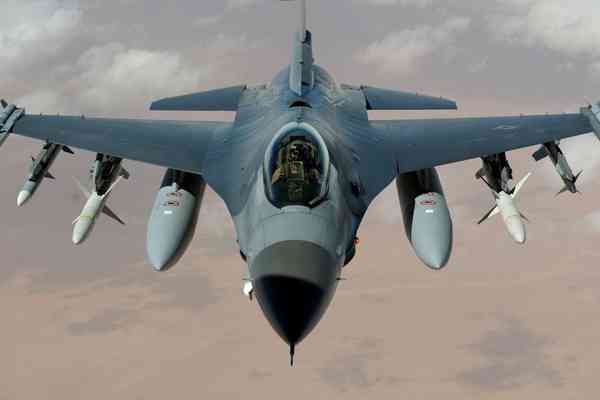
Commented by Armin Schulz on October 13th, 2026 | 05:26 CEST
Almonty Industries, Rheinmetall, Lockheed Martin – Tungsten, Defence and a Share Price Decline That Could Open Up Opportunities
Sangdong is producing tungsten again for the first time since 1993. Almonty's South Korean mine is now supplying a raw material from outside China that is urgently needed in defence and is also found in an increasing number of high-tech devices. China's export restrictions have driven up tungsten prices in the West, while demand remains strong. The same is true of defence. On September 14, Rheinmetall booked an order for tens of thousands of artillery shells, while Lockheed Martin announced a framework agreement worth up to USD 1.2 billion for tactical missiles on September 21. Yet the stock market has so far shown little reaction to these developments. All three stocks are under pressure. We therefore take a closer look at Almonty Industries, Rheinmetall and Lockheed Martin.
Read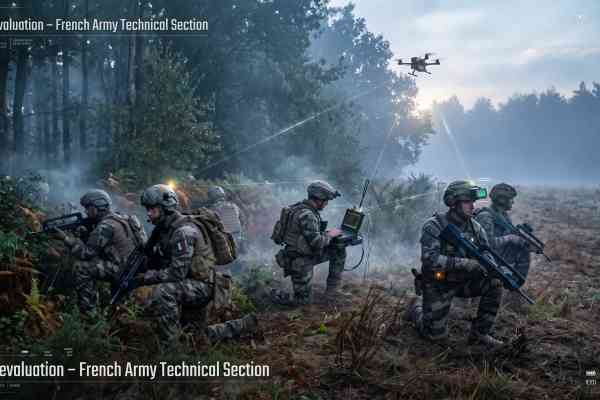
Commented by Nico Popp on October 9th, 2026 | 07:05 CEST
HPQ Silicon, Rheinmetall and Wacker Chemie: Silicon Batteries for the French Military?
Digitalization is also making its way into the defence sector. This is evident, not least, from developments in Ukraine. Modern communication devices, networked combat operations, and constant data streams are driving up power consumption even among infantry units. Existing graphite-based batteries are reaching their limits, and every additional gram of equipment restricts mobility in the field. Switching to silicon-based anodes promises longer operational times without adding weight. We examine this development and highlight opportunities for investors.
Read