October 12th, 2022 | 12:34 CEST
Is electric refueling getting more and more expensive? There are solutions! Mercedes-Benz, Altech Advanced Materials, Varta
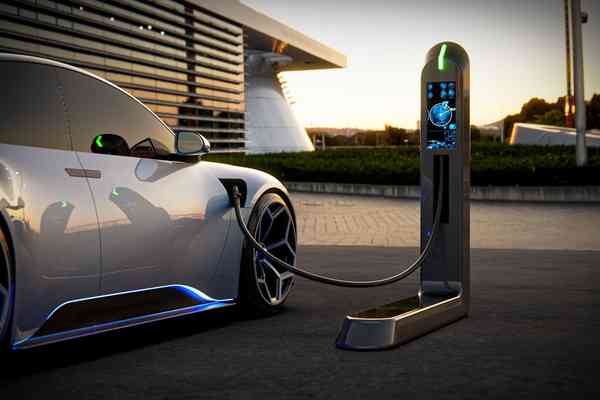
Diesel is unlikely to cost less than EUR 2 per litre anytime soon. But at least modern combustion engines are considered efficient and flexible. Current media reports about electricity costs at charging stations for e-cars show a different picture. Some providers are shamelessly exploiting the shortage of charging stations and rising energy prices. Prices of EUR 0.70 per kilowatt hour are not uncommon at public charging stations. Those who fill up a lot in public areas often pay more for electromobility than for driving a combustion engine. But what does this mean for the trend toward electric driving?
time to read: 3 minutes | Author: Nico Popp
ISIN: MERCEDES-BENZ GROUP AG | DE0007100000 , ALTECH ADV.MAT. NA O.N. | DE000A2LQUJ6 , VARTA AG O.N. | DE000A0TGJ55
Table of contents:
Author

Nico Popp
At home in Southern Germany, the passionate stock exchange expert has been accompanying the capital markets for about twenty years. With a soft spot for smaller companies, he is constantly on the lookout for exciting investment stories.
Tag cloud
Shares cloud
Mercedes-Benz: Who cares about the future now?
At the moment, the trend toward e-cars is by no means being shaken in any way. Why? Even those who charge their e-car with household electricity still drive much more cheaply. And having your own photovoltaic system makes electric driving even more fun. Nevertheless, major manufacturers such as Mercedes-Benz are also turning the efficiency screw. The Mercedes EQXX prototype is designed to cover longer distances despite its lighter battery. The showcase prototype is expected to cover up to 1,000 km. The energy storage system in the EQXX has a capacity of 210 Wh per kilogram of battery. Current models from Mercedes only have 160 Wh. Mercedes achieves this efficiency by coating the anode with silicon. Silicon can store more lithium ions, which increases efficiency.
But how do investors benefit from the developments at Mercedes-Benz? It will probably be some time before the technology plays a role on the road in the EQXX. That is also why the market is focusing on other topics around Mercedes. Analysts, such as Patrick Hummel of UBS, see an oversupply of cars coming in the next three to six months. The time of pricing power and profitability would then be over. However, mass manufacturers are likely to be hit even harder than Mercedes by the increasing reluctance of customers to spend. Nevertheless, the Mercedes-Benz share is currently not a buy. The value is likely to become even cheaper.
Altech Advanced Materials: Opportunities of the future without the burdens of the present?
The Altech Advanced Materials share has already become significantly cheaper: The share was trading below EUR 1 at the beginning of the year, only to rise to EUR 3.40 in late summer. In the meantime, the share price has plummeted to around EUR 1.50. However, even if the price trend suggests spectacular things, nothing negative has happened at Altech Advanced Materials. On the contrary. The battery specialist offers an innovative process for coating anodes in batteries for electric cars similar to the process used by Mercedes-Benz. It is seeking to close ranks with the industry and has even developed a second mainstay in the field of large electricity storage systems. The idea is for utilities and wind farms to store surplus energy and release it into the grid as needed.
"This involves flexible electricity storage systems that can be scaled to almost any capacity and that are inexpensive, durable and safe due to the materials used. Safety is fundamentally important for everyone, but even more so for industrial applications in the multi-digit megawatt range. The reason for this is quickly explained: The battery is not flammable. We work with a solid ceramic cylinder. Furthermore, common salt is used instead of lithium. From this "list of ingredients" alone, it can be deduced that the supply of basic materials will not play a major role in our new business field compared to cobalt, lithium or copper in the lithium-ion battery," explained Altech director Uwe Ahrens most recently in an interview. The new process, like e-car technology, is to be advanced at the planned plant in Schwarze Pumpe, Saxony. Altech believes it can "strike a nerve" with its developments, especially for German industry, as complex supply chains do not play a major role for Altech's solutions. The share is currently highly volatile but remains promising in the long term. Those who think anticyclically can lie in wait.
Varta: The price fantasy is dead
Speculators have also laid in wait for Varta. The German battery group, which has wanted to enter the electromobility business for some time and recently founded its own subsidiary for this purpose, has come under pressure on the stock market. After the share weakened for many months, a profit warning and the departure of the CEO caused the share to sell off. After an interim rise, however, Varta recently turned down again. A lot of confidence was destroyed here, and the recovery was nothing more than a "dead cat bounce". Although Varta is anything but dead, at least the price fantasy has died in recent weeks.
Even if traditional companies such as Varta are stuck around electromobility and pioneers such as Mercedes-Benz currently have other worries than celebrating their prototypes, opportunities can arise for interested investors around battery technology. Rising electricity prices show that even electromobility cannot avoid greater efficiency. Companies like Altech Advanced Materials now have several business units and a good connection to German industry - including working with SGL Carbon. When the storm subsides, investors will see things more clearly again with the Altech share.
Conflict of interest
Pursuant to §85 of the German Securities Trading Act (WpHG), we point out that Apaton Finance GmbH as well as partners, authors or employees of Apaton Finance GmbH (hereinafter referred to as "Relevant Persons") may hold shares or other financial instruments of the aforementioned companies in the future or may bet on rising or falling prices and thus a conflict of interest may arise in the future. The Relevant Persons reserve the right to buy or sell shares or other financial instruments of the Company at any time (hereinafter each a "Transaction"). Transactions may, under certain circumstances, influence the respective price of the shares or other financial instruments of the Company.
In addition, Apaton Finance GmbH is active in the context of the preparation and publication of the reporting in paid contractual relationships.
For this reason, there is a concrete conflict of interest.
The above information on existing conflicts of interest applies to all types and forms of publication used by Apaton Finance GmbH for publications on companies.
Risk notice
Apaton Finance GmbH offers editors, agencies and companies the opportunity to publish commentaries, interviews, summaries, news and the like on news.financial. These contents are exclusively for the information of the readers and do not represent any call to action or recommendations, neither explicitly nor implicitly they are to be understood as an assurance of possible price developments. The contents do not replace individual expert investment advice and do not constitute an offer to sell the discussed share(s) or other financial instruments, nor an invitation to buy or sell such.
The content is expressly not a financial analysis, but a journalistic or advertising text. Readers or users who make investment decisions or carry out transactions on the basis of the information provided here do so entirely at their own risk. No contractual relationship is established between Apaton Finance GmbH and its readers or the users of its offers, as our information only refers to the company and not to the investment decision of the reader or user.
The acquisition of financial instruments involves high risks, which can lead to the total loss of the invested capital. The information published by Apaton Finance GmbH and its authors is based on careful research. Nevertheless, no liability is assumed for financial losses or a content-related guarantee for the topicality, correctness, appropriateness and completeness of the content provided here. Please also note our Terms of use.