
BAY.MOTOREN WERKE AG ST

Commented by Carsten Mainitz on October 2nd, 2026 | 10:00 CEST
Massively Underrated! The Next Robotics Wave Is Coming – First Hydrogen, BMW and Schaeffler Are Getting in Position!
Hydrogen, AI, and robotics are transforming mobility and opening up new business opportunities. While BMW is advancing the use of humanoid robots in its own production facilities, Schaeffler is developing key components for the next generation of robotics. The developments at First Hydrogen are particularly exciting. The Canadian company is evolving from a hydrogen commercial vehicle specialist into a provider of unmanned ground vehicles and robotics, targeting a market with enormous potential. Change creates opportunity. Who will put the most horsepower on the road by the end of the year?
Read
Commented by Matthias Schomber on September 9th, 2026 | 09:55 CEST
BMW in Crisis, Renk Corrects! Will Volatus Aerospace Become the Stock of the Hour on the Drone Hype?
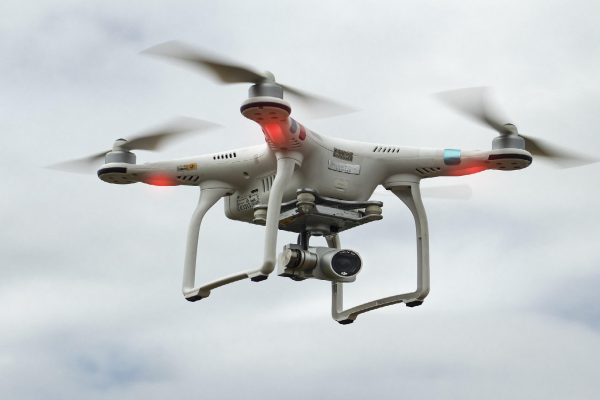
Global stock markets remain challenging overall, driven by ongoing crises and wars. Today, we take a closer look at three companies and their stocks that would normally be potential holdings in growth-oriented portfolios. We start with Augsburg-based transmission specialist Renk, whose stock has recently been punished by the market despite strong fundamentals. We then examine the already well-advanced but painful transformation at Bavarian flagship automaker BMW, which has recently shocked investors with weak margins. Finally, we present a company that is still something of a "hidden gem" for many investors: Volatus Aerospace. The Canadian drone specialist has just reached an important milestone and, from a technical analysis perspective, could be on the verge of a breakout. Buckle up - things could get exciting!
Read

Commented by Jens Castner on September 3rd, 2026 | 08:20 CEST
Roadmap Instead of Guesswork: Finexity, Lahontan Gold and BMW on a Clear Path to the Future
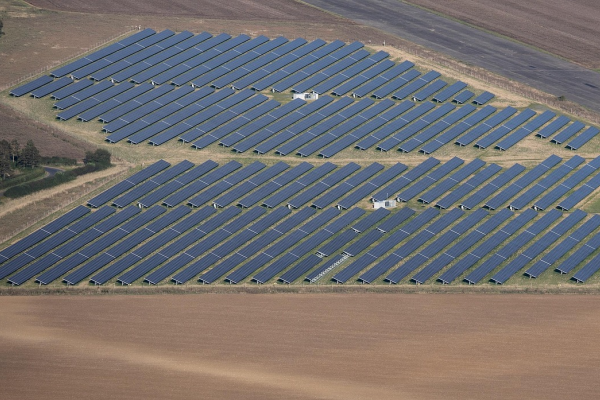
Promises about the future are what drive the stock market. But they are not always credible. Some companies, however, openly lay out their roadmaps—with clearly defined milestones rather than mere hope. Three examples illustrate just how different this can look: Finexity, a Hamburg-based fintech company reinventing securities trading; Lahontan Gold, a Canadian exploration company on the verge of entering production; and German blue-chip BMW. The Munich-based automaker is defining a "Neue Klasse" (New Class) not just on the road. Investors should keep all three stocks on their radar.
Read
Commented by Matthias Schomber on August 13th, 2026 | 07:10 CEST
BYD, BMW, and RE Royalties in the Spotlight: Price War, Plummeting Profits, Job Cuts, and Green Dividends
Globally, it currently seems as though the auto industry is sitting on a veritable powder keg. Industry giants like BYD and BMW are embroiled in a fierce, perhaps even ruinous, price war. Established automakers are grappling with painful profit slumps and drastic market shifts. Investors, however, are increasingly seeking stable alternatives. As a result, stocks from various sectors, including renewable energy, may now step into the spotlight. One exciting player in this space is RE Royalties. The Canadian company is a pioneer in financing green projects. Even aside from the major automotive crises, it continues to grow steadily. Can this stock really be a safe haven? We take an in-depth look at the current developments at three companies. We compare hard facts and analyze technical charts. Traditional auto manufacturing meets Asian dominance and innovative financing. Read on and discover the opportunities offered by this trio.
Read
Commented by Nico Popp on August 12th, 2026 | 07:00 CEST
Stocks for Life? How Netflix, BMW and Aspermont Build Customer Loyalty and Recurring Revenue
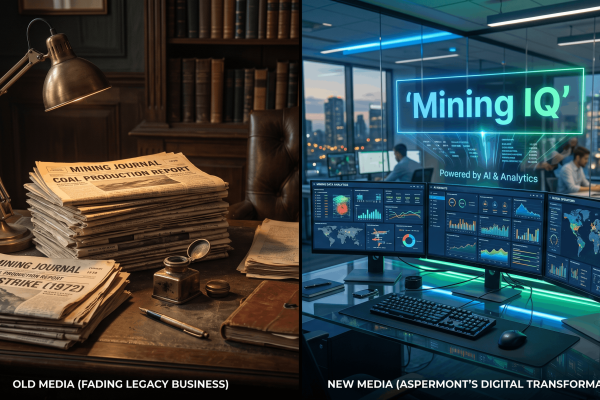
Recurring revenue is the ultimate goal. In practice, this is often achieved with basic consumer goods like toothpaste or with strong brands. People who have been buying Nike running shoes for years are more likely to remain loyal to the brand. Providers like Netflix take the concept of recurring revenue to the extreme—here, the subscription automatically renews for another month. If you do not cancel, you keep paying. BMW would also love to have such loyal customers. But the competition never sleeps. We take a closer look at three companies that would love to keep their customers for life.
Read

Commented by Matthias Schomber on July 17th, 2026 | 07:15 CEST
Crash Risk or Buying Opportunity? SpaceX Slides, BMW Eyes a Rebound, and Desert Gold Shines on the Charts
The situation in the Middle East has continued to escalate, with attacks around the Strait of Hormuz driving up oil prices. Brent crude has recently climbed to around USD 85 per barrel, adding another layer of uncertainty to global financial markets. For investors searching for opportunities in the current environment, it is important to look beyond individual stocks and keep a close eye on geopolitical developments. In this article, we examine three companies from very different sectors and highlight where potential opportunities may be emerging. First, we look at BMW, whose shares are currently trading at what many consider an attractive valuation and may be positioned for a rebound. We also examine SpaceX, whose stock has entered what many investors would describe as crash territory, with the share price falling below its IPO level. Finally, we turn to Desert Gold Ventures, a small West African gold explorer that has continued to make steady operational progress largely independent of broader market turbulence—and largely without attracting much attention. Could this overlooked company represent a significant opportunity for investors?
Read
Commented by Nico Popp on July 8th, 2026 | 07:05 CEST
Canada and Europe Are Jointly Securing Raw Materials: Why BMW and Volkswagen Should Keep an Eye on Power Metallic Mines
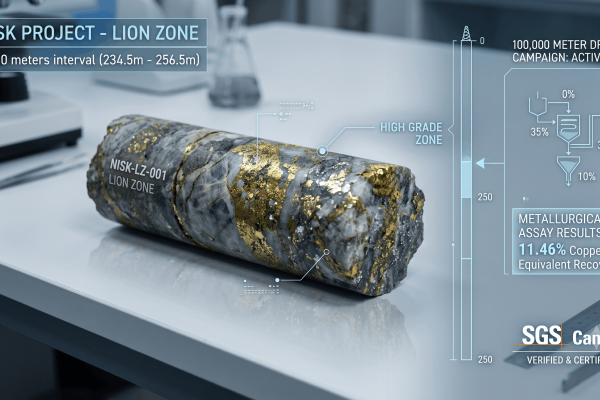
The automotive industry's transition to electric mobility is disrupting traditional supply chains. While efficient assembly used to be the key factor, in the era of electric vehicles, secure, environmentally responsible access to critical minerals matters most. Above all, strict legal requirements, such as the European Supply Chain Due Diligence Act, are forcing automakers to fully document the origin of their raw materials all the way back to the mine. In this complex landscape, Canada has emerged as one of the most important partners for European industry. The standards and mineral content are just right here—we introduce the market and potential beneficiaries.
Read

Commented by Matthias Schomber on July 7th, 2026 | 07:00 CEST
Auto and Combustion-Engine Crisis Meets Nuclear Power: Volkswagen and BMW Under Pressure - American Atomics on the Verge of a Breakout?
Germany's automotive industry has reached yet another low point in its ongoing crisis. Thousands of jobs are at risk. The country has long since surrendered its technological leadership to the Chinese. Policymakers have already driven the final nail into the coffin, and the casket is practically halfway into the ground. Yet, as the saying goes, hope dies last. Perhaps Volkswagen, BMW, and Germany's other automakers can still turn the tide and stage something of a resurrection. Or the grave may simply be filled in, marking the beginning of a prolonged decline—or even a permanent one. Volkswagen and BMW continue to struggle with structural challenges, shrinking margins, and weakening international markets. Investors should increasingly reconsider where they allocate their capital. Traditional safe bets no longer offer the same reassurance, and attention is inevitably shifting toward entirely different sectors benefiting from strong political support. This is precisely where the US uranium industry could emerge as a major beneficiary, with smaller players such as American Atomics also seeking to position themselves to help meet the world's rapidly growing energy demand. It is a paradigm shift that undoubtedly carries significant risks—but also presents tangible opportunities.
Read

Commented by André Will-Laudien on July 6th, 2026 | 07:25 CEST
Crash? No Thanks: The Auto Sector Ahead of a Turnaround! 133% with BYD, VW, North Arrow Minerals and BMW
In recent months, hardly any other sector on the stock market has managed to become as unpopular as the automotive sector. Margin battles and restructurings, including mass layoffs, are making the rounds across Europe. This downward trend stems primarily from structural overcapacity and mistimed ramp-up of electromobility. Now the German kings of the combustion engine are facing the aggressive market entry of state-subsidized Chinese competitors. European manufacturers, in particular, are thus caught in a fatal pincer crisis of falling sales and rising investment costs. Analysts therefore predominantly rate the traditional business models of the OEMs as risky and are lowering their future expectations. Institutional investors are abruptly shifting their portfolios into less cyclical, higher-margin growth sectors. The result: the broad European auto index lost around 12% over the last 12 months, with individual manufacturers down as much as 17 to 37%. Is there still hope for the titans on 4 wheels?
Read

Commented by André Will-Laudien on June 23rd, 2026 | 11:00 CEST
Gigawatt Power for AI and Electric Mobility: BMW, BYD, Rock Tech Lithium and Volkswagen in Focus
Current energy market analyses project electricity demand of around 780 TWh for Germany in 2035, representing an increase of approximately 56% compared to 2022. The Fraunhofer Institute estimates electricity demand from electric mobility alone at approximately 260 TWh by 2035. As a rule of thumb: if more than 50% of an upscaled car fleet runs electrically, mobility alone will require roughly an additional 200 to 260 TWh of electricity per year by 2035 — equivalent to around one third of Germany's current total electricity consumption. By comparison, the AI boom represents a different but equally massive load: data centres consumed approximately 415 TWh worldwide in 2024, and according to the IEA, that figure could reach around 945 TWh by 2030. BMW, VW and BYD occupy different positions in the same value chain: they sell vehicles that will increasingly require not only batteries but also a significantly larger and more flexible electricity infrastructure. Lithium remains the key raw material, because every battery — whether LFP, NMC or solid-state — cannot do without the white metal. Accordingly, Europe will need up to 20 times as much lithium by 2035 as it does today, according to industry sources. Rock Tech Lithium intends to make its mark in Canada and Germany and become an important building block in the North Atlantic supply chain. We do the math!
Read