June 24th, 2025 | 07:40 CEST
Hydrogen – The new trends: Plug Power, Pure Hydrogen, thyssenkrupp
German industry is set to go green. But once again, reality is proving more complex. In March, Thyssenkrupp withdrew a hydrogen tender because all submitted bids significantly exceeded the assumed cost conditions for hydrogen. So, is the hydrogen hype failing to take hold in the real economy? We take a closer look at the latest developments and explain which companies are now in pole position.
time to read: 3 minutes | Author: Nico Popp
ISIN: PLUG POWER INC. DL-_01 | US72919P2020 , PURE HYDROGEN CORPORATION LIMITED | AU0000138190 , THYSSENKRUPP AG O.N. | DE0007500001
Table of contents:
Author

Nico Popp
At home in Southern Germany, the passionate stock exchange expert has been accompanying the capital markets for about twenty years. With a soft spot for smaller companies, he is constantly on the lookout for exciting investment stories.
Tag cloud
Shares cloud
Thyssenkrupp continues hydrogen strategy: With natural gas if necessary
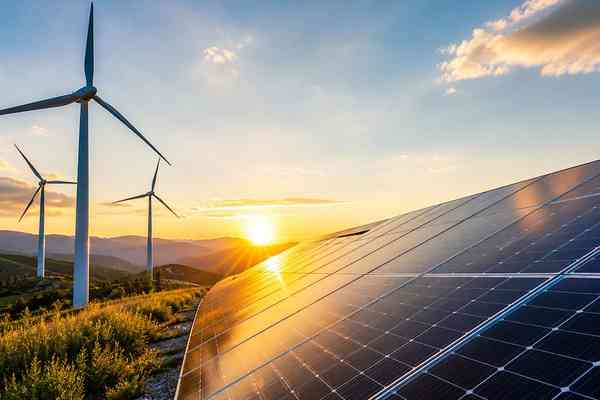
Despite the recent withdrawal of a tender, Thyssenkrupp still believes in hydrogen. The Company intends to use the high costs revealed by the failed tender in March as an opportunity to renegotiate subsidies. Thyssenkrupp also made it clear that green steel plants could also be operated with natural gas if necessary – even that would result in CO2 savings. The real green transformation could follow as soon as hydrogen is available at a reasonable price. But what exactly is the problem at the moment? Is renewable energy not available in abundance? Doesn't solar energy simply have to be converted into hydrogen?
Plug Power: Figures are improving, but not good enough
What sounds simple has been an urgent task for companies like Plug Power for many years. Plug Power is a leading global provider of integrated hydrogen ecosystems. The Canadian company offers electrolyzers for the production of green electricity, fuel cell systems, hydrogen tanks, compressors, and filling stations. Plug Power is particularly strong in the field of forklift trucks and other commercial applications. It is a smart strategy: once customers discover that hydrogen-powered forklifts work reliably, it makes sense for them to purchase additional solutions from Plug Power as well.
Plug Power's figures have improved recently: revenue climbed to USD 133.7 million in the first quarter of 2025, and losses were significantly reduced thanks to cost cuts and economies of scale. Analysts are still not entirely convinced, however. The consensus of 17 analysts is to "Hold" Plug Power shares. Although industrial companies such as Thyssenkrupp are pushing ahead with their hydrogen projects and hydrogen subsidiary Nucera recently acquired Danish high-pressure alkaline electrolysis specialist Green Hydrogen Systems, Plug Power's business has not yet gained sufficient momentum. But what is the reason for that?
Pure Hydrogen impresses with heavy machinery: Emerging markets as target markets
Plug Power's offering may not be entirely convincing to industrial customers – for example, battery-powered forklifts are considered more efficient. Many warehouses already have photovoltaic systems on their rooftops, making hydrogen as a fuel an unnecessary detour. Hydrogen makes more sense, however, for machines that are not used exclusively in one location – such as construction machinery, trucks, or buses. The Australian company Pure Hydrogen develops and supplies emission-free hydrogen solutions, primarily for heavy-duty applications and infrastructure. The Company offers hydrogen-powered commercial vehicles such as garbage trucks, concrete mixer trucks, buses, and semi-trucks, as well as stationary applications such as H2 generators. Thanks to this focus, the innovative company was able to report positive operating cash flow for the first time in March of this year. Sales of hydrogen vehicles climbed significantly in 2025 compared to 2024 – orders for 24 fuel cell vehicles have been received so far. In 2025, there were only 2 in total.
Pure Hydrogen: Methane pyrolysis and gas fields as additional pillars
As an additional pillar, Pure Hydrogen is focusing on methane pyrolysis technology, which breaks down methane into solid graphene and hydrogen. This process produces hydrogen through pyrolysis along with valuable by-products. Through a stake in Botala Energy, Pure Hydrogen also operates gas exploration projects in Botswana. With this setup, the Company is positioning itself in a hydrogen niche amid industrial transformation, focusing on decentralized solutions. Cooperation agreements in Mexico and Asia demonstrate that the Company is primarily able to score points in markets where electricity prices are low or the supply of renewable energy is abundant.
Pure Hydrogen's shares have only been listed in Frankfurt for a few weeks and remain largely undiscovered. However, on its home exchange in Australia, the share price has already shown a slight upward trend over the past year. It appears the market has not yet fully priced in Pure Hydrogen's emerging hydrogen business. The market capitalization is still a modest AUD 25.5 million. Since industrial giants like Thyssenkrupp continue to rely on hydrogen, while fossil gases still have their place, Pure Hydrogen could win over more customers with its business model. The stock is exciting and worth keeping an eye on.
Conflict of interest
Pursuant to §85 of the German Securities Trading Act (WpHG), we point out that Apaton Finance GmbH as well as partners, authors or employees of Apaton Finance GmbH (hereinafter referred to as "Relevant Persons") may hold shares or other financial instruments of the aforementioned companies in the future or may bet on rising or falling prices and thus a conflict of interest may arise in the future. The Relevant Persons reserve the right to buy or sell shares or other financial instruments of the Company at any time (hereinafter each a "Transaction"). Transactions may, under certain circumstances, influence the respective price of the shares or other financial instruments of the Company.
In addition, Apaton Finance GmbH is active in the context of the preparation and publication of the reporting in paid contractual relationships.
For this reason, there is a concrete conflict of interest.
The above information on existing conflicts of interest applies to all types and forms of publication used by Apaton Finance GmbH for publications on companies.
Risk notice
Apaton Finance GmbH offers editors, agencies and companies the opportunity to publish commentaries, interviews, summaries, news and the like on news.financial. These contents are exclusively for the information of the readers and do not represent any call to action or recommendations, neither explicitly nor implicitly they are to be understood as an assurance of possible price developments. The contents do not replace individual expert investment advice and do not constitute an offer to sell the discussed share(s) or other financial instruments, nor an invitation to buy or sell such.
The content is expressly not a financial analysis, but a journalistic or advertising text. Readers or users who make investment decisions or carry out transactions on the basis of the information provided here do so entirely at their own risk. No contractual relationship is established between Apaton Finance GmbH and its readers or the users of its offers, as our information only refers to the company and not to the investment decision of the reader or user.
The acquisition of financial instruments involves high risks, which can lead to the total loss of the invested capital. The information published by Apaton Finance GmbH and its authors is based on careful research. Nevertheless, no liability is assumed for financial losses or a content-related guarantee for the topicality, correctness, appropriateness and completeness of the content provided here. Please also note our Terms of use.