
LOCKHEED MARTIN
Commented by Armin Schulz on October 13th, 2026 | 05:26 CEST
Almonty Industries, Rheinmetall, Lockheed Martin – Tungsten, Defence and a Share Price Decline That Could Open Up Opportunities
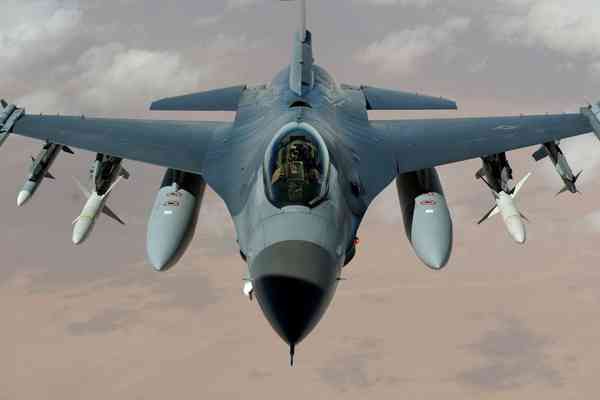
Sangdong is producing tungsten again for the first time since 1993. Almonty's South Korean mine is now supplying a raw material from outside China that is urgently needed in defence and is also found in an increasing number of high-tech devices. China's export restrictions have driven up tungsten prices in the West, while demand remains strong. The same is true of defence. On September 14, Rheinmetall booked an order for tens of thousands of artillery shells, while Lockheed Martin announced a framework agreement worth up to USD 1.2 billion for tactical missiles on September 21. Yet the stock market has so far shown little reaction to these developments. All three stocks are under pressure. We therefore take a closer look at Almonty Industries, Rheinmetall and Lockheed Martin.
Read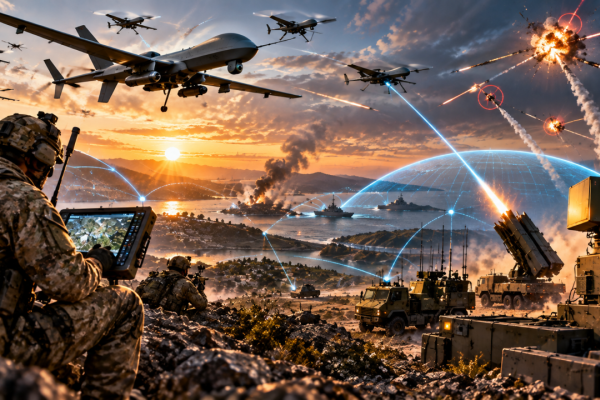
Commented by Stefan Feulner on September 28th, 2026 | 07:05 CEST
Lockheed Martin, Volatus Aerospace, DroneShield: The Billion-Dollar Race for Drone Supremacy
Wars are changing rapidly. Drones are taking over reconnaissance and attack missions, autonomous systems are making increasingly more decisions on their own, and traditional weapons systems are being integrated with artificial intelligence and new sensors. At the same time, demand for technologies that can detect and neutralize enemy aircraft at an early stage is surging. This is creating a new billion-dollar market for the defence industry, spanning precision weapons to autonomous drones and electronic countermeasures.
Read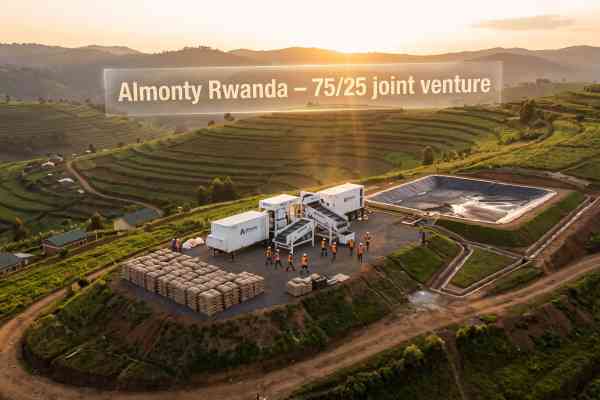
Commented by Nico Popp on September 22nd, 2026 | 07:05 CEST
Tungsten Shortage: Almonty Secures Sandvik Deal – New US Defense Rules Raise Pressure on Lockheed & Co.
In extreme operating conditions, cutting-edge technology relies on materials that push the boundaries of physics. Whether in ammunition, engines, or milling heads that machine titanium blocks for stealth jets—there is no getting around tungsten. With the highest melting point of any pure metal and an enormous density, the element is considered indispensable for industry and the defence sector. Yet, of all things, the West is almost left high and dry when it comes to this key component. Beijing controls over three-quarters of global production and also dominates downstream processing. However, price spikes and stricter trade rules are now shaking the industry awake. At the centre of it all is the US tungsten specialist Almonty Industries.
Read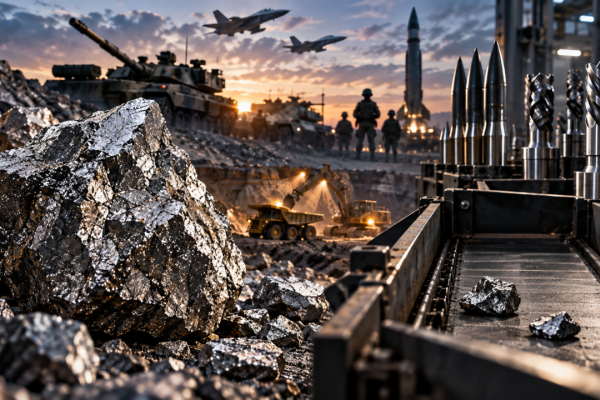
Commented by Stefan Feulner on September 21st, 2026 | 07:25 CEST
Lockheed Martin, Almonty Industries, Rheinmetall: Defense Boom Meets Tungsten Shortage
The global defense boom is entering its next phase. Growth is no longer driven solely by new orders, but by how quickly companies can ramp up production capacity. However, missiles, aircraft, and armoured vehicles require large quantities of strategic materials. Tungsten, in particular, is virtually irreplaceable for many military applications because of its extreme hardness and heat resistance. As Western defense contractors expand their manufacturing, control over secure sources of raw materials is therefore increasingly becoming a strategic issue.
Read
Commented by Armin Schulz on September 14th, 2026 | 08:20 CEST
Empty Ammunition Stockpiles, Tight Tungsten Supply: Almonty Industries, Rheinmetall and Lockheed Martin Set to Benefit
As geopolitical conflicts intensify once again and NATO countries ramp up defence spending, ammunition supplies are increasingly running low. This is making tungsten ever more important. Without this critical raw material, armour-piercing ammunition, precision missiles and high-performance tools cannot be produced. Starting in 2027, US procurement rules will also require supply chains independent of China, Russia, Iran, and North Korea. This is redirecting billions of dollars and intensifying the race for secure sources. Against this backdrop, Almonty Industries, Rheinmetall, and Lockheed Martin are moving into focus. All three companies stand to benefit from the realignment of the Western defence industry.
Read
Commented by Armin Schulz on September 2nd, 2026 | 07:15 CEST
How Investors Can Profit from the Drone Threat — Rheinmetall, Volatus Aerospace and Lockheed Martin in Focus
On the night of August 5, 2026, the quick action of a bus driver helped avert a catastrophe. The drone attack ushered in a new era of threats. The foiled attack on Leipzig/Halle Airport involving an explosive-laden drone is no longer an isolated incident. This escalation, which is now attracting attention at the highest levels of the security establishment, is putting a multibillion-dollar market for effective counter-drone solutions and autonomous weapons systems firmly in the spotlight. For investors, the question is who will benefit most from this "drone supercycle". We take a closer look at three promising candidates: Rheinmetall, Volatus Aerospace and Lockheed Martin.
Read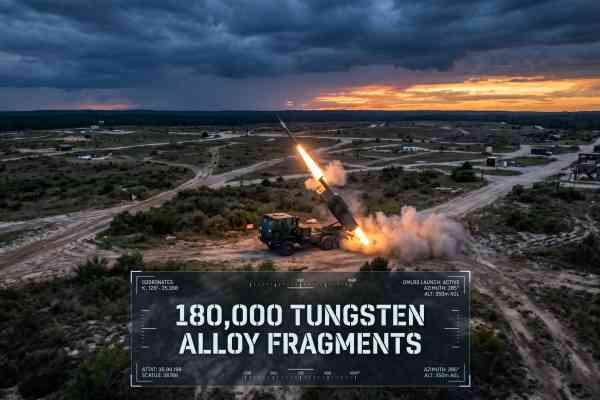
Commented by Nico Popp on August 20th, 2026 | 07:05 CEST
Tungsten Shock for Sandvik and Lockheed Martin – Almonty in a Perfect Position
When military equipment or industrial tools reach their performance limits, a highly sought-after heavy metal often comes to the rescue. With a melting point of 3,422 °C, tungsten withstands even extreme heat and has a density nearly identical to that of gold. Yet it is precisely with this key raw material, tungsten, that Western industrialized nations are coming under pressure. Beijing controls over 80% of global production and has significantly tightened export controls in recent years. Since China itself became a net importer in 2025 and the Western defense industry faces strict procurement bans, a race is underway for mining capacity in secure jurisdictions. This is where Almonty Industries comes into play, as it is considered a leading Western tungsten producer. We take a closer look at the market.
Read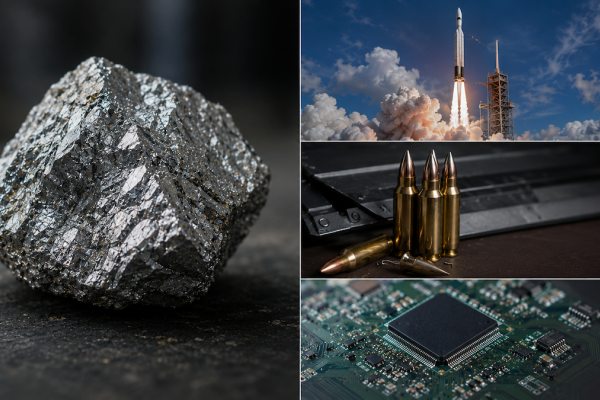
Commented by Fabian Lorenz on August 10th, 2026 | 07:05 CEST
Tungsten Shortage Makes Headlines and Offers 100% Upside Potential: Almonty Industries, Indus Holding, and Lockheed Martin in Focus
China dominates the global tungsten market, and the West is increasingly feeling the consequences. The NZZ warns of a dangerous dependence on critical raw materials, while export controls and a lack of alternative sources are further exacerbating supply issues. This is precisely where Almonty Industries comes in. The company operates tungsten mines in Portugal and South Korea, with another operation in the US expected to come online soon. At the same time, tungsten prices are surging. According to Indus CEO Johannes Schmidt, tungsten carbide prices have roughly tripled since the beginning of the year. Almonty is not the only company benefiting from this development. Indus Holding, an investment company with exposure to the sector, has already raised its full-year guidance twice. The US military buildup is driving additional demand. With ammunition stockpiles running low, the Trump administration is putting pressure on Lockheed Martin and other defence contractors. For investors, the tungsten boom may have only just begun.
Read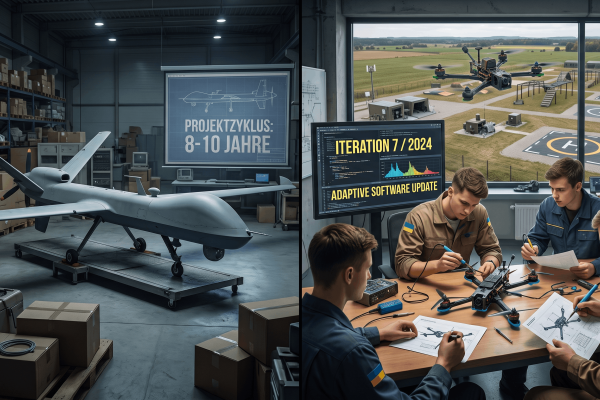
Commented by Nico Popp on July 27th, 2026 | 07:15 CEST
The Drone Revolution: Palantir and Lockheed Martin Forced to Innovate—Volatus Aerospace Follows Ukraine's Lead
The days when tanks weighing several metric tons or extremely expensive fighter jets determined victory or defeat on the battlefield are over. As a look at modern warfare shows, it is now primarily the seamless interaction between hardware and software that determines actual success. Those who cannot coordinate algorithms and sensor technology in real time will fall behind. Ukraine is currently demonstrating this impressively, as it now launches more drones for counterattacks against Russia than the aggressor itself. This illustrates that, for NATO, security also means building an agile defence industry that can respond flexibly to requirements. We take a look at three companies in the industry and highlight opportunities.
Read
Commented by André Will-Laudien on July 21st, 2026 | 07:00 CEST
Ukraine – Iran – NATO: The Battle in the Skies Gives Wings to RTX and Lockheed; Rheinmetall and Volatus Aerospace on the Rise!
As long as geopolitical conflicts continue, defence stocks have it easy. That is because they automatically come into focus when new government programs are launched to boost defence capabilities. In July, it was the NATO conference in Ankara. Government officials in attendance surrounded Donald Trump, as the US is the leader in air defence—and this is precisely where both NATO and Ukraine are falling short. When it comes to drones, however, the former Soviet state has made great strides. An entire drone industry was built from the ground up in no time at all. And for several weeks now, they have been piercing through Russia's defensive perimeter and penetrating deep into its energy processing facilities. Ukraine has already taken a quarter of Russia's oil refining capacity out of commission. The West views this progress as a welcome easing of tensions, but is stepping up its investments even further. Chancellor Merz, for example, is ordering the highly sought-after Tomahawk missiles from the US and is even participating in the latest French nuclear exercise. Just as politicians are, investors should also be in the starting blocks to ride the new wave of investment.
Read