
BOEING CO. DL 5

Commented by André Will-Laudien on October 7th, 2026 | 09:10 CEST
Bridging the Skies: The European-Canadian Drone Offensive with Volatus Aerospace, Boeing, RTX and DroneShield
"If Russia is not stopped, its war machine will sooner or later turn against us," German Chancellor Friedrich Merz has warned. The current security situation is very serious, and it would certainly be preferable to avoid being drawn into such a conflict. As modern warfare is no longer fought exclusively on the ground, the global aerospace and defence industry is undergoing one of the biggest transformations in its history. Relations between Germany and Canada are also developing in a remarkably positive direction, a testament to the inner strength of the NATO alliance. The new strategic alliance aims to break through existing technological barriers and set new standards for the defence sector. At the heart of this initiative is the integration of cutting-edge sensor technology, artificial intelligence, and state-of-the-art platforms. Innovative systems for airspace surveillance and threat detection are becoming increasingly important for securing critical infrastructure. For investors, this development creates opportunities to gain exposure to a highly dynamic, rapidly evolving growth market.
Read

Commented by André Will-Laudien on September 15th, 2026 | 10:25 CEST
Defence Stocks Ride the NATO Wave: Boeing, Volatus, Dassault, RTX and DroneShield in Focus
Since Russia's initial actions in Central Europe, the European Union has faced a massive wave of rearmament driven by new NATO requirements, giving the defence industry a significant boost. EU Defence Commissioner Andrius Kubilius called for an unprecedented expansion of European capabilities in Brussels to match Russia's enormous production capacity. To achieve this goal, the EU is aiming to produce up to 10 million state-of-the-art FPV drones and 130,000 jet-powered drones annually. In addition, the defence industry is expected to roll out about 1,700 ballistic missiles per year. Industry giants such as Boeing and Dassault are likely to benefit significantly from this massive technological rearmament initiative. At the same time, specialized drone pioneers like Volatus and DroneShield are stepping into the spotlight as demand for unmanned systems and their countermeasures rises dramatically. A newly formed drone alliance between the EU and Ukraine is now set to accelerate the development of these next-generation systems massively. Which stocks could see the biggest gains?
Read

Commented by Armin Schulz on July 21st, 2026 | 07:25 CEST
China's Tungsten Grip Begins to Loosen—Almonty Industries Strengthens Defence Supply Chains as RENK and Boeing Secure Multi-Billion-Dollar Orders
The wars in Ukraine and Iran have exposed a critical weakness in the West's technology and defence architecture. Without fire-resistant tungsten, even the most advanced fighter jets remain grounded, and the most precise guided missiles are rendered useless. While combat operations are depleting stockpiles, China has effectively secured a monopoly over the entire supply chain, from the mine to high-performance components. This double squeeze, driven by war-induced demand and Beijing's control over supply, is transforming this critical material into a strategic instrument of power. On the other hand, these tensions are fueling a boom in the defence industry. Meanwhile, these geopolitical tensions are fueling a boom across the defence industry. We take a closer look at the current outlook for Almonty Industries, RENK Group, and Boeing.
Read
Commented by Armin Schulz on June 30th, 2026 | 07:00 CEST
ILA 2026 Unveils the Winners: Conquering the Next Multi-Billion-Dollar Aviation Market with Rheinmetall, Volatus Aerospace, and Boeing
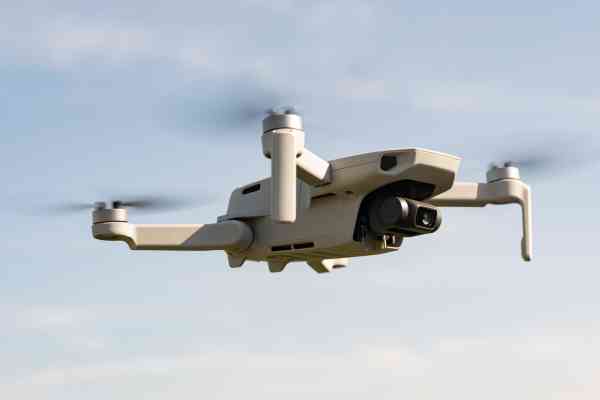
The next stage of aerial warfare is not a distant scenario, but a tangible industrialization trend that has taken the capital markets by storm. NATO exercises, lessons learned from Ukraine, and the 2026 International Aerospace Exhibition all underscore the urgent shift toward networked, autonomous systems. Investors should not dismiss this as a mere technological gimmick. In the future, the decisive factor will no longer be the platform alone, but rather mastery of entire ecosystems comprising sensors, software, and integration. Those who identify the right companies early on will participate in a market driven by rising defence budgets and political momentum. We take a closer look at Rheinmetall, Volatus Aerospace, and Boeing.
Read

Commented by Nico Popp on March 10th, 2026 | 07:05 CET
Running out of ammunition? The key role of Antimony Resources, Rheinmetall, and Boeing
The arms industry is facing a severe test amid the war in the Middle East. The enormous consumption of ammunition is pushing already limited Western production capacities to their limits. While the US has raised its defense spending for 2026 to a record level of USD 901 billion, the intense exchange of fire in the Middle East and the use of modern defense systems are depleting stockpiles at a record pace. In this environment, the critical semi-metal antimony is becoming a focus of national security. The element is irreplaceable as a hardening agent for lead alloys in armor-piercing projectiles and for high-precision infrared sensors. According to the US Geological Survey (USGS), the global supply situation is becoming increasingly tense. This is mainly due to strict export restrictions imposed by China, which dominates global mining with a market share of just under 60% and has long used the metal as a strategic weapon. To guarantee defense capabilities, industry giants such as Rheinmetall and Boeing must ramp up their production. The problem is that raw materials are finite. This is where players such as Antimony Resources come into play, securing the coveted antimony in Canada.
Read

Commented by Nico Popp on January 8th, 2026 | 07:25 CET
Defense in a stranglehold: Why Lockheed and Boeing are grounded without antimony - and Antimony Resources holds the strategic solution
It is a chemical element with the atomic number 51 that has long led a shadowy existence on the world's stock exchanges, but whose strategic importance is now keeping security policymakers at the Pentagon awake at night: antimony. What sounds like a footnote in the periodic table is, in reality, the invisible glue holding together the modern defense and aviation industries. But this glue is becoming scarce. China, which dominates the global market with a share of more than 50% in production and nearly 80% in processing capacity, has begun to tighten the reins on exports. Trade barriers and opaque export restrictions are fueling real fears of a supply stoppage. In this high-risk geopolitical scenario, giants such as Lockheed Martin and Boeing are finding themselves in a bind, while small Western explorers such as Antimony Resources are suddenly becoming owners of assets that could prove indispensable to the national security of NATO countries.
Read

Commented by Nico Popp on December 17th, 2025 | 07:30 CET
The Pentagon gets serious for Boeing and Co.: US government backs Korea Zinc and ignites the turbo for Antimony Resources
Antimony was long a metal that attracted little attention. But that has changed abruptly with China's recent export restrictions and geopolitical escalation. The semi-metal is indispensable for the defense industry, from ammunition to high-tech alloys used by Boeing. To break its dependence on Beijing, Washington is now digging deep into the state coffers and supporting the development of domestic capacities through the industrial giant Korea Zinc. This government intervention is fundamentally changing the rules of the market and bringing North American explorers, such as Antimony Resources, which could supply the urgently needed raw material in a few years, into the spotlight of strategic investors.
Read
Commented by Nico Popp on November 18th, 2025 | 07:00 CET
Defense stocks catching their second wind: Almonty, Boeing, Rheinmetall
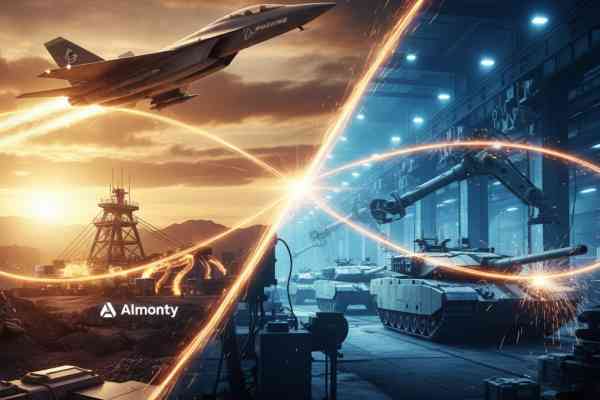
The question of European security has fallen somewhat out of focus on the stock market - shares in companies such as Rheinmetall and Almonty have fallen from their highs. But just because other topics are currently dominating the media, that does not mean that defense-related stocks do not have a promising future ahead of them. We take a look at three companies in the sector and explain what kind of potential investors can expect today.
Read

Commented by Nico Popp on September 22nd, 2025 | 07:05 CEST
Tenfold increase on the Horizon – Things could move fast: Boeing, Larvotto Resources and Antimony Resources
When fires break out in high-rise buildings, vehicles, or aircraft, they can quickly become life-threatening. Fire protection materials have been used for many years to contain fires. Antimony is a key component in these materials. Around 42% of global demand is accounted for by antimony-based flame retardants in composite materials. But antimony also plays an important role in armaments and is found in armor-piercing ammunition, night vision devices, infrared sensors, and communication equipment. With China controlling around 70% of the market, according to Future Markets Insights, the need for alternative sources is growing. We take a closer look at the market and highlight some exciting stocks.
Read

Commented by André Will-Laudien on August 25th, 2025 | 07:00 CEST
100% with NATO contracts from the air! Airbus, Globex Mining, Boeing, and Lufthansa
The craziness continues! NATO member states have agreed on new planning targets for armaments and capabilities and, according to Secretary General Mark Rutte, have increased the requirements for air and missile defense by about 30%. Rutte stated: "We need more resources, troops, and capabilities to be prepared for any threat." German Chancellor Friedrich Merz emphasised that Germany would provide all the necessary resources to expand the Bundeswehr into the strongest conventional army in Europe. According to experts, large-scale defense projects, particularly in the aerospace sector, will require enormous investments and far-reaching acquisitions. Across Europe, around EUR 300 billion is expected to be invested in air forces by 2030. Investors should now set the course to benefit from the flood of orders in the aerospace sector.
Read