May 13th, 2025 | 07:00 CEST
When returns meet security: Why Almonty Industries is suddenly everyone's darling!
In 2025, the world looks at a map full of conflicts: tensions are escalating in Ukraine, the Middle East, and along new geopolitical fault lines in Asia and Africa. Hopes for peace are giving way to a reality of rearmament and militarization. This dynamic is fueling the defense industry. But its boom depends on an inconspicuous metal: tungsten. With its unique heat resistance and density, it is irreplaceable for armor-piercing ammunition, missiles, and high-performance alloys. While China dominates the global market, a Canadian company is stepping into the spotlight: Almonty Industries. With the revival of the legendary Sangdong mine in South Korea and strategic partnerships, Almonty could become a key player for the West.
time to read: 3 minutes | Author: Armin Schulz
ISIN: ALMONTY INDUSTRIES INC. | CA0203981034
Table of contents:
Author

Armin Schulz
Born in Mönchengladbach, he studied business administration in the Netherlands. In the course of his studies he came into contact with the stock exchange for the first time. He has more than 25 years of experience in stock market business.
Tag cloud
Shares cloud
Tungsten: The invisible backbone of security
Tungsten is not a headline-grabbing commodity, but without it, nothing works. Its melting point of 3,422 degrees Celsius makes it the hardest metal on earth and indispensable in defense technology. Industry experts agree that without tungsten, there would be no hard steel for armor or high-impact ammunition. The problem is that over 80% of global production is controlled by China. Since Beijing drastically cut exports in February 2025, NATO countries have been desperately searching for alternatives. According to estimates, Western reserves will only last for a few months – a nightmare for defense companies that want to ramp up production due to the boom.
Almonty Industries: From underdog to strategic partner
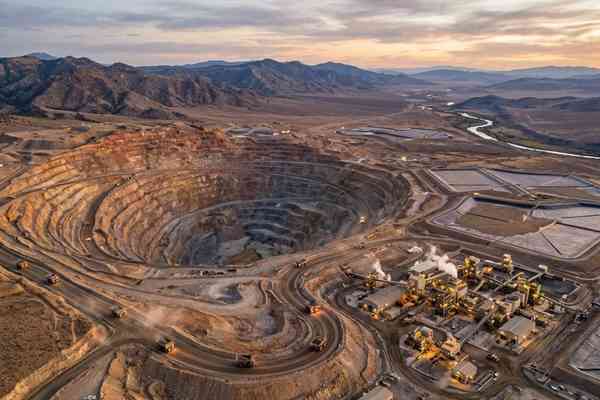
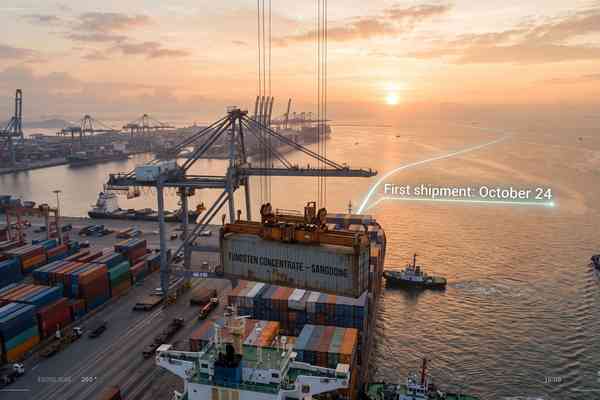
This is where Almonty Industries comes into play. The Company, which previously operated mines in Portugal and Spain, is positioning itself as a bridgehead for Western raw material security. The game changer is the Sangdong mine in South Korea. A historic mine dating back to the 1950s, which once supplied 30% of the world's tungsten. After more than three decades of inactivity, Almonty will start production here in the second quarter of 2025. The figures are impressive. The property offers 7.89 million tons of ore reserves, a life span of 90 years, and has the potential to cover more than 40% of non-Chinese production.
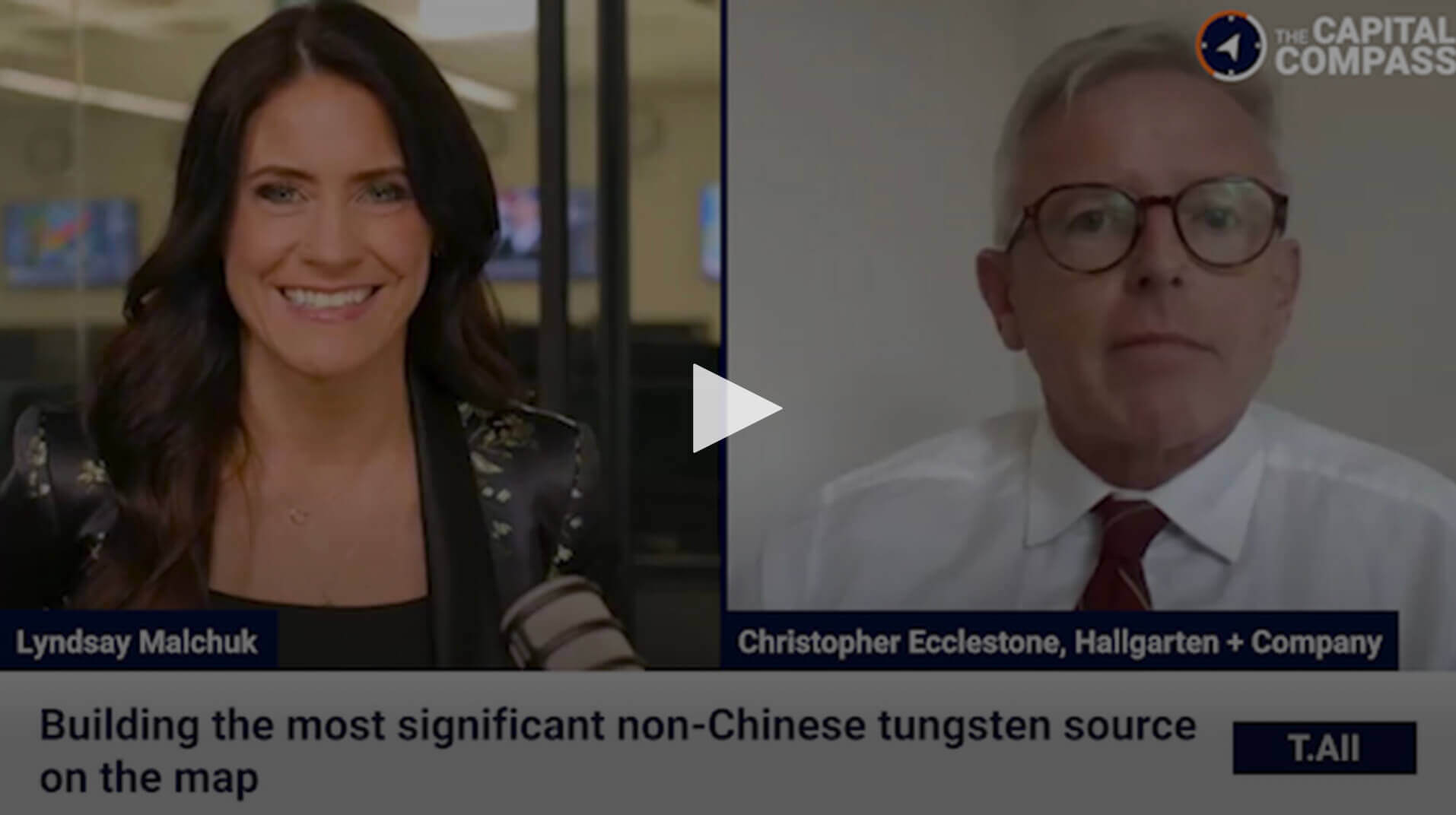
Another deal that changes everything
On May 7, Almonty signed an agreement underscoring the Company's strategic importance. Tungsten Parts Wyoming, a US defense contractor, has committed to purchasing at least 40 tons of tungsten oxide per month, which will be used exclusively for US defense applications such as missiles and drones. The highlight of the deal is a guaranteed minimum price combined with unlimited upside potential as global market prices rise. "This binding purchase agreement represents a significant milestone for Almonty, as it secures both predictable revenue through a fixed minimum price and long-term demand directly linked to US defense programs," said CEO Lewis Black. The deal is not an isolated case. The Austrian Plansee Group secured long-term supplies back in 2020. At the end of January, it was announced that South Korean steel giant SeAH M&S would purchase all molybdenum from Sangdong, which is also located on the property.
The "Americanization" of a Canadian company
Parallel to its operational expansion, Almonty is undergoing a structural change. At the most recent annual general meeting, a majority of shareholders voted in favor of relocating the headquarters to Delaware. This brings the Company closer to the US military complex. This is in line with the announcement on March 18 that the Company has entered into a strategic partnership with American Defense International, which has important networks in the US. The strategy is complemented by the planned listing on the NASDAQ, which is intended to attract new investor groups. The appointment of retired General Gustave F. Perna to the board was a symbolic coup. The former head of logistics for the US Army brings contacts in the Pentagon and knows how to make supply chains crisis-proof.
Analysts: From niche player to mainstream player
The financial world is beginning to recognize the potential. Peter Thilo Hasler of Sphene Capital sees the Company generating revenue of CAD 483.4 million and EBIT of CAD 198.8 million by 2027. His price target is CAD 5.40. GBC Research is more cautious at CAD 4.20, but points to the unique geopolitical leverage. Also in April, B. Riley Securities issued a "Buy" recommendation with a target price of CAD 5.00. This puts the stock's potential between 70 and 120%.

But it is about more than just numbers. Almonty embodies a paradigm shift. Countries are suddenly prioritizing security of supply over cost efficiency. This plays into the Company's hands. Demand already exceeds supply, and Almonty is one of the few players outside China that can scale up. Nevertheless, it is not possible to meet all the demand. Lewis Black said in an interview with FAZ: "I realize that I have to tell many interested parties that I unfortunately cannot supply them immediately."
In a world that is moving toward division rather than globalization, tungsten is becoming a test case for Western resilience. Almonty Industries has set the course to fill this gap with the Sangdong mine, strategic alliances, and US domestication. Whether the mine will become the key to the West's tungsten supply also depends on the broader geopolitical climate. But one thing is clear: When security takes precedence over returns, companies like Almonty are no longer just commodity stocks – they become insurance policies against the unpredictability of the 21st century.
Conflict of interest
Pursuant to §85 of the German Securities Trading Act (WpHG), we point out that Apaton Finance GmbH as well as partners, authors or employees of Apaton Finance GmbH (hereinafter referred to as "Relevant Persons") currently hold or hold shares or other financial instruments of the aforementioned companies and speculate on their price developments. In this respect, they intend to sell or acquire shares or other financial instruments of the companies (hereinafter each referred to as a "Transaction"). Transactions may thereby influence the respective price of the shares or other financial instruments of the Company.
In this respect, there is a concrete conflict of interest in the reporting on the companies.
In addition, Apaton Finance GmbH is active in the context of the preparation and publication of the reporting in paid contractual relationships.
For this reason, there is also a concrete conflict of interest.
The above information on existing conflicts of interest applies to all types and forms of publication used by Apaton Finance GmbH for publications on companies.
Risk notice
Apaton Finance GmbH offers editors, agencies and companies the opportunity to publish commentaries, interviews, summaries, news and the like on news.financial. These contents are exclusively for the information of the readers and do not represent any call to action or recommendations, neither explicitly nor implicitly they are to be understood as an assurance of possible price developments. The contents do not replace individual expert investment advice and do not constitute an offer to sell the discussed share(s) or other financial instruments, nor an invitation to buy or sell such.
The content is expressly not a financial analysis, but a journalistic or advertising text. Readers or users who make investment decisions or carry out transactions on the basis of the information provided here do so entirely at their own risk. No contractual relationship is established between Apaton Finance GmbH and its readers or the users of its offers, as our information only refers to the company and not to the investment decision of the reader or user.
The acquisition of financial instruments involves high risks, which can lead to the total loss of the invested capital. The information published by Apaton Finance GmbH and its authors is based on careful research. Nevertheless, no liability is assumed for financial losses or a content-related guarantee for the topicality, correctness, appropriateness and completeness of the content provided here. Please also note our Terms of use.