

Armin Schulz
Born in Mönchengladbach, he studied business administration in the Netherlands. In the course of his studies he came into contact with the stock exchange for the first time. He has more than 25 years of experience in stock market business.
After graduating, he worked as an IT consultant for a listed company before becoming self-employed, during which time he worked for various DAX-listed companies and a large Swiss insurance company, among others.
Since 2009, he has been exclusively involved in the capital markets, where he was able to gain experience as a day and swing trader, in investor relations and at board level. He was able to live out his passion for numbers in the controlling department of a securities trading house.
For him, fundamental analysis paired with the correct reading of the price action of a market provides the basis for successful trading.
Commented by Armin Schulz

Commented by Armin Schulz on October 21st, 2026 | 05:44 CEST
Nordex, RE Royalties, NextEra Energy – US Electricity Consumption Rises 4% YoY, Boosting Demand for Wind Turbines, Financing and Utilities
Demand for electricity is growing. The US Energy Information Administration (EIA) estimates that US electricity consumption was 4% higher in the third quarter of 2026 than in the same quarter a year earlier. The share of electricity generated from wind power is expected to rise from 11% this year to 12% in 2027. Meeting this demand requires wind turbines, financing for new projects and major utilities. These factors are driving expansion across the sector. We take a closer look at turbine manufacturer Nordex, renewable energy financier RE Royalties and utility NextEra Energy.
Read
Commented by Armin Schulz on October 21st, 2026 | 05:25 CEST
Nel, dynaCERT, Daimler Truck – Hydrogen, Electricity and Diesel Aim to Reduce Emissions in Heavy-Duty Transport
The decarbonisation of trucks is progressing at different speeds. Daimler Truck sold a total of 91,260 units in the 3rd quarter of 2026, of which only 1,207 were battery-electric. The transition is therefore progressing more slowly than sales are growing. Hydrogen propulsion first requires low-cost hydrogen production. Meanwhile, fleet operators are looking for ways to make existing diesel engines cleaner today to improve their carbon footprint. Ultimately, manufacturers must deliver vehicles that perform in everyday use. If all this can be brought together, it could give hydrogen a long-term boost. We therefore take a closer look at Nel, dynaCERT and Daimler Truck.
Read
Commented by Armin Schulz on October 20th, 2026 | 05:39 CEST
VW, Strategic Resources, Infineon: EVs, Raw Materials and Chips - Three perspectives on the Auto Industry's Transformation
In September, more than one in three new cars registered in Germany was fully electric. According to the Federal Motor Transport Authority (KBA), battery-electric vehicles accounted for 34.5% of new registrations. Automakers must adapt their model line-ups in a short period of time, and this requires substantial investment. But the transformation extends beyond the factory gates. Building electric vehicles requires reliable sources of raw materials such as vanadium, used in high-strength steel (ideally produced using green methods) and in batteries. Power semiconductors are also essential, controlling and converting electrical power within vehicles. Companies capable of supplying these materials and components could benefit from this shift. We therefore take a closer look at Volkswagen, Strategic Resources and Infineon.
Read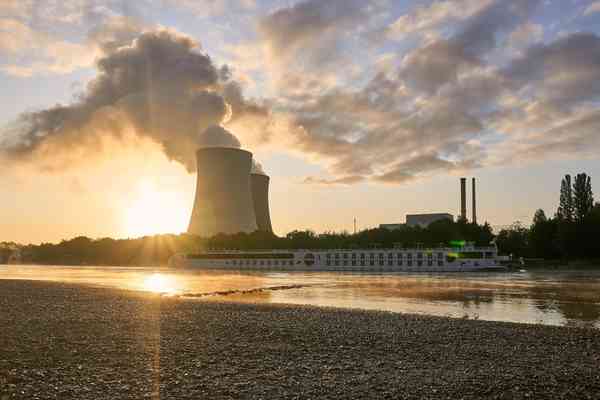
Commented by Armin Schulz on October 19th, 2026 | 05:23 CEST
E.ON, Standard Uranium, Energy Fuels: Uranium Stocks Caught Between Rising Electricity Demand and Fuel Shortages
The long-term uranium price stood at USD 96.50 per pound at the end of September, according to producer Cameco. Power plant operators secure their fuel supply years in advance, and that is precisely where the pressure comes from. Data centres are driving up electricity demand, distribution grids must deliver it to customers, and the fuel has to come from somewhere. New mines do not start producing overnight. Anyone who discovers deposits or extracts uranium from the ground today is playing right into the hands of energy suppliers. Today we take a closer look at E.ON with its distribution networks, Standard Uranium and Energy Fuels.
Read
Commented by Armin Schulz on October 16th, 2026 | 05:20 CEST
Power Metallic Mines, Siemens Energy and BYD: The Export Boom in Electric Vehicles Drives Demand for Copper and Electricity
A single Chinese automaker sold 180,700 new energy vehicles overseas in September. That accounts for about 39% of its sales, more than double the figure from a year earlier. Behind this growth lies a substantial demand for raw materials, including copper and nickel for batteries and electric motors, as well as platinum-group metals for catalytic converters in hybrid vehicles. Electricity is also essential to charge all these vehicles. This illustrates what supply chains must look like to keep electric vehicles running. This plays right into the hands of raw material producers and electricity generators. Today, we take a closer look at Power Metallic Mines, Siemens Energy and BYD.
Read
Commented by Armin Schulz on October 15th, 2026 | 05:39 CEST
SAP, Aspermont, Palantir: AI Stocks Benefit as Data Is Turned into Products
Data are the raw material for artificial intelligence. On October 6, SAP announced plans to acquire Belgian specialist TechWolf, whose technology links tasks, skills and labour market signals. The deal is expected to close in the 4th quarter. Aspermont deals with raw materials in the literal sense, having evolved from a specialist mining publisher into a provider of data and analytics. Palantir integrates data sources into platforms that enable government agencies and businesses to make decisions and take action. Artificial intelligence is now giving the data business a fresh boost. We take a closer look at SAP, Aspermont and Palantir.
Read
Commented by Armin Schulz on October 15th, 2026 | 05:27 CEST
Bilfinger, Zefiro Methane, Waste Management – Environmental Remediation: A Business for Three Specialists
Created and Published on Behalf of Zefiro Methane Corp.
Environmental damage often occurs quickly, but remedying it costs time and money. Environmental Action Germany reported on 13 October that inspections in September had found uncontrolled methane leaks at gas facilities in northern Germany, western Germany and the Netherlands. The environmental campaigners see these as possible breaches of the EU Methane Regulation. Such reports are likely to spur operators into action. Those who decommission facilities, decontaminate legacy sites, plug orphaned wells or recover energy from waste could benefit. If successful, cleaning up becomes a business. We therefore take a closer look at Bilfinger, Zefiro Methane and Waste Management.
Read
Commented by Armin Schulz on October 14th, 2026 | 05:44 CEST
SpaceX, First Hydrogen, Siemens: Space, Drones and Robotics Are Key Themes for Investors
Space, drones and robotics are likely to become increasingly important in the coming years. On September 24, the International Federation of Robotics (IFR) reported a record stock of 5 million industrial robots, while on September 28, Starship reached Earth orbit for the first time. The two developments are more closely connected than they might initially appear. Deploying drones or robots in factories requires connectivity, propulsion systems and software to control the entire operation. From space to the factory floor, the foundations for the next phase of technological development are being laid. We therefore take a closer look at SpaceX, First Hydrogen and Siemens.
Read
Commented by Armin Schulz on October 14th, 2026 | 05:41 CEST
Barrick Mining, Lahontan Gold and Agnico Eagle: Gold Stocks Spanning Production, Mine Restart and Strategic Investments
Since 2019, Barrick Mining has invested about USD 5.3 billion in Tanzania's economy, according to its own figures, and it extended the licences for the North Mara gold mine by 15 years in early October. This provides planning certainty. Smaller companies also have big plans. Lahontan Gold agreed to acquire Emergent Metals in mid-September and is targeting a 2027 restart of the Santa Fe mine in Nevada. If it succeeds, the high gold price works in the company's favour. Agnico Eagle shows that major producers are also interested in emerging companies. We therefore take a closer look at Barrick Mining, Lahontan Gold and Agnico Eagle.
Read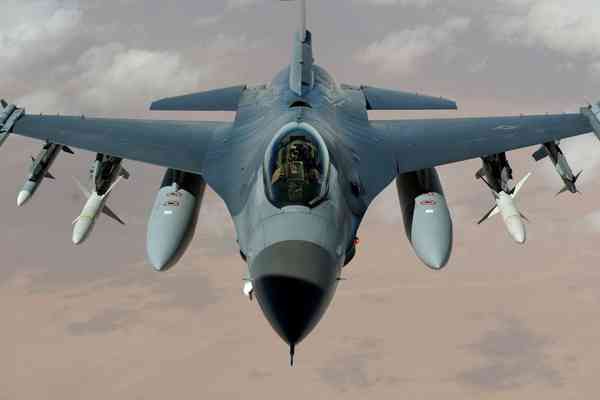
Commented by Armin Schulz on October 13th, 2026 | 05:26 CEST
Almonty Industries, Rheinmetall, Lockheed Martin – Tungsten, Defence and a Share Price Decline That Could Open Up Opportunities
Sangdong is producing tungsten again for the first time since 1993. Almonty's South Korean mine is now supplying a raw material from outside China that is urgently needed in defence and is also found in an increasing number of high-tech devices. China's export restrictions have driven up tungsten prices in the West, while demand remains strong. The same is true of defence. On September 14, Rheinmetall booked an order for tens of thousands of artillery shells, while Lockheed Martin announced a framework agreement worth up to USD 1.2 billion for tactical missiles on September 21. Yet the stock market has so far shown little reaction to these developments. All three stocks are under pressure. We therefore take a closer look at Almonty Industries, Rheinmetall and Lockheed Martin.
Read