

Armin Schulz
Born in Mönchengladbach, he studied business administration in the Netherlands. In the course of his studies he came into contact with the stock exchange for the first time. He has more than 25 years of experience in stock market business.
After graduating, he worked as an IT consultant for a listed company before becoming self-employed, during which time he worked for various DAX-listed companies and a large Swiss insurance company, among others.
Since 2009, he has been exclusively involved in the capital markets, where he was able to gain experience as a day and swing trader, in investor relations and at board level. He was able to live out his passion for numbers in the controlling department of a securities trading house.
For him, fundamental analysis paired with the correct reading of the price action of a market provides the basis for successful trading.
Commented by Armin Schulz

Commented by Armin Schulz on October 3rd, 2026 | 06:00 CEST
Bayer, MustGrow Biologics, BASF: From Yesterday's Crop Protection to Tomorrow's Biologicals
Created and Published on Behalf of MustGrow Biologics Corp.
Major agricultural companies are reshaping their businesses and increasingly looking to small specialists. On September 2, Bayer presented its goals for the agricultural business through 2029 to investors. The Leverkusen-based company aims to generate more than EUR 3 billion in free operating cash flow by then and to assume a leading global role in biologicals through partnerships. That could work in the favor of small developers like MustGrow Biologics. On September 14, BASF commissioned four banks to prepare for a potential initial public offering (IPO) of its agricultural division, which generated EUR 9.6 billion in revenue in 2025. We therefore take a closer look at Bayer, MustGrow Biologics and BASF.
Read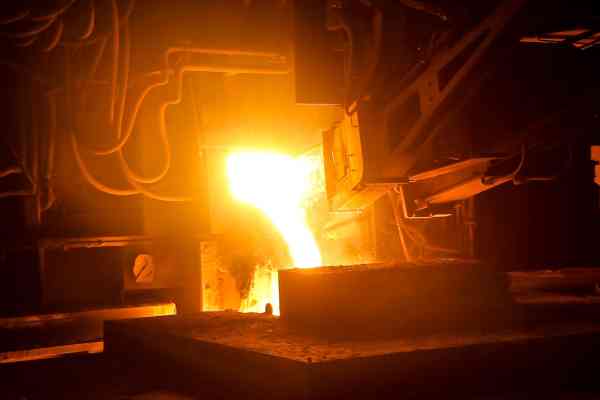
Commented by Armin Schulz on October 1st, 2026 | 07:35 CEST
thyssenkrupp, Strategic Resources, Salzgitter – Steel Stocks That Could Benefit from the Industry's Transformation
Europe's steel industry is currently transforming. Since July 1, the EU has been protecting its steel market with a duty-free quota of 18.345 million metric tonnes and a 50% tariff on all imports exceeding that amount. Starting October 1, importers must also provide proof of where they smelted and cast their steel. This gives manufacturers breathing room to replace blast furnaces with direct reduction plants. However, these plants require high-grade iron ore of the appropriate quality. For those who view steel, raw materials, and restructuring as a unified whole, the new situation could work in their favour. We are therefore taking a closer look at thyssenkrupp, Strategic Resources and Salzgitter.
Read
Commented by Armin Schulz on September 30th, 2026 | 10:05 CEST
Micron, Kobo Resources, MP Materials: Stocks with Upcoming Catalysts in AI, Gold and Rare Earths
The stock market trades on expectations. Between now and the end of the year, three companies across different market segments have upcoming milestones that could reset expectations. Artificial intelligence has significantly fueled demand for memory chips. The quarterly results on September 30 will show how much of that demand is here to stay. A gold explorer is set to release its first mineral resource estimate, revealing how much of the precious metal lies underground. As of January 1, the Pentagon's procurement rules for magnets will become stricter, which could benefit manufacturers with supply chains outside China. We are therefore taking a closer look at Micron Technology, Kobo Resources and MP Materials.
Read
Commented by Armin Schulz on September 30th, 2026 | 07:10 CEST
Newmont, DRC Gold and Agnico Eagle – China's Gold Imports Already Exceed Last Year's Total
China imported more than 1,000 metric tons of gold from January through August. That is more than in all of 2025, according to the latest Chinese customs data. The central bank in Beijing has also been increasing its gold reserves for 22 consecutive months. Demand from the Far East is particularly beneficial for the major producers. Explorers are looking for tomorrow's supplies in the northeast of the DRC, for example, where Kibali, one of Africa's largest gold mines, operates. Companies that want to grow need their own projects in the pipeline. Today, we are looking at three gold companies: Newmont, DRC Gold and Agnico Eagle.
Read
Commented by Armin Schulz on September 29th, 2026 | 07:45 CEST
A Multi-Billion-Dollar Market Underground: How Investors in BP, Zefiro Methane and Occidental Petroleum Could Benefit
Created and Published on Behalf of Zefiro Methane Corp.
For decades, the oil industry's motto was "drill, produce, sell." Now, a second business is emerging from beneath the surface. Old wells must be safely plugged, emissions reduced, and CO₂ stored and sequestered in depleted reservoirs. What previously only cost money at the end of a project could become a source of revenue for engineers, drilling crews, and infrastructure providers. For investors, the climate promise matters less. The questions are: who is already booking contracts, who is building the facilities, and who is still waiting to start operations? This is where the wheat is separated from the chaff. We take a look at how BP, Zefiro Methane and Occidental Petroleum are tackling this issue.
Read
Commented by Armin Schulz on September 29th, 2026 | 07:05 CEST
Vonovia Under Pressure from Expropriation? Lahontan Gold and Coinbase as Inflation Opportunities for Investors
Rising inflation typically drives up demand for real estate, but this sector is currently facing political pressure. In Berlin, the Left Party wants to expropriate large private housing portfolios. Approximately 240,000 apartments would be affected. Nothing has been decided yet, but the debate is weighing on the market. For Vonovia, it is becoming clear what makes "concrete gold" vulnerable: regulation, compensation disputes, interest burdens and rent debates. Those who want to protect their wealth are looking for alternatives. Gold is often seen as a hedge against crisis. As an up-and-coming gold producer, Lahontan Gold could benefit from the high price of gold. Coinbase, meanwhile, offers access to the growing crypto trading market without actually owning Bitcoin. Three bets, three opportunities—we take a closer look.
Read
Commented by Armin Schulz on September 25th, 2026 | 09:50 CEST
Volkswagen, HPQ Silicon, AeroVironment: How Investors Can Profit from the Battery and Drone Boom
The lines between defence and automotive are blurring. Defence budgets are reaching record highs, while the auto industry is undergoing a complete transformation. In between, a new value chain is emerging, built on batteries, silicon and autonomous systems. After all, drones and an ever-increasing amount of military technology also require better batteries. Electric mobility needs them too. Those who understand the intersections are a step ahead of the masses. Headlines are of little help here. What counts are supply chains, patents and full order books. That is why we are taking a closer look at Volkswagen, HPQ Silicon and AeroVironment today.
Read
Commented by Armin Schulz on September 22nd, 2026 | 07:10 CEST
The Copper-Gold Boom: How Rio Tinto, Globex Mining and Franco-Nevada Benefit from the Same Megatrend
Copper and gold are both climbing to high levels at the same time. This is a rare occurrence. On the London Metal Exchange, a metric ton of copper most recently cost USD 14,779, while gold is trading at over USD 4,300 per ounce. Central banks purchased 288.9 metric tons of the precious metal in the second quarter alone. At the same time, global copper mine production fell by 1.1% in the first half of the year. It takes 12 to 15 years from discovery to the first metric ton mined. So the high prices cannot give the mines a quick boost. We will therefore look at three companies profiting from the shortage: Rio Tinto, Globex Mining and Franco-Nevada.
Read
Commented by Armin Schulz on September 21st, 2026 | 07:30 CEST
Novo Nordisk, BioNxt Solutions, Evotec: When Injections Become Pills, The Cash Starts Rolling In
The daily injection has had its day. For a long time, taking biologics in pill form was considered a pipe dream, but as of this year, it is becoming a billion-dollar business. On September 17, 2026, Novo Nordisk announced a partnership with Orbis Medicines worth up to USD 1.4 billion to make injections available orally. In February, the Danish company secured a partnership with Vivtex worth up to USD 2.1 billion. Whoever can deliver peptides through the stomach could see the industry come knocking. We are taking a closer look at Novo Nordisk, BioNxt Solutions and Evotec, which cover the entire spectrum of this trend—from acquisitions to technology to development.
Read
Commented by Armin Schulz on September 21st, 2026 | 07:20 CEST
Barrick Mining, Desert Gold, B2Gold: From Reliable Cash Flow to Significant Leverage in Mali's Resurgent Gold Region
Mali is back on the map for gold investors. Between January and June 2026, the country produced 23.5 metric tons of gold—about 30% more than in the same period the previous year and more than the government had anticipated (21.2 metric tons). At the same time, the price per troy ounce exceeds USD 4,300. High prices and mines resuming operations are working in producers' favour, while developers hope to make the leap into production. Investors looking to profit from this trend have a choice between steady cash flow, the significant upside potential of a production launch, and regional growth. We therefore take a closer look at three companies active in Mali: Barrick Mining, Desert Gold and B2Gold.
Read