

Armin Schulz
Born in Mönchengladbach, he studied business administration in the Netherlands. In the course of his studies he came into contact with the stock exchange for the first time. He has more than 25 years of experience in stock market business.
After graduating, he worked as an IT consultant for a listed company before becoming self-employed, during which time he worked for various DAX-listed companies and a large Swiss insurance company, among others.
Since 2009, he has been exclusively involved in the capital markets, where he was able to gain experience as a day and swing trader, in investor relations and at board level. He was able to live out his passion for numbers in the controlling department of a securities trading house.
For him, fundamental analysis paired with the correct reading of the price action of a market provides the basis for successful trading.
Commented by Armin Schulz

Commented by Armin Schulz on September 17th, 2026 | 07:25 CEST
Barrick Mining, DRC Gold and B2Gold: Three Gold Plays That Could Benefit Investors from the Next Price Surge
Gold has long been more than just a hedge against crisis. Central banks keep buying, while new mines take years to start producing. This imbalance plays into the hands of the gold price. But what is the best way to profit from it? Those who hold physical gold participate directly in price movements. Mining stocks can see significantly greater price swings depending on their stage of development. Whether large-scale ongoing production, new resources, or expandable output is the better path depends on the individual company. We therefore examine how this leverage differs among Barrick Mining, DRC Gold and B2Gold.
Read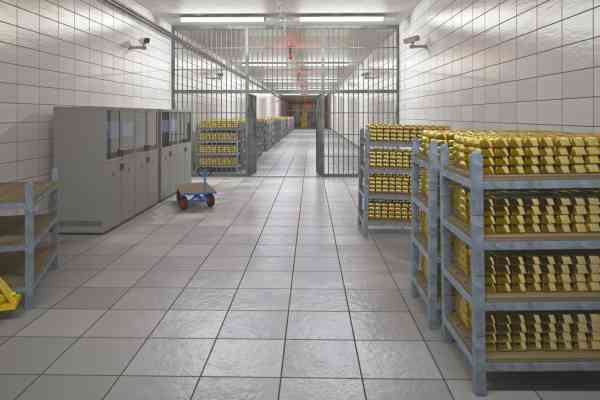
Commented by Armin Schulz on September 16th, 2026 | 07:15 CEST
Central Banks Buy Record Amounts: Newmont, Lahontan Gold and Agnico Eagle Could Be the Biggest Winners
Gold hit an all-time high of USD 5,589 in January 2026 before taking a breather. Currently, the metal is holding steady above USD 4,000. Central banks have been a major driver of this trend recently. In the second quarter, they made net purchases of 289 metric tons of gold, up 62% from the previous year, with Poland alone buying 51 metric tons. On September 15, the Fed will decide on interest rates, while money has also been flowing back into gold ETFs since the end of July. We are therefore taking a look at three companies – Newmont, Lahontan Gold and Agnico Eagle – that cover the full spectrum of the gold industry, from a heavyweight through a developer on the path to becoming a producer to an established gold miner.
Read
Commented by Armin Schulz on September 16th, 2026 | 07:05 CEST
DroneShield, Volatus Aerospace, Kratos Defense: Those Protecting the Airspace Are Reaping the Benefits of the New Budgets
A single drone can bring an airport to a standstill. The failed drone attack on Leipzig/Halle Airport in August 2026 sent shockwaves through Berlin, Brussels and Washington. The incident has jolted policymakers into action. The German government is preparing a package of measures against sabotage, and between January and September 2026, contracts for drone defense totaling more than USD 53 billion were publicly announced worldwide. What was niche technology yesterday is now moving squarely into defense budgets. We therefore take a look at three companies that detect and defend against drones and protect mobile targets: DroneShield, Volatus Aerospace and Kratos Defense.
Read
Commented by Armin Schulz on September 15th, 2026 | 10:35 CEST
No Power, No AI: How Siemens Energy, NU E Power and Micron Aim to Benefit from Infrastructure, Projects and Efficiency
Created and Published on Behalf of NU E Power Corp.
The AI boom is overshadowing the biggest bottleneck: electricity. Data centres are consuming enormous amounts of energy, while limited capacity in power grids, turbines and transformers is holding back growth. This creates three key areas of opportunity: infrastructure supply, local project development, and demand for energy-efficient chips. As an investor, it is important to understand who supplies the energy infrastructure, who develops the projects, and who produces the most energy-efficient chips. Siemens Energy, NU E Power, and Micron operate across these areas. That makes them worth examining more closely.
Read
Commented by Armin Schulz on September 14th, 2026 | 08:20 CEST
Empty Ammunition Stockpiles, Tight Tungsten Supply: Almonty Industries, Rheinmetall and Lockheed Martin Set to Benefit
As geopolitical conflicts intensify once again and NATO countries ramp up defence spending, ammunition supplies are increasingly running low. This is making tungsten ever more important. Without this critical raw material, armour-piercing ammunition, precision missiles and high-performance tools cannot be produced. Starting in 2027, US procurement rules will also require supply chains independent of China, Russia, Iran, and North Korea. This is redirecting billions of dollars and intensifying the race for secure sources. Against this backdrop, Almonty Industries, Rheinmetall, and Lockheed Martin are moving into focus. All three companies stand to benefit from the realignment of the Western defence industry.
Read
Commented by Armin Schulz on September 14th, 2026 | 07:50 CEST
Power Metallic Mines, Volkswagen and RWE: Raw Materials, Cells, Grid — Benefiting from the Germany-Canada Pact
Europe aims to expand battery production in 2026, but without raw materials, cells, and electricity, every target remains fragile. Regulations on carbon footprints and battery passports are increasing the pressure. Europe remains dependent on supply chains from Asia. Anyone looking to reduce this dependence needs secure access to raw materials, gigafactories and energy storage. Germany and Canada are currently in formal talks on a comprehensive Canada-Germany Strategic Partnership Agreement, which is also intended to cover raw materials, energy and investments. The aim is to strengthen raw material security—all the more reason to take a closer look at Power Metallic Mines, Volkswagen and RWE.
Read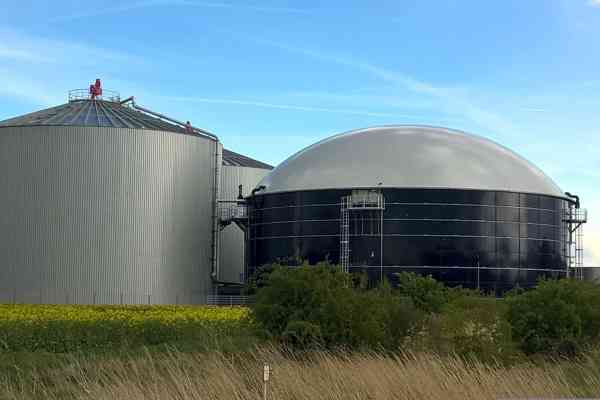
Commented by Armin Schulz on September 10th, 2026 | 08:25 CEST
Germany's Gas Gap Is Growing! BASF, A.H.T. Syngas and Verbio Could Turn the Shortage into an Opportunity
Gas prices are fluctuating, storage facilities are emptier than they have been since records began, and the old security fossil fuels provided is crumbling. While Germany nervously looks ahead to the heating season, industry has long since pulled the ripcord. Turning to domestic, low-carbon gases is no longer a "green fairy tale", but a hard business necessity. Technology for converting waste materials into energy is taking centre stage, and the first companies are already posting rising margins. Amid this tension between a supply crisis and a technological breakthrough, it is worth taking a closer look at BASF, A.H.T. Syngas, and Verbio.
Read
Commented by Armin Schulz on September 10th, 2026 | 08:15 CEST
Inflation Protection for Your Portfolio: Bitcoin with Strategy, Gold with Desert Gold, and Oil and Lithium with ExxonMobil
How will investors allocate their capital in 2026 among the most important stores of value of our time? First, there is digital gold, Bitcoin, which cannot be mined indefinitely. Then there is physical gold from the earth, which has long been regarded as a safe haven and whose price, like Bitcoin's, has recently climbed significantly again. Finally, there is black gold, oil, which has once again come into focus, most recently since the Iran conflict. Investors who are thinking strategically today should not put all their eggs in one basket, but instead diversify. We take a closer look at one company from each sector: Strategy, Desert Gold, and ExxonMobil.
Read
Commented by Armin Schulz on September 10th, 2026 | 06:50 CEST
Brussels Is Driving the Billion-Dollar Fertilizer Market: Can Bayer, MustGrow Biologics and K+S Benefit?
Created and Published on Behalf of MustGrow Biologics Corp.
Agriculture is in crisis, creating a billion-dollar market that few investors can afford to ignore. Brussels is imposing ever tighter restrictions on chemical crop protection products in Europe, while soils around the world are becoming increasingly depleted. Those still relying on conventional fertilizers today risk falling behind in the long run. Demand is rising for organic crop protection products and fertilizers that deliver high yields while still meeting environmental requirements. Three stocks show how differently investors can profit from the biological revolution in soil health: Bayer, MustGrow Biologics, and K+S.
Read
Commented by Armin Schulz on September 9th, 2026 | 06:45 CEST
Why IAA 2026 Could Be the Starting Signal for dynaCERT, DHL and Caterpillar – and How to Benefit
When the IAA Transportation opens its doors in Hanover from September 15 to 20, the global logistics and heavy industry sectors will take centre stage. Artificial intelligence and the push toward carbon neutrality are forcing logistics giants and machinery manufacturers to transform. dynaCERT is presenting its bridging technology for existing diesel fleets, Deutsche Post is relaunching as DHL AG, and Caterpillar is focusing on AI-driven autonomous systems. The question is what will happen to existing fleets and how the industry will move forward. We take a closer look at the current situation at all three companies.
Read