

Armin Schulz
Born in Mönchengladbach, he studied business administration in the Netherlands. In the course of his studies he came into contact with the stock exchange for the first time. He has more than 25 years of experience in stock market business.
After graduating, he worked as an IT consultant for a listed company before becoming self-employed, during which time he worked for various DAX-listed companies and a large Swiss insurance company, among others.
Since 2009, he has been exclusively involved in the capital markets, where he was able to gain experience as a day and swing trader, in investor relations and at board level. He was able to live out his passion for numbers in the controlling department of a securities trading house.
For him, fundamental analysis paired with the correct reading of the price action of a market provides the basis for successful trading.
Commented by Armin Schulz

Commented by Armin Schulz on August 11th, 2026 | 07:10 CEST
Hydrogen Stocks in 2026: Nel ASA, dynaCERT, and Plug Power—Three Strategies, but Who Will Win the Race to Profitability?
The hype surrounding hydrogen is over. Now, the only things that matter are operating metrics, margins, and the potential for scaling. The capital markets are increasingly focusing on cash flow and efficiency. Industry pioneers have long fallen short of expectations, but a turnaround is now emerging for some hydrogen companies. Today, we take a look at three companies—Nel ASA, dynaCERT, and Plug Power—each pursuing very different strategies, and assess where they currently stand.
Read
Commented by Armin Schulz on August 10th, 2026 | 07:15 CEST
New Wave of Liquidity from the Bessent Plan: Should Investors Turn to Vonovia, DRC Gold, and Strategy to Escape Currency Depreciation?
Japan is the largest holder of US Treasury bonds. The yen is currently extremely weak, driving up import prices and putting increasing pressure on Japanese households. Against this backdrop, signs are mounting of a coordinated currency intervention between Washington and Tokyo. Recently, US Treasury Secretary Scott Bessent was reportedly seen with a notepad indicating that the United States could be planning to purchase billions of dollars' worth of yen. Such a move could fuel a new wave of global liquidity, erode the purchasing power of cash, and push investors toward hard assets. The question is whether investors should turn to "concrete gold" (real estate), the yellow metal, or cryptocurrency. We therefore take a closer look at Vonovia, DRC Gold, and Strategy.
Read
Commented by Armin Schulz on August 7th, 2026 | 07:25 CEST
Bayer, MustGrow Biologics, and Nutrien: Feeding the World Means Leading the Future of Agriculture
Created and Published on Behalf of MustGrow Biologics Corp.
Global food security remains under pressure from geopolitical conflicts, extreme weather events, and resource scarcity. These challenges are placing agricultural production under growing strain. With the world's population continuing to expand, transforming agriculture has become a critical priority. As a result, the agricultural technology sector is emerging as a key driver of innovation. Established industry leaders are adapting their product portfolios to meet the demands of a changing climate, while agile biotech companies are accelerating the development of sustainable alternatives to conventional chemical crop protection products. Today, we take a closer look at Bayer, MustGrow Biologics, and Nutrien—three companies that are well positioned to shape the future agricultural value chain.
Read
Commented by Armin Schulz on August 7th, 2026 | 07:05 CEST
Get Started with Growth Investing Now: Why Micron Technology, Zefiro Methane, and Bloom Energy Can Boost Your Portfolio
Given the current interest rate environment and inflation rates, saving money makes little sense. This means investors need to rethink their strategies. One possible solution to this creeping erosion of wealth is growth investing—that is, building positions in companies that are growing at an above-average rate. This allows retail investors to directly benefit from the companies' technologies or expansion. The trick lies in selecting promising candidates. Today, we take a closer look at memory chip specialist Micron Technology, energy service provider Zefiro Methane, and fuel cell pioneer Bloom Energy.
Read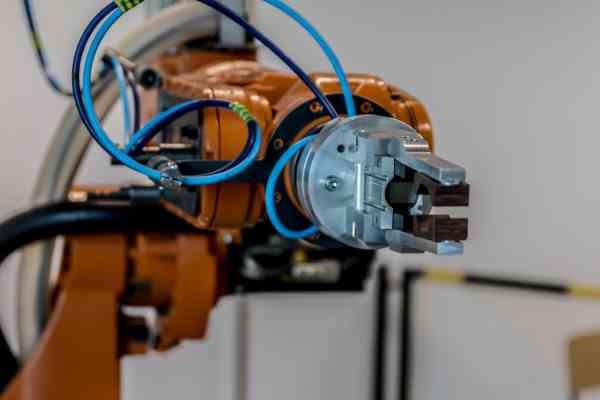
Commented by Armin Schulz on August 6th, 2026 | 07:35 CEST
BHP Group, Strategic Resources, and Freeport McMoRan: AI and Robotics Are Triggering a Commodity Supercycle
Commodity markets are on the verge of a supercycle. The rapid expansion of digital infrastructure, from AI data centers to robotics, is driving demand for a wide variety of commodities to new heights. As soon as production becomes more efficient, sufficient materials will be needed. Copper, the backbone of electrification, is a prime example of the looming supply shortage. Overall, the combination of growing demand and only gradual expansion of mining operations is the perfect breeding ground for a sustained rise in commodity prices. This price surge will ultimately have a positive impact on the balance sheets of commodity companies. Three companies that stand to benefit from this trend are BHP Group, Strategic Resources, and Freeport McMoRan.
Read
Commented by Armin Schulz on August 6th, 2026 | 07:20 CEST
RENK Group, Volatus Aerospace, and TKMS: Defence Boom – Three Ways to Capitalize on the Land, Air, and Sea Opportunity
The West is in the midst of a fundamental overhaul of its security architecture. After years of relying on a relatively stable geopolitical environment, governments are now significantly increasing defence budgets to strengthen military readiness and resilience. As a result, companies supporting this structural transformation of the defence industry are benefiting from long-term demand. Modern defence capabilities are no longer defined solely by the number of platforms deployed, but increasingly by the integration of mobility, intelligence, surveillance, and maritime capabilities. Against this backdrop, RENK Group, Volatus Aerospace, and TKMS each offer distinct ways to gain exposure to the ongoing defence investment cycle. Together, they represent differentiated opportunities across the land, air, and maritime domains of modern defence.
Read
Commented by Armin Schulz on August 6th, 2026 | 07:05 CEST
Palantir, Miivo AI, and IBM: The Multi-Billion-Dollar SMB Market – How to Capitalize on Untapped AI Integration in Your Portfolio
Created and Published on Behalf of Miivo AI Inc.
Public discussion around artificial intelligence often centers on the latest AI models, AI agents, and similar technologies. While large corporations have already embraced AI, the real opportunity extends far beyond a handful of global enterprises. Take Germany's small and medium-sized business (SMB) sector, for example, which comprises around 780,000 companies. According to a Bitkom survey, 41% are now actively using AI in their business processes. However, this has also created challenges. Around 80% of companies struggle to quantify the economic return on their AI investments. The gap between potential and operational integration opens up a market that can be extremely lucrative for companies capable of bridging this gap. Today, we take a closer look at Palantir, Miivo AI, and IBM, three companies helping businesses successfully integrate AI into their operational processes.
Read
Commented by Armin Schulz on August 5th, 2026 | 07:05 CEST
How Almonty Industries, Rheinmetall, and RTX Are Driving the New Defense Supercycle—and Why the Correction Could Be an Opportunity
The New York Post recently reported that, according to experts, the US does not have enough missiles to protect its troops in the Middle East in the event of a protracted war with Iran. This means that the West has largely depleted its ammunition stockpiles. A defense supercycle is on the horizon, forcing nations to become self-sufficient. This rapid depletion is revealing a critical bottleneck. The dwindling availability of tungsten, whose price has skyrocketed, threatens to jeopardize resupply efforts. We take a look at tungsten supplier Almonty Industries, then examine the European defense giant Rheinmetall, and conclude with the technological leader of the US missile industry, RTX.
Read
Commented by Armin Schulz on August 4th, 2026 | 07:35 CEST
AI Needs Baseload Power: How SAP Monetizes AI, Standard Uranium Supports the Uranium Supply Chain, and Amazon Invests in Nuclear Power
Artificial intelligence has become firmly embedded in the global economy and is expected to remain a key driver of growth for years to come. While public attention is focused on AI agents, the latest ChatGPT models, and increasingly powerful algorithms, a far more fundamental bottleneck is emerging: energy. Massive data centers are being built to power the next generation of AI applications, and they require enormous amounts of reliable, around-the-clock electricity. As a result, baseload power is becoming increasingly important. In this report, we examine SAP, the established software leader generating recurring revenue through its cloud services and AI offerings. We also take a closer look at Standard Uranium, an emerging exploration company that could play a role in strengthening the uranium supply chain. Finally, we turn to Amazon, which is not only investing heavily in the physical infrastructure behind AI but is also planning to power parts of its operations with small modular reactors (SMRs).
Read
Commented by Armin Schulz on August 3rd, 2026 | 07:30 CEST
Hydrogen Reality 2026: Nel ASA and A.H.T. Syngas Step Up as BP Pulls Back
The industrialization of hydrogen is heading toward a decisive turning point. While the major oil multinationals are surprisingly cutting back on their billion-dollar green projects, demand for clean energy remains strong. Investors need to rethink their strategies. The future of energy will not be shaped by the former pioneers, but by specialized technology companies and niche players who now want to seize the opportunity at hand. We examine this landscape more closely, taking a closer look at Nel ASA as a pioneer in electrolysis technology, A.H.T. Syngas as a creative niche provider of decentralized hydrogen solutions, and BP as the energy giant that is pulling back.
Read