November 27th, 2025 | 07:10 CET
USD 2.4 trillion is being invested in the energy transition – How to benefit with Siemens Energy, RE Royalties, and Nordex
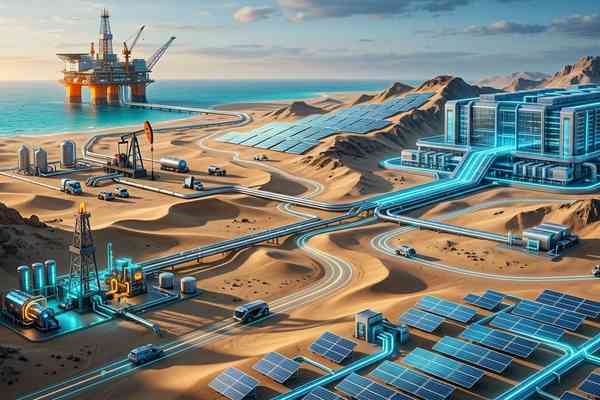
The global energy market is undergoing a fundamental transformation. With record investments of USD 2.4 trillion being made, it is no longer just about building plants. The real key to success lies in system integration - the intelligent networking of generation, storage, and stable grids. This development creates unique opportunities for companies that are central to shaping the new energy landscape. Three players stand out in particular: Siemens Energy, RE Royalties, and Nordex.
time to read: 4 minutes | Author: Armin Schulz
ISIN: SIEMENS ENERGY AG NA O.N. | DE000ENER6Y0 , RE ROYALTIES LTD | CA75527Q1081 , NORDEX SE O.N. | DE000A0D6554
Table of contents:
Author

Armin Schulz
Born in Mönchengladbach, he studied business administration in the Netherlands. In the course of his studies he came into contact with the stock exchange for the first time. He has more than 25 years of experience in stock market business.
Tag cloud
Shares cloud
Siemens Energy – A key player in the energy transition puzzle
Siemens Energy is increasingly positioning itself as a systemically important integrator for the energy transition. The Company is not only driving the expansion of renewable energy, but is also addressing the crucial challenge of system stability with its gas and grid technologies. As the expansion of wind and solar power continues to gain momentum, the issue of supply security is becoming increasingly urgent. This is where the portfolio of gas turbines comes in, which can be quickly regulated to offset the volatility of renewables, while modern grid technologies make it possible to control the electricity being transported in the first place. This integral role, which goes beyond mere component manufacturing, creates a unique market position.
Operational strength underpins this strategic orientation. A record order backlog, driven by high demand for gas turbines and grid modernization, offers massive planning security. A large portion of the expected revenue for the coming years is already contractually secured. This high visibility allows management to expand capacity in a targeted manner and invest in the regionalization of production in order to hedge against trade conflicts and supply chain risks. The economies of scale resulting from growing production are also likely to further fuel margin development in the coming quarters and improve profitability in the long term.
The grid technology business in particular is benefiting from a structural megatrend: the explosive growth in power demand from data centers. Providers of large data centers are effectively developing their own private grids to handle their enormous capacities. A significant portion of the capacities already booked at Siemens Energy comes from precisely this market. At the same time, global demand for new gas-fired power plants as a bridging technology remains high. While the offshore wind business is subject to regional fluctuations, these two stable pillars, gas turbines and grid technology, will support the Company's growth narrative for the foreseeable future. The share is currently available for EUR 108.85.
RE Royalties – A new approach to stable returns in the energy sector
While investors often think of volatile manufacturer stocks when it comes to renewable energy, a Canadian company has taken a different approach. It is transferring the proven licensing model from mining to solar parks and wind farms. Developers receive capital without having to give up controlling interests. In return, the financier secures a small percentage of future project revenues. This combination of loans and long-term revenue sharing creates a unique income structure that is not dependent on stock market sentiment. The approach offers project developers a valuable alternative to traditional bank loans while allowing them to participate in long-term value creation.
The success of the model is based on several pillars. The focus is on commercially proven technologies such as solar and wind, whose greatest risks lie in the construction phase. Since the plants often rely on long-term power purchase agreements of 20 to 40 years, revenues are stable and predictable. Capital recycling is a clever lever. Once loans are repaid after a few years, the money flows into new projects. A prime example is the financing of an indigenous-led solar project in Alberta, which underscores the practical implementation and acceptance of the model. This regional and technological diversification makes the portfolio resilient to local political changes.
For investors, the attractive dividends are particularly interesting. The stable, contractually secured sources of income from the growing portfolio feed the distributions. The Company has been paying a quarterly dividend of CAD 0.01 for years, which indicates the reliability of the cash flows. Growth is primarily driven by the repeated use of the Company's own capital rather than risky borrowing. This creates a self-reinforcing cycle that enables both scaling and dividend security. Dividends are thus directly supported by the operational success of the financed energy projects. The share is currently trading at CAD 0.26, resulting in a dividend yield of over 15%.
Nordex – Picking up speed
The Nordex Group is in robust shape, as evidenced by its revised annual figures. The Company has significantly raised its forecast for the EBITDA margin for 2025 from the original 5.0–7.0% to 7.5–8.5%. This move follows a strong third quarter in which revenue amounted to around EUR 1.7 billion. The operating result (EBITDA) was particularly impressive, climbing by a whopping 90% to EUR 136 million. This impressive increase shows how much more profitable the Company has become. The reason for this lies in the efficiency of the projects, while the service business is also growing strongly.
This momentum is also reflected in healthy demand. Order intake rose by 26% to around 2.2 GW in the past quarter. Recent orders underscore this trend. Nordex is supplying turbines for projects in Ireland (60 MW) and Spain (42 MW), thereby consolidating its international presence. In Germany, the Company also secured several major orders, including for a 77 MW wind farm in Rhineland-Palatinate. These projects demonstrate the broad geographical spread and high acceptance of Delta4000 turbines in various markets.
The business is running smoothly. Free cash flow of EUR 149 million in the last quarter and increased net liquidity of over EUR 1 billion are evidence of disciplined management. Despite minor delivery delays at a supplier in Turkey, installation capacity increased by 28%. With a stable order backlog of just under EUR 15 billion and a service business that generates predictable revenue, Nordex has created a solid basis for sustained, profitable growth. The share price is currently EUR 26.24.
The energy transition, with investments of USD 2.4 trillion, requires system integration, which offers new opportunities. As a system-relevant integrator, Siemens Energy is mastering the challenge of grid stability with gas turbines and grid technology. RE Royalties offers stable, dividend-backed returns away from stock market volatility with its innovative licensing model for renewable energy projects. Nordex impresses with strong operating performance, rising profitability, and a growing order backlog for its Delta4000 turbines.
Conflict of interest
Pursuant to §85 of the German Securities Trading Act (WpHG), we point out that Apaton Finance GmbH as well as partners, authors or employees of Apaton Finance GmbH (hereinafter referred to as "Relevant Persons") may hold shares or other financial instruments of the aforementioned companies in the future or may bet on rising or falling prices and thus a conflict of interest may arise in the future. The Relevant Persons reserve the right to buy or sell shares or other financial instruments of the Company at any time (hereinafter each a "Transaction"). Transactions may, under certain circumstances, influence the respective price of the shares or other financial instruments of the Company.
In addition, Apaton Finance GmbH is active in the context of the preparation and publication of the reporting in paid contractual relationships.
For this reason, there is a concrete conflict of interest.
The above information on existing conflicts of interest applies to all types and forms of publication used by Apaton Finance GmbH for publications on companies.
Risk notice
Apaton Finance GmbH offers editors, agencies and companies the opportunity to publish commentaries, interviews, summaries, news and the like on news.financial. These contents are exclusively for the information of the readers and do not represent any call to action or recommendations, neither explicitly nor implicitly they are to be understood as an assurance of possible price developments. The contents do not replace individual expert investment advice and do not constitute an offer to sell the discussed share(s) or other financial instruments, nor an invitation to buy or sell such.
The content is expressly not a financial analysis, but a journalistic or advertising text. Readers or users who make investment decisions or carry out transactions on the basis of the information provided here do so entirely at their own risk. No contractual relationship is established between Apaton Finance GmbH and its readers or the users of its offers, as our information only refers to the company and not to the investment decision of the reader or user.
The acquisition of financial instruments involves high risks, which can lead to the total loss of the invested capital. The information published by Apaton Finance GmbH and its authors is based on careful research. Nevertheless, no liability is assumed for financial losses or a content-related guarantee for the topicality, correctness, appropriateness and completeness of the content provided here. Please also note our Terms of use.