July 22nd, 2025 | 07:05 CEST
Top CEO warns of global economic crisis – Secure your portfolio now: Nel, Evonik, Dryden Gold
These are words that raise concern: Evonik CEO Christian Kullmann believes that the global economy is on the brink of an economic crisis due to constant tariff threats. The CEO is calling for greater economic freedom for companies in Germany, as investment is urgently needed after years of stagnation. Although Kullmann ends the interview on a hopeful note, the situation remains uncertain. We explain how investors can navigate this uncertainty and present stocks with promising prospects.
time to read: 3 minutes | Author: Nico Popp
ISIN: NEL ASA NK-_20 | NO0010081235 , EVONIK INDUSTRIES NA O.N. | DE000EVNK013 , DRYDEN GOLD CORP | CA26245V1013
Table of contents:
Author

Nico Popp
At home in Southern Germany, the passionate stock exchange expert has been accompanying the capital markets for about twenty years. With a soft spot for smaller companies, he is constantly on the lookout for exciting investment stories.
Tag cloud
Shares cloud
Evonik: The figures are still good
It comes as no surprise that the CEO of specialty chemicals supplier Evonik is warning of a global economic crisis. The chemical industry is considered energy-intensive and is therefore under pressure from foreign competition. Although analysts have also expressed positive opinions in recent months, industry experts point to short-term pressures on Evonik's business. In the first quarter, EBITDA climbed 7% to EUR 560 million, while revenue remained stable at around EUR 3.78 billion. However, the stock market is anticipating the future and is therefore taking a wait-and-see approach: Over a six-month period, Evonik's share price has hardly moved forward, and in the longer term, the share price is even down.
NEL calls for protectionism – Evonik CEO Kullmann calls for investment
While Evonik is under immediate pressure to actively tackle its transformation and face up to the new realities, NEL shares were considered an exciting bet on the future just a few years ago. However, this bet did not pay off – although NEL gained 16.7% on the stock market over a six-month period, the long-term picture is disastrous: in the last five years alone, the share price has fallen by 88%. The Norwegian company supplies electrolyzers for the production of green hydrogen and also handles logistics and storage of hydrogen. In the past, NEL has delivered several hydrogen filling stations. The Company is benefiting from the European Green Deal, but is also under pressure. Competition is growing, especially in China. NEL itself emphasizes that soon less than half of the hydrogen projects funded by the EU will actually use technology manufactured in Europe. NEL is calling for more protectionism, such as origin criteria for electrolyzers and other hydrogen infrastructure.
Whether protectionism really is the answer to low competitiveness remains to be seen. Although Chinese suppliers are likely to benefit from subsidies, the question must be asked whether the European hydrogen industry can win the race against China. This general uncertainty is hindering the investments that are so crucial at present, and at the same time, it is ensuring that the long-term chances for a successful transformation are dwindling. In his interview with Handelsblatt, Evonik CEO Kullmann points to Germany's financial reserves and opportunities to turn the tide after all. For Kullmann, economic power and military strength are crucial. These strengths must be developed. Since the associated investments will be financed by loans, the alternative currency gold is also coming into focus.
Dryden Gold: Promising project in Canada benefits from rising gold prices
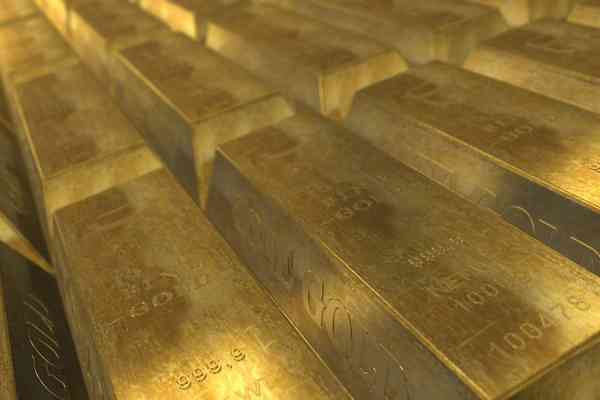
When the world found itself with its back against the wall after the outbreak of the pandemic and central banks and governments around the world spent billions, the price of gold also skyrocketed, reaching a new all-time high in the summer of 2020. Today, gold is trading significantly higher. The prospect of further government spending and the ongoing uncertainty continue to support the gold price. In the first half of 2025 alone, the gold price rose by around 25%. One asset class that can benefit particularly during challenging phases is that of early-stage project developers. One such company is the Canadian company Dryden Gold.
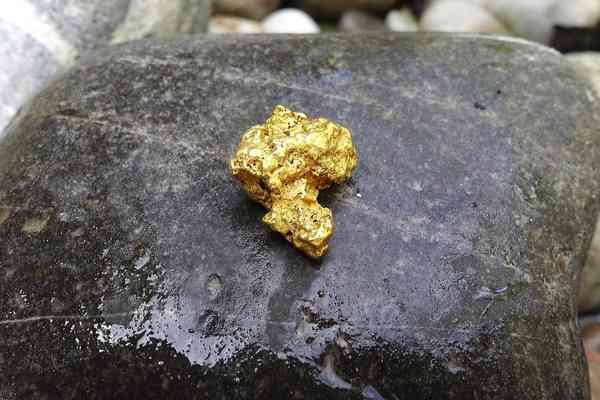
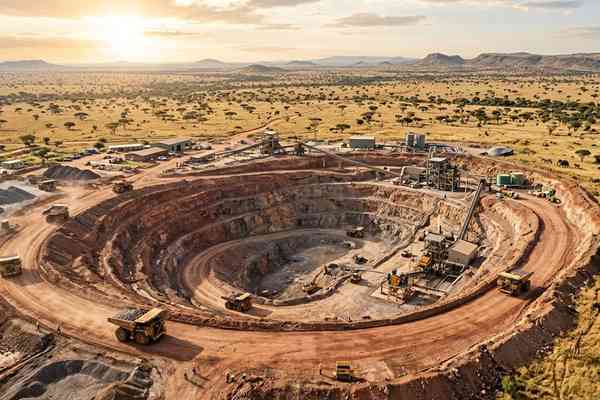
Dryden Gold controls 70,250 ha in the Dryden Gold Belt in the Canadian province of Ontario. The flagship Gold Rock project is a historic brownfield site - an area that has already been explored. This offers advantages for future work, as certain data is already available and supplementary exploration can be carried out. In June, the Company reported visible gold deposits in two parallel structures. When gold is visible to the naked eye, it is an indication of high-grade deposits that are very likely to be economically viable. After the drill results were published, Dryden CEO Trey Wasser drew comparisons to the Red Lake Mine in Ontario, which was considered one of the largest mines in the world for many years.
Analysts see more than 100% potential here
These key figures also convinced the market in the spring and early summer – Dryden Gold's share price climbed from around CAD 0.10 at the end of March to its current level of CAD 0.25. The market capitalization is thus around CAD 30 million. According to analysts at Couloir Capital, the share price still has room to rise. The target price for the share announced in June is CAD 0.65. Couloir Capital considers the value to be promising for speculative investors, as the exploration potential is set to increase massively with the continuation of the drilling program. With its land package in a high-yield gold belt, Dryden Gold offers opportunities for attractive returns. This is contingent on a sustained high gold price. At a time when CEOs of key German industries, such as Evonik's Christian Kullmann, are warning of a global economic crisis, the conditions for further increases in gold prices appear to be in place.
Conflict of interest
Pursuant to §85 of the German Securities Trading Act (WpHG), we point out that Apaton Finance GmbH as well as partners, authors or employees of Apaton Finance GmbH (hereinafter referred to as "Relevant Persons") may hold shares or other financial instruments of the aforementioned companies in the future or may bet on rising or falling prices and thus a conflict of interest may arise in the future. The Relevant Persons reserve the right to buy or sell shares or other financial instruments of the Company at any time (hereinafter each a "Transaction"). Transactions may, under certain circumstances, influence the respective price of the shares or other financial instruments of the Company.
In addition, Apaton Finance GmbH is active in the context of the preparation and publication of the reporting in paid contractual relationships.
For this reason, there is a concrete conflict of interest.
The above information on existing conflicts of interest applies to all types and forms of publication used by Apaton Finance GmbH for publications on companies.
Risk notice
Apaton Finance GmbH offers editors, agencies and companies the opportunity to publish commentaries, interviews, summaries, news and the like on news.financial. These contents are exclusively for the information of the readers and do not represent any call to action or recommendations, neither explicitly nor implicitly they are to be understood as an assurance of possible price developments. The contents do not replace individual expert investment advice and do not constitute an offer to sell the discussed share(s) or other financial instruments, nor an invitation to buy or sell such.
The content is expressly not a financial analysis, but a journalistic or advertising text. Readers or users who make investment decisions or carry out transactions on the basis of the information provided here do so entirely at their own risk. No contractual relationship is established between Apaton Finance GmbH and its readers or the users of its offers, as our information only refers to the company and not to the investment decision of the reader or user.
The acquisition of financial instruments involves high risks, which can lead to the total loss of the invested capital. The information published by Apaton Finance GmbH and its authors is based on careful research. Nevertheless, no liability is assumed for financial losses or a content-related guarantee for the topicality, correctness, appropriateness and completeness of the content provided here. Please also note our Terms of use.