May 8th, 2026 | 07:15 CEST
The Clock Is Ticking in Europe: How Group Eleven, Volkswagen, and thyssenkrupp Are Positioning for the Transition
The global economy is being shaken up by three major forces: the push for decarbonization, geopolitical tensions, and the race toward electromobility. For the steel industry in Europe, this means a tough transition—after all, it accounts for 7% of greenhouse gas emissions. At the same time, the EU mandates that by 2030, one-tenth of strategic raw materials must come from domestic sources. Vehicle manufacturers, in turn, are grappling with Scope 3 emissions from their supply chains. Energy prices are skyrocketing, supply chains are breaking down—but that is precisely where opportunities lie. We take a look at the current situation at Group Eleven Resources, Volkswagen, and thyssenkrupp.
time to read: 4 minutes | Author: Armin Schulz
ISIN: GROUP ELEVEN RESOURCES | CA39944P1018 | TSXV: ZNG , OTCQB: GRLVF , VOLKSWAGEN AG VZO O.N. | DE0007664039 , THYSSENKRUPP AG O.N. | DE0007500001
Table of contents:
Author

Armin Schulz
Born in Mönchengladbach, he studied business administration in the Netherlands. In the course of his studies he came into contact with the stock exchange for the first time. He has more than 25 years of experience in stock market business.
Tag cloud
Shares cloud
Group Eleven Resources – Strong Drilling Data
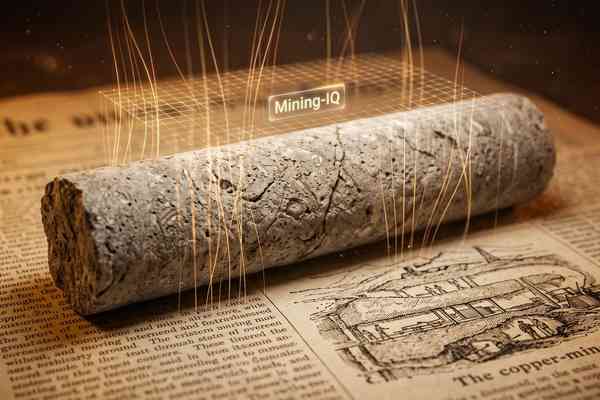
With its Critical Raw Materials Act, the EU is prioritizing the domestic extraction of strategic metals. While zinc itself is not classified as "critical," Group Eleven Resources has identified two commodities on its property—copper and germanium—that are included on the EU's strategic materials list. This could potentially support accelerated permitting and access to funding for the Irish exploration company. However, the Ballywire discovery is currently attracting attention for another reason: its latest drill results have surpassed all previous findings, including a 23.5-meter interval grading more than 12.3% zinc and lead, 46 g/t silver, and additional copper mineralization.
The drilling data point to an expanding system. The mineralized strike length has now been extended to 3.2 km, while newly identified copper-silver zones at depth indicate further upside potential. Particularly noteworthy is the fact that five drill holes spaced roughly 350 m apart have confirmed these deeper structures. This suggests the presence of a large, interconnected system whose full scale is only gradually becoming apparent. Those who keep the bigger picture in mind may see a discovery here that could significantly reshape the understanding of the entire project. Zinc remains an important material for both the automotive and steel industries, while copper and silver are key raw materials for global electrification.
Financially, the explorer appears well-funded. A capital increase of CAD 12 million in March 2026 strengthened the company's cash reserves, allowing the drilling program to be expanded from 20,000 m to as much as 75,000 m. Five drill rigs are currently operating on site, with additional results expected in the coming weeks. This positions the company well for the next 18 months without the immediate need to raise additional capital. For investors seeking early exposure to a promising discovery in a secure jurisdiction, Group Eleven Resources remains a company worth monitoring. The stock is currently trading at CAD 1.11.
Volkswagen - Electric Vehicle Push Gains Momentum
Volkswagen's latest quarterly figures initially read like a construction site report: revenue shrank by 2% to EUR 75.7 billion, operating profit plummeted by 14% to EUR 2.5 billion. The return on sales, at 3.3%, is on thin ice. Sales of electric vehicles, in particular, are sluggish in China. Deliveries there slumped significantly. But those who focus solely on profits overlook the flip side: net cash flow in the Automotive division climbed from minus EUR 0.8 billion to plus EUR 2.0 billion. In addition, the European order backlog rose by around 15% compared to the end of 2025.
China remains the major pain point. In addition to the general decline in sales, demand for electric vehicles is particularly disappointing. Domestic competition is driving down prices, while VW is fighting for market share in a tough market environment. North America also weakened, weighing on the results. At least Western Europe saw slight growth, and the new electric models are generating interest. The order book for electric vehicles in Europe also grew.
Volkswagen is in the midst of the biggest transformation in the company's history. By 2030, 50,000 jobs will be cut in Germany while the group simultaneously pushes ahead with its electric and software offensive. The joint venture Rivian and Volkswagen Group Technologies (RV Tech) has successfully completed winter testing of its software platform. At the same time, the group is struggling with margins. Volkswagen is targeting an operating return of 4.0 to 5.5% for 2026. The stock is currently trading at EUR 88.58 — if this price level is to be referenced with a specific date, it should be supported by a reliable market source.
thyssenkrupp: Pause in Steel Deal, Focus on Marine and Hydrogen
Talks with India's Jindal Steel regarding a stake in the steel division have been put on hold for the time being. The reason is improved conditions in Europe. The EU is planning stricter import quotas and doubled protective tariffs against Asian steel imports, in addition to a carbon border adjustment. The restructuring collective bargaining agreement with IG Metall is also on the table. Nevertheless, steel production remains resource-intensive; among other things, it requires zinc for corrosion protection. thyssenkrupp still intends to spin off the division in the medium term, either as a minority stake or an independent unit.
The submarine subsidiary TKMS will cooperate with Spain's Navantia in the future to bridge bottlenecks in shipyard capacity. A multi-billion-euro contract for Canadian submarines is under review. At the same time, thyssenkrupp is pushing ahead with its hydrogen and ammonia initiative. The Uhde division secured a FEED contract in Brunei for the export of liquid ammonia. In addition, the group is a founding member of the European Resilience Alliance for clean hydrogen. This is a clear signal of the strategic realignment away from the conglomerate model.
The listing of Materials Services is scheduled for fall 2026; whether this will take the form of an IPO, a spin-off, or a sale remains to be seen. The division generates stable earnings in commodities trading. On May 12, thyssenkrupp will present its half-year report. Investors expect clarity on the major naval contract and progress regarding the divestitures. The transformation into a financial holding company is taking shape, but the steel division remains a source of uncertainty, despite recent relief from policymakers. Currently, a share costs EUR 11.12.
Group Eleven Resources is proving that Europe still has its own raw material treasures with strong drilling results for zinc, lead, silver, copper, and germanium. Volkswagen is fighting back against its decline in China with an electric vehicle offensive and cost cuts worth billions. thyssenkrupp is putting its steel sale to Jindal on hold due to improved market conditions, focusing instead on maritime partnerships and hydrogen projects, while the listing of Materials Services is scheduled for this fall. Europe's transformation is underway, and these three companies show where the opportunities lie.
Conflict of interest
Pursuant to §85 of the German Securities Trading Act (WpHG), we point out that Apaton Finance GmbH as well as partners, authors or employees of Apaton Finance GmbH (hereinafter referred to as "Relevant Persons") currently hold or hold shares or other financial instruments of the aforementioned companies and speculate on their price developments. In this respect, they intend to sell or acquire shares or other financial instruments of the companies (hereinafter each referred to as a "Transaction"). Transactions may thereby influence the respective price of the shares or other financial instruments of the Company.
In this respect, there is a concrete conflict of interest in the reporting on the companies.
In addition, Apaton Finance GmbH is active in the context of the preparation and publication of the reporting in paid contractual relationships.
For this reason, there is also a concrete conflict of interest.
The above information on existing conflicts of interest applies to all types and forms of publication used by Apaton Finance GmbH for publications on companies.
Risk notice
Apaton Finance GmbH offers editors, agencies and companies the opportunity to publish commentaries, interviews, summaries, news and the like on news.financial. These contents are exclusively for the information of the readers and do not represent any call to action or recommendations, neither explicitly nor implicitly they are to be understood as an assurance of possible price developments. The contents do not replace individual expert investment advice and do not constitute an offer to sell the discussed share(s) or other financial instruments, nor an invitation to buy or sell such.
The content is expressly not a financial analysis, but a journalistic or advertising text. Readers or users who make investment decisions or carry out transactions on the basis of the information provided here do so entirely at their own risk. No contractual relationship is established between Apaton Finance GmbH and its readers or the users of its offers, as our information only refers to the company and not to the investment decision of the reader or user.
The acquisition of financial instruments involves high risks, which can lead to the total loss of the invested capital. The information published by Apaton Finance GmbH and its authors is based on careful research. Nevertheless, no liability is assumed for financial losses or a content-related guarantee for the topicality, correctness, appropriateness and completeness of the content provided here. Please also note our Terms of use.