
agritech

Commented by Armin Schulz on October 3rd, 2026 | 06:00 CEST
Bayer, MustGrow Biologics, BASF: From Yesterday's Crop Protection to Tomorrow's Biologicals
Created and Published on Behalf of MustGrow Biologics Corp.
Major agricultural companies are reshaping their businesses and increasingly looking to small specialists. On September 2, Bayer presented its goals for the agricultural business through 2029 to investors. The Leverkusen-based company aims to generate more than EUR 3 billion in free operating cash flow by then and to assume a leading global role in biologicals through partnerships. That could work in the favor of small developers like MustGrow Biologics. On September 14, BASF commissioned four banks to prepare for a potential initial public offering (IPO) of its agricultural division, which generated EUR 9.6 billion in revenue in 2025. We therefore take a closer look at Bayer, MustGrow Biologics and BASF.
Read
Commented by Stefan Feulner on September 30th, 2026 | 07:00 CEST
FMC, MustGrow Biologics, Corteva: The Technology Transforming Agriculture
Created and Published on Behalf of MustGrow Biologics Corp.
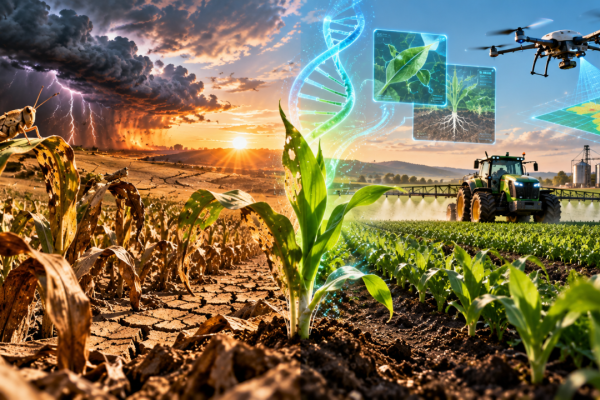
Agriculture is under enormous pressure to innovate. Pests are developing resistance, extreme weather events are threatening crops, and pressure is mounting to reduce the use of traditional chemicals and fertilizers. As a result, a technological race is underway among agricultural corporations. Biological crop-protection products, artificial intelligence and gene editing are being used to make plants more resilient and protect yields. An industry dominated by synthetic chemistry for decades could undergo fundamental changes in the years ahead.
Read

Commented by André Will-Laudien on September 21st, 2026 | 07:00 CEST
Gas Prices Above EUR 2.50? Nel ASA, Bayer, MustGrow and K+S in the Spotlight
Created and Published on Behalf of MustGrow Biologics Corp.
The ongoing debate over rising energy costs and the transition toward a greener economy is increasingly reaching gas stations and supermarket shelves. If gasoline prices remain sustainably above EUR 2.50, agricultural producers in particular will come under enormous pressure. Food production remains heavily dependent on fossil fuels, as tractors and harvesters are traditionally powered by agricultural diesel. Higher fuel prices therefore directly increase the cost of producing and transporting our daily food. At the same time, the agricultural sector faces the enormous challenge of reducing its reliance on conventional chemicals and fertilizers and finding more sustainable alternatives. This transformation requires innovative approaches at the intersection of the energy and agricultural sectors. Companies such as Nel ASA are therefore moving into focus, as green hydrogen can play a key role in decarbonizing the agricultural sector and producing cleaner fuels. Specialists such as MustGrow Biologics are also gaining importance by developing biological crop protection products designed to replace chemical alternatives. The traditional fertilizer giant K+S is likewise a key player in the rapidly evolving sector of sustainable food. Where are the opportunities for investors?
Read

Commented by Jens Castner on September 17th, 2026 | 08:50 CEST
From Farm to Supermarket Shelf: MustGrow Biologics, Sprouts and Hain Celestial Fuel the Appetite for Organic
Created and Published on Behalf of MustGrow Biologics Corp.
Healthy, sustainable, organic: the trend toward conscious eating shows no signs of slowing down. Yet the sector has recently disappointed on the stock market. Soaring costs for raw materials and logistics are eating into producers' margins, while inflation is forcing consumers to be more cautious at the checkout. But these lean years can also create opportunities. A closer look at the entire value chain, from the field to the supermarket shelf, reveals three very different cases: MustGrow Biologics, Hain Celestial and Sprouts Farmers Market. A comparison of the trio reveals where analysts see the greatest upside potential.
Read

Commented by Matthias Schomber on September 10th, 2026 | 09:35 CEST
Is Nel ASA Set to Rebound? Analysts Are Singing Bayer's Praises! RE Royalties Entices with Dividends!
Today we are taking a look at three companies that may all be at a critical turning point. Hydrogen specialist Nel ASA is racing against the clock and must prove its full order book can translate into real profits. On the other hand, there is Bayer—a company that, after years of deep crisis, share prices hovering around EUR 20, and seemingly endless legal battles, has risen like a phoenix from the ashes and is aiming to climb even higher. Last but not least, we take a look at RE Royalties. The project financier is well positioned for the energy transition and is delivering strong returns to shareholders. We examine the numbers, the technical analysis, and the truth behind the latest news.
Read
Commented by Armin Schulz on September 10th, 2026 | 06:50 CEST
Brussels Is Driving the Billion-Dollar Fertilizer Market: Can Bayer, MustGrow Biologics and K+S Benefit?
Created and Published on Behalf of MustGrow Biologics Corp.
Agriculture is in crisis, creating a billion-dollar market that few investors can afford to ignore. Brussels is imposing ever tighter restrictions on chemical crop protection products in Europe, while soils around the world are becoming increasingly depleted. Those still relying on conventional fertilizers today risk falling behind in the long run. Demand is rising for organic crop protection products and fertilizers that deliver high yields while still meeting environmental requirements. Three stocks show how differently investors can profit from the biological revolution in soil health: Bayer, MustGrow Biologics, and K+S.
Read
Commented by Fabian Lorenz on September 9th, 2026 | 07:00 CEST
Evotec Under Pressure! Analysts See Upside Potential - News From MustGrow and Bayer
Created and Published on Behalf of MustGrow Biologics Corp.
Alarm bells are ringing at Evotec. The share price is at risk of slipping below the EUR 3 mark. Even at this seemingly low price level, analysts are notably reluctant to issue "Buy" recommendations. Evotec has, however, announced a research collaboration to develop new T-cell-activating therapeutic approaches for solid tumors. MustGrow's story is now gaining noticeable momentum. The Canadian AgTech company reached profitability in the first half of the year and expects revenue to increase in the second half. In addition, the first milestone payment from Bayer under their licensing agreement has been received. Further payments running into the millions could follow in the coming years and exceed MustGrow's current market capitalization. Analysts see potential for significant upside. Bayer itself has announced an intensive phase of new product launches for its Crop Science division. Analysts recommend buying the stock.
Read

Commented by Tarik Dede on September 5th, 2026 | 05:00 CEST
Three Stocks for a Speculative Portfolio: SanDisk, MustGrow Biologics and Super Micro Computer
Created and Published on Behalf of MustGrow Biologics Corp.
Conservative investors tend to favour cash-generative stocks and dividend payers. However, every portfolio should also have a little spice. After all, blue-chip stocks do not always deliver outperformance, although they often provide greater stability. These additional returns can come from both small and large companies. At present, concerns about higher interest rates are weighing on many of the high-flyers of recent months and years. Some stocks have suffered significant pullbacks, even though their outlook remains bright. Today, we therefore take a look at three more speculative but high-growth stocks: SanDisk, MustGrow Biologics and Super Micro Computer.
Read

Commented by Stefan Bode on September 4th, 2026 | 10:40 CEST
Billion-Dollar Contracts, Takeover Battle and 600% Upside Potential: Where the Action Is Now - Frasers Group, Hugo Boss, MustGrow Biologics, OHB
Created and Published on Behalf of MustGrow Biologics Corp.
Pure excitement and volatility on the international financial markets. While an established, long-standing group faces a change in control following a takeover bid and a battle for majority voting rights, an emerging niche player is celebrating its first-ever quarterly profit following a groundbreaking deal with a major player in the agricultural sector. At the same time, a high-profile technology leader is showing that even significant billion-dollar contracts offer no guarantee of a rising share price. Three highly exciting companies from different sectors offer unique opportunities for your investment portfolio.
Read

Commented by André Will-Laudien on August 26th, 2026 | 10:00 CEST
The Focus Is on Nutrition, Not Microchips: What Is on the Menu at McDonald's, Bayer, MustGrow and Kraft Heinz?
Created and Published on Behalf of MustGrow Biologics Corp.
The stock market is many things, but it is hardly sustainable. Trends change as quickly as the weather—chips are all the rage today, but tomorrow they are out of favor. Funnily enough, the lines of reasoning are similar whether the market is rising or falling. However, sustainability is of paramount importance in the food production sector and among publicly traded companies in it. This is because a consistent ESG focus in global food production has evolved from a mere image factor to an established guarantee of success. A recent study by the McKinsey Global Institute impressively demonstrates that companies with strong ESG structures have more resilient supply chains in the long term and enjoy significantly higher consumer loyalty. Giants like McDonald's and Kraft Heinz are driving this transformation by increasingly focusing on recyclable packaging, nature-based farming, and ethical sourcing of raw materials. However, this green transition would be virtually inconceivable without innovative suppliers and trailblazers at the base of the value chain. This is where the agricultural giant Bayer comes into play, laying the foundation for lower-emission crops through targeted investments in biological crop protection and regenerative agriculture. As an agile driver of innovation, the Canadian company MustGrow Biologics is tapping into this trend and revolutionizing the market with all-natural active ingredients derived from the mustard plant. It is worth taking a closer look at what really matters!
Read