February 20th, 2026 | 07:25 CET
Agricultural revolution breaks the billion-dollar barrier: Why MustGrow Biologics, Bayer, and Bioceres Crop Solutions are ending the era of chemicals
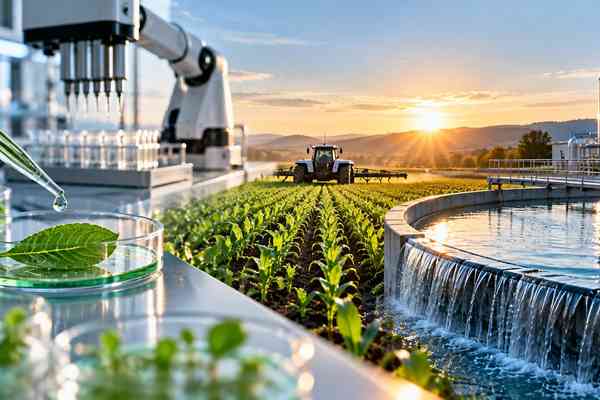
The agricultural industry is currently transitioning from toxic chemicals to high-performance biologics. In this market environment, various players are positioning themselves with complementary strategies to capture the gigantic market for sustainable crop protection, which is expected to generate billions of dollars in revenue in the future. The ongoing deterioration of farmland and increasingly restrictive regulations are forcing farmers and corporations alike to rethink their approaches. It is no longer just about purely ecological ideals, but about food for humanity. Established agricultural giants and innovative technology companies are working feverishly to secure yields without further depleting nature. In this race, clear winners are emerging who are laying the foundation for the agriculture of the future and offering investors unprecedented opportunities. MustGrow Biologics is an exciting candidate.
time to read: 3 minutes | Author: Nico Popp
ISIN: MUSTGROW BIOLOGICS CORP. | CA62822A1030 , BAYER AG NA O.N. | DE000BAY0017 , BIOCERES CROP SOLUTIONS CORP | KYG1117K1141
Table of contents:
Author

Nico Popp
At home in Southern Germany, the passionate stock exchange expert has been accompanying the capital markets for about twenty years. With a soft spot for smaller companies, he is constantly on the lookout for exciting investment stories.
Tag cloud
Shares cloud
Biologics are entering the mainstream
Established players such as Bioceres Crop Solutions are at the forefront of this development, having already proven that sustainable and organic business models can justify a market capitalization in the billions on the stock market. The Argentine company focuses on highly profitable core organic products. Through the targeted sale of biological seed treatment packages, Bioceres has significantly expanded its gross margin, proving that the market is willing to pay real premium prices for ecological innovations. The days when biologics were considered inefficient niche products are finally over. The company is demonstrating how to combine biotechnologically optimized seeds with natural crop protection solutions to create a highly scalable business model that drastically reduces the use of conventional chemicals.
The technological basis: AI meets molecular biology
While Bioceres demonstrates large-scale economic feasibility, highly innovative Canadian companies such as the privately held Terramera are laying the essential technological foundation for this rapid development. Terramera acts as the intellectual engine of the industry, using artificial intelligence and advanced molecular delivery systems to raise the often insufficient efficiency of purely natural active ingredients to an industrial level. With its proprietary platform, Terramera delivers biological agents directly to the target cells of pests, increasing biological effectiveness many times over while drastically reducing the required application rates. This fusion of cutting-edge software and biochemistry is what enables the industry to develop formulations that can compete with conventional synthetic chemistry in terms of effectiveness. Terramera thus provides the crucial technological building blocks for the agricultural transition.
But while these and other companies, such as Bayer, are already creating broad market acceptance for the green transformation, true success will ultimately be decided out in the field, where farmers are looking for alternatives to increasingly regulated and banned pesticides that work immediately. It is precisely at this critical interface that MustGrow Biologics enters the scene and delivers the operational breakthrough in the fight against the most devastating plant diseases worldwide. With its patented active ingredients derived from mustard seeds, MustGrow occupies the most important field in modern agriculture: the uncompromising and immediate replacement of highly toxic soil chemistry with high-performance biological systems. The industry has long waited for a player that not only excels in the laboratory, but also proves on hundreds of acres of farmland that natural active ingredients can reliably and massively reduce stubborn pathogens such as clubroot without damaging soil life.

The operational breakthrough: TerraMG™ destroys clubroot
The company announcement at the beginning of February 2026 was a milestone for the company and a bombshell for the entire agricultural industry. MustGrow presented the results of large-scale field trials in the Canadian prairies, which specifically targeted the extremely feared clubroot. In these tests, the flagship product TerraMG™ demonstrated a sustained reduction of harmful clubroot spores by up to 95%. Until now, such efficiency could only be achieved in agricultural practice with aggressive and harsh synthetic chemicals, which are increasingly being banned by regulatory authorities or to which pathogens have already developed extensive resistance. Since the aggressive spores of clubroot can survive in the soil for up to 20 years and completely destroy entire rapeseed growing regions, TerraMG™ tackles the problem radically at its root and permanently remediates the soil.
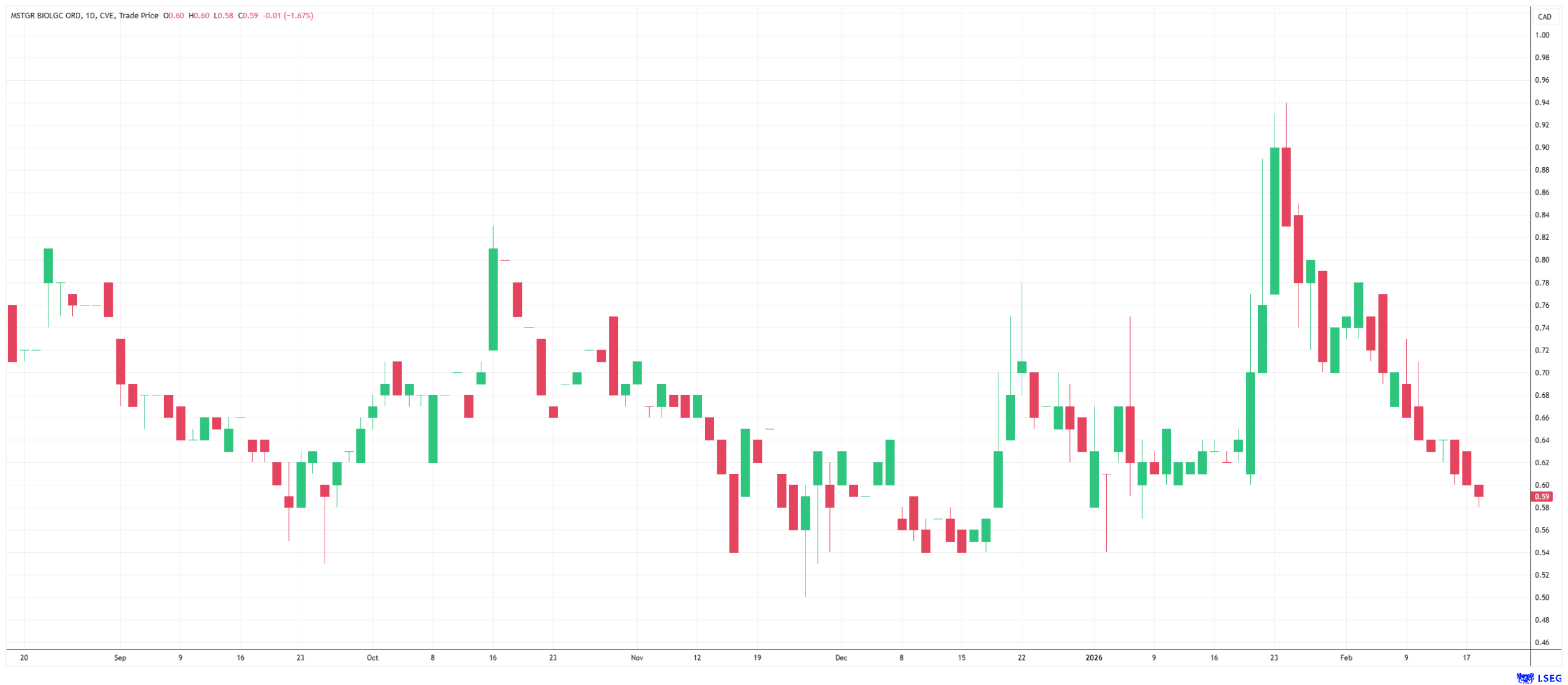
With this success, MustGrow Biologics is solving a fundamental problem in the agricultural industry, often referred to by experts as the ESG paradox. This paradox describes the widespread concern among farmers that sustainable and ecological practices in agriculture inevitably and unavoidably come at the expense of their own short-term returns. MustGrow's innovative technology now proves exactly the opposite, as recent field trials have not only shown disease suppression but also a significant increase in yield, representing a massive added value of USD 91 per acre for the farmer. When large agricultural businesses can heal their soil through the targeted use of biologics and even increase their already tight margins, the biggest psychological and financial hurdle to the widespread adoption of environmentally friendly technologies is removed. The result is a win-win situation for nature and the bottom line. This prospect is also promising for investors. MustGrow occupies an innovative niche.
Watch YouTube videoConflict of interest
Pursuant to §85 of the German Securities Trading Act (WpHG), we point out that Apaton Finance GmbH as well as partners, authors or employees of Apaton Finance GmbH (hereinafter referred to as "Relevant Persons") may hold shares or other financial instruments of the aforementioned companies in the future or may bet on rising or falling prices and thus a conflict of interest may arise in the future. The Relevant Persons reserve the right to buy or sell shares or other financial instruments of the Company at any time (hereinafter each a "Transaction"). Transactions may, under certain circumstances, influence the respective price of the shares or other financial instruments of the Company.
In addition, Apaton Finance GmbH is active in the context of the preparation and publication of the reporting in paid contractual relationships.
For this reason, there is a concrete conflict of interest.
The above information on existing conflicts of interest applies to all types and forms of publication used by Apaton Finance GmbH for publications on companies.
Risk notice
Apaton Finance GmbH offers editors, agencies and companies the opportunity to publish commentaries, interviews, summaries, news and the like on news.financial. These contents are exclusively for the information of the readers and do not represent any call to action or recommendations, neither explicitly nor implicitly they are to be understood as an assurance of possible price developments. The contents do not replace individual expert investment advice and do not constitute an offer to sell the discussed share(s) or other financial instruments, nor an invitation to buy or sell such.
The content is expressly not a financial analysis, but a journalistic or advertising text. Readers or users who make investment decisions or carry out transactions on the basis of the information provided here do so entirely at their own risk. No contractual relationship is established between Apaton Finance GmbH and its readers or the users of its offers, as our information only refers to the company and not to the investment decision of the reader or user.
The acquisition of financial instruments involves high risks, which can lead to the total loss of the invested capital. The information published by Apaton Finance GmbH and its authors is based on careful research. Nevertheless, no liability is assumed for financial losses or a content-related guarantee for the topicality, correctness, appropriateness and completeness of the content provided here. Please also note our Terms of use.