March 12th, 2026 | 07:00 CET
Solutions instead of energy crisis: The potential of CHAR Technologies, Linde, and DuPont
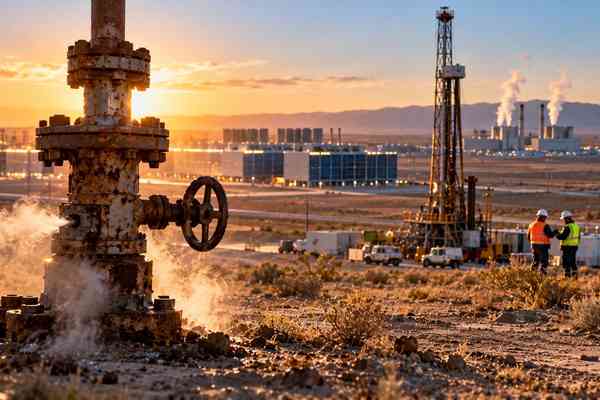
The German economy is under enormous pressure. After years of rising energy prices and an increasingly complicated supply of raw materials, the population and industry are gripped by fears of a creeping decline. Electricity prices for energy-intensive companies remain at a level that is significantly higher than in previous years. Industry experts have long warned of a permanent exodus of production capacities to cheaper regions such as the US, where electricity costs for industry last year were less than half those in the European Union. To ensure the survival of industry, new approaches are coming into focus. Solutions are needed that break the dependence on fossil fuel imports and make supply more flexible. Different approaches are being taken here: While Linde and DuPont prefer to partner with the big players, Canadian innovator CHAR Technologies is occupying the exciting niche of decentralized energy generation.
time to read: 3 minutes | Author: Nico Popp
ISIN: CHAR Technologies Ltd. | CA15957L1040 | TSXV: YES , LINDE PLC | IE000S9YS762 , DUPONT DE NEMOURS INC. ON | US26614N1028
Table of contents:
Author

Nico Popp
At home in Southern Germany, the passionate stock exchange expert has been accompanying the capital markets for about twenty years. With a soft spot for smaller companies, he is constantly on the lookout for exciting investment stories.
Tag cloud
Shares cloud
CHAR Technologies as a pioneer of decentralized pyrolysis
CHAR Technologies has positioned itself in the field of decentralized resource recovery. Its business model addresses two enormous industrial problems at the same time: expensive waste disposal and the need for climate-neutral energy. The technological core is high-temperature pyrolysis, which breaks down organic materials at over 800 degrees Celsius into solid biochar and energy-rich synthesis gas. The biochar can replace fossil coal in the steel and metal industry almost one-to-one, while the gas produced is used for heat, renewable natural gas, or green hydrogen. The company has also achieved a groundbreaking success in wastewater treatment. In a project in the US, CHAR demonstrated that the plant can destroy the dangerous and extremely persistent PFAS chemicals in sewage sludge. This opens up a massive growth market for the company among municipalities that are suffering from increasingly stringent regulations and the aforementioned "forever chemicals."
Smart licenses and strong partners conserve capital
Operationally, the company is currently taking the decisive step from developer to producer. With the current commissioning of the first phase of its flagship Canadian project in Thorold, CHAR is proving the industrial scalability of its technology. A second biochar project in Espanola, on the site of a former pulp mill, is already in the starting blocks. In order to grow rapidly internationally without tying up a huge amount of its own capital, the management is focusing on smart partnerships. For example, a license agreement with a French developer secures future market entry in Europe and promises attractive margins through ongoing royalties. Investors are also increasingly focusing on the stock, which is also listed in Germany. The BMI Group is massively expanding its financial commitment to CHAR. It is likely to hold more than 10% of the shares in the future, which demonstrates investor confidence in the technology.
Linde supplies the infrastructure for clean gas
While CHAR offers decentralized solutions for smaller companies, the gas group Linde supplies the central building blocks for large-scale industrial decarbonization. The world's largest industrial gas company covers the entire hydrogen value chain and builds huge electrolysers as well as distribution and cryogenic storage facilities. A prime example of this strategic orientation is the planned construction of a 100-megawatt electrolyser for the Shell chemical park in the Rhineland, which is expected to supply clean energy from 2027. Such infrastructure forms the backbone of large-scale domestic industry. Financially, the group is operating from a position of strength. With a project portfolio of USD 10 billion, 65% of which is accounted for by clean energies, and enormous pricing power thanks to long-term contracts, Linde offers investors a safe haven against short-term fluctuations.
DuPont as the link between the ecosystems
The technological link between these two worlds is provided by materials specialist DuPont. The company manufactures the components that are essential for the efficient operation of modern energy plants. Whether it is highly efficient specialty materials for gas purification at Linde or complex water treatment systems for cooling and steam generation in pyrolysis plants such as those at CHAR, DuPont supplies the building blocks. A current example is a new reverse osmosis membrane that purifies industrial wastewater under extremely high pressure, maximizing water recovery while reducing energy consumption. In times of persistently high electricity costs, this is a decisive competitive advantage for industrial customers.
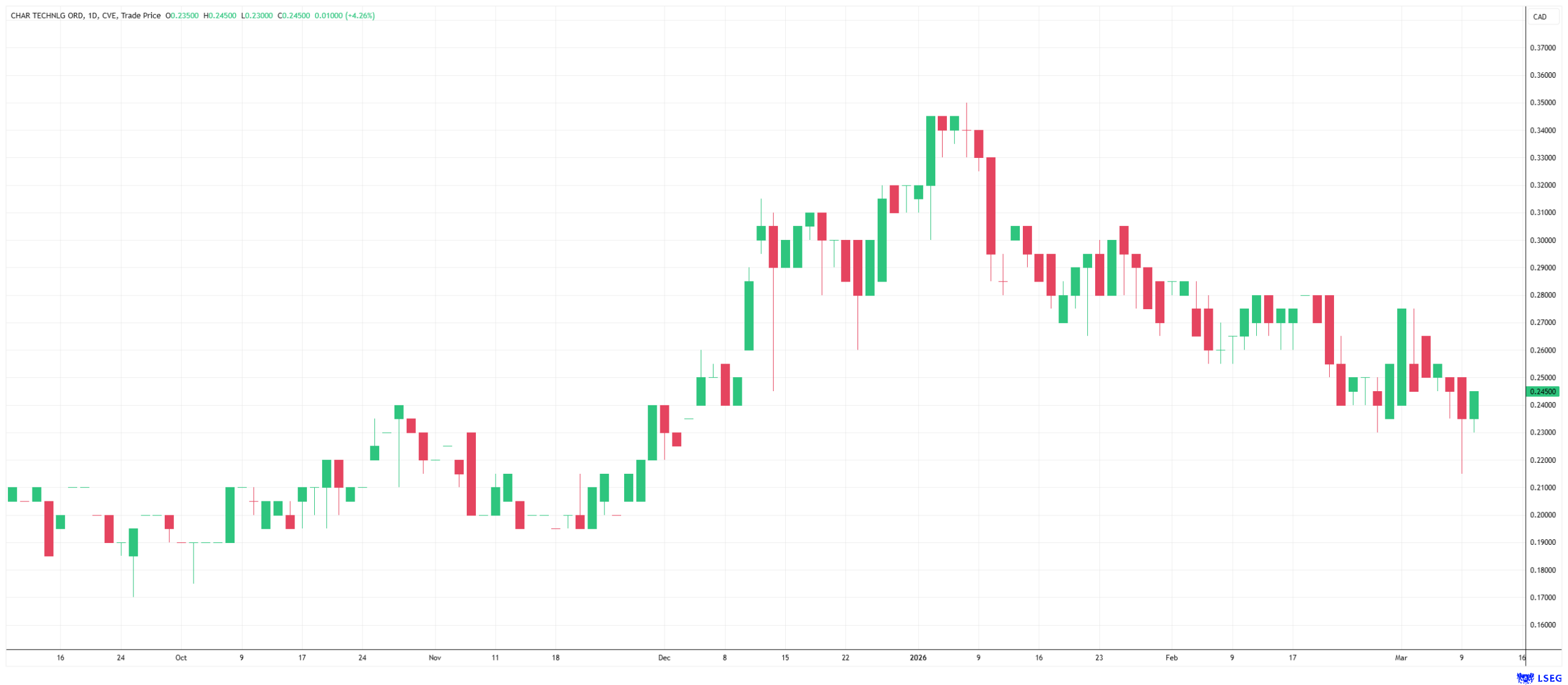
For investors, this trio represents an excellent mix. Linde and DuPont form the established and stable core investments for the portfolio. At the same time, CHAR Technologies offers speculative investors a dynamic return opportunity for the future, given the start of commercial production and the solution to highly topical waste disposal problems. Despite operational progress in recent weeks, CHAR's share price has fallen back. Investors should keep an eye on the stock, as the business model and expansion into Europe sound promising.
Watch YouTube videoConflict of interest
Pursuant to §85 of the German Securities Trading Act (WpHG), we point out that Apaton Finance GmbH as well as partners, authors or employees of Apaton Finance GmbH (hereinafter referred to as "Relevant Persons") may hold shares or other financial instruments of the aforementioned companies in the future or may bet on rising or falling prices and thus a conflict of interest may arise in the future. The Relevant Persons reserve the right to buy or sell shares or other financial instruments of the Company at any time (hereinafter each a "Transaction"). Transactions may, under certain circumstances, influence the respective price of the shares or other financial instruments of the Company.
In addition, Apaton Finance GmbH is active in the context of the preparation and publication of the reporting in paid contractual relationships.
For this reason, there is a concrete conflict of interest.
The above information on existing conflicts of interest applies to all types and forms of publication used by Apaton Finance GmbH for publications on companies.
Risk notice
Apaton Finance GmbH offers editors, agencies and companies the opportunity to publish commentaries, interviews, summaries, news and the like on news.financial. These contents are exclusively for the information of the readers and do not represent any call to action or recommendations, neither explicitly nor implicitly they are to be understood as an assurance of possible price developments. The contents do not replace individual expert investment advice and do not constitute an offer to sell the discussed share(s) or other financial instruments, nor an invitation to buy or sell such.
The content is expressly not a financial analysis, but a journalistic or advertising text. Readers or users who make investment decisions or carry out transactions on the basis of the information provided here do so entirely at their own risk. No contractual relationship is established between Apaton Finance GmbH and its readers or the users of its offers, as our information only refers to the company and not to the investment decision of the reader or user.
The acquisition of financial instruments involves high risks, which can lead to the total loss of the invested capital. The information published by Apaton Finance GmbH and its authors is based on careful research. Nevertheless, no liability is assumed for financial losses or a content-related guarantee for the topicality, correctness, appropriateness and completeness of the content provided here. Please also note our Terms of use.