
CAMECO CORP.
Commented by Nico Popp on October 22nd, 2026 | 05:41 CEST
Beyond Coal: Cameco, GE Vernova and NU E Power in Canada's Nuclear Energy Transition
Created and published on behalf of NU E Power Corp.
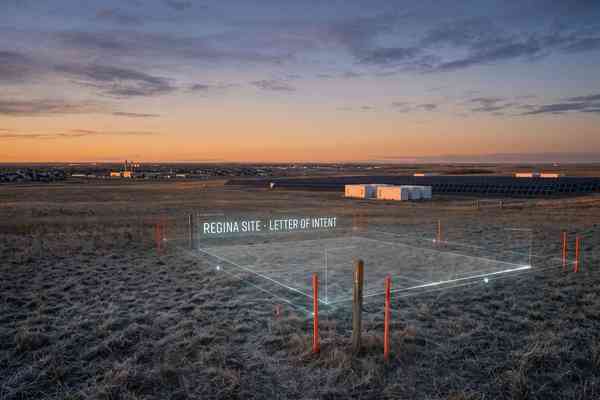
The Canadian province of Saskatchewan is planning a fundamental restructuring of its energy supply. A government plan presented by Premier Scott Moe at the end of September envisages generating at least 2,600 megawatts (MW) of electricity from nuclear power plants by 2050. Saskatchewan, historically heavily dependent on coal- and gas-fired power generation, cites supply security and affordable electricity as reasons for its shift toward nuclear power. The plan comprises two technical development stages. First, provincial utility SaskPower plans to build small modular reactors (SMRs) near Estevan at the Rafferty Reservoir. Second, large, conventional nuclear reactors with a capacity of over 2,000 MW are to be built in the northwest of the province, with the first potentially coming online in 2042. Established companies such as Cameco and GE Vernova are active in this evolving energy landscape, alongside specialised project developers such as NU E Power.
Read
Commented by Armin Schulz on July 28th, 2026 | 10:05 CEST
Multi-Billion Dollar Saudi Nuclear Deal: Cameco, American Atomics and Constellation Energy in Focus
Driven by AI data centres and industrial transformation, soaring global energy demand is thrusting nuclear power back to the forefront of energy policy. The multi-billion-dollar US-Saudi agreement is not a superficial diplomatic gesture, but a 30-year economic stimulus program for the entire nuclear value chain. The true return on the nuclear energy renaissance lies not in the reactor coolers themselves, but in the companies that secure the supply, scale the technology, and capture the returns from capacity markets. This is precisely where a closer look at Cameco, American Atomics, and Constellation Energy is particularly worthwhile.
Read
Commented by Nico Popp on July 24th, 2026 | 08:50 CEST
Cameco Had to Buy Uranium on the Open Market – NexGen Opts Out of Offtake Agreements – Standard Uranium Receives a "Gift"
Now Saudi Arabia has entered the picture as well. The recent nuclear deal with the US underscores that nuclear power is on the rise. The reason is clear: AI data centers require climate-neutral baseload power. However, nuclear reactors need uranium fuel—and uranium is anything but abundant. At the same time, Western sanctions against Russian uranium are further tightening an already constrained global supply. Amid this supply gap, a remote region in northern Canada is increasingly attracting investor attention. The Athabasca Basin is home to the world's largest uranium deposits. While established industry leaders and advanced developers already command multi-billion-dollar valuations, investors are searching for the next discovered success stories in the world's premier uranium district. We take a closer look at the investment landscape in the Athabasca Basin.
Read
Commented by Fabian Lorenz on July 24th, 2026 | 08:35 CEST
North America is betting on nuclear power! Who stands to benefit? Siemens Energy, Cameco, Constellation Energy, and American Atomics
North America is fully committed to nuclear power. In Canada, a flagship project featuring four small modular reactors (SMRs) is set to supply electricity to 1.2 million households. In addition, large nuclear power plants are also planned. The government is supporting this expansion—just as it is in the US. There, nuclear power capacity is set to quadruple by 2050, rising from the current level of around 100 GW to 400 GW. This presents investment opportunities for investors across the entire value chain, starting with uranium. New mining areas are urgently needed. In addition to Cameco as a core investment, American Atomics is an interesting option. The company is working to establish an integrated value chain. The latest developments in its flagship project are promising. But Siemens Energy also plans to capitalize on the boom. Although the German conglomerate does not supply reactors, it does provide steam turbines, generators, and other equipment for nuclear power plants.
Read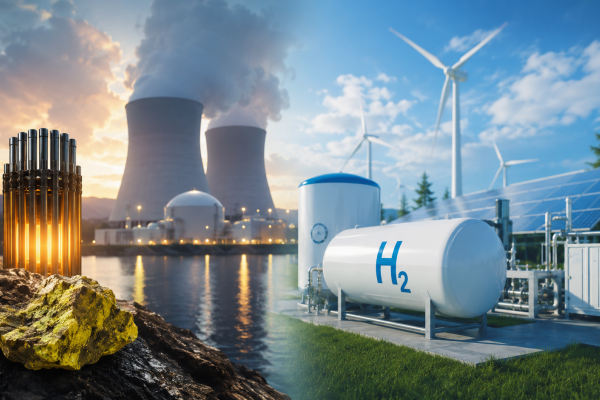
Commented by Stefan Feulner on July 20th, 2026 | 07:05 CEST
Cameco, American Atomics, and ElringKlinger Make a Splash
The next long-term investment trend is taking shape in the capital markets. While many investors focus on short-term price fluctuations, future markets worth billions are emerging in the background. The expansion of nuclear energy, the industrial use of hydrogen, and the development of independent raw material and supply chains are gaining momentum worldwide. At the same time, the transformation of the automotive industry is opening up new opportunities in the global auto parts business. Companies that benefit early on from these structural developments could be poised for a sustained revaluation.
Read
Commented by Armin Schulz on July 1st, 2026 | 06:55 CEST
Cameco, American Atomics, and Centrus Energy: How to Capitalize on the Revaluation of the Entire Sector
The uranium market is currently undergoing not just another commodity boom, but a strategic realignment across the entire value chain. Security of supply and industrial sovereignty have long since elevated nuclear fuel to a matter of national security. For investors, the focus is shifting from the mere spot price to critical bottlenecks in processing and enrichment. The actual value creation no longer occurs solely in the ground, but rather where ore is transformed into usable fuel. Whoever controls these key nodes secures the margins. Cameco, American Atomics, and Centrus Energy demonstrate how stability, leverage, and strategic scarcity can be profitably combined within the same market environment.
Read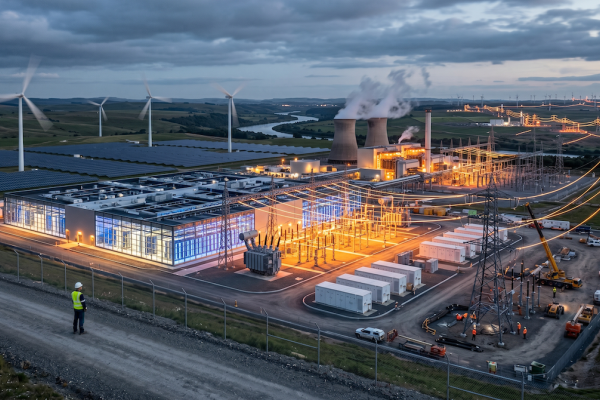
Commented by Fabian Lorenz on June 30th, 2026 | 07:20 CEST
The US Is Pumping Billions into the Market! Uranium Stocks Like Cameco and American Atomics Are Back! What About Plug Power?
Uranium stocks are poised for a comeback. The US government is providing billions to build nuclear power plants faster and more affordably. The spot price for uranium is still low; however, one expert sees momentum and forecasts a significant price increase. Cameco should benefit from this as a core investment. American Atomics could be poised for outperformance. The Canadian explorer is working on an integrated uranium value chain in North America. Its projects in the US states of Utah and Colorado are promising. And what about Plug Power? The stock lost over 35% of its value in June. Can the latest news halt the downward trend? Analysts see upside potential.
Read
Commented by Nico Popp on June 22nd, 2026 | 07:05 CEST
HALEU Enrichment Bottleneck Threatens Cameco and Amazon—American Atomics Benefits
The electricity demand of AI data centers cannot be met by renewable energy alone—even the greatest idealists have come to understand this by now. The result is an unprecedented renaissance of nuclear energy. The latest "Red Book Report" from the OECD Nuclear Energy Agency (NEA) and the International Atomic Energy Agency shows that, with accelerated reactor expansion, existing mining capacity would not be sufficient to meet demand in the medium term. Decades of underinvestment in mining projects have led to a supply deficit, while geopolitical risks and severe production bottlenecks at the world's largest producer, Kazatomprom, are further exacerbating the situation. As a result, established players in the nuclear value chain are under pressure to act. Investors are capitalizing on this to make investments in secure jurisdictions.
Read
Commented by Matthias Schomber on June 19th, 2026 | 07:00 CEST
Winners and Losers of the Energy Transition: Cameco Strong, Nel ASA Disappoints, American Atomics Positions Itself
The global energy market is in flux, and stocks across the various sectors are either soaring or plummeting. While the world continues to watch with bated breath the historic peace agreement between the US and Iran—a deal expected to reopen the Strait of Hormuz and noticeably calm global markets—a similarly dramatic transformation is underway in the energy sector. Investors are currently experiencing a rollercoaster of emotions, because while established uranium giants like Cameco are benefiting from the renaissance of nuclear power, Nel ASA is fighting for its future following massive declines in orders. In the background, a smaller stock is poised to make big waves. American Atomics has strategically positioned itself to meet the growing demand for nuclear energy in the US. In a post-war world craving security and independence, Cameco, Nel ASA, and American Atomics are showing who might be among the winners in the reshaping of the energy supply—and who might be left behind.
Read
Commented by Armin Schulz on June 15th, 2026 | 07:25 CEST
Supply Shortage & AI's Power Hunger: Why Cameco, Standard Uranium, and Energy Fuels Are the Perfect Uranium Stocks Right Now
The uranium industry is facing an unprecedented shortage in 2026. The annual production shortfall of 30 million pounds is driving up prices, while 70 gigawatts of new reactor capacity is being built worldwide. But the real driver is the insatiable hunger for power of AI data centers. Add to that a historic wave of consolidation. Major producers are securing strategic stakes, juniors are merging into powerful platforms, and even non-energy players are entering the market via licensing models. Those holding the right positions now could benefit from a supercycle. While Cameco, as an established giant, focuses on stability, Standard Uranium, as an explorer, offers growth opportunities and could become a takeover target. Energy Fuels benefits from its unique US infrastructure.
Read