January 8th, 2026 | 07:00 CET
Shares in rally mode: D-Wave and Power Metallic Mines! And what is Nel ASA doing?
At Power Metallic Mines, the knot has finally been broken. Since mid-December, the share price of this commodity gem has risen by around 50%. This is likely just the beginning, as there are good reasons for prices to continue rising, and analysts believe that a price gain of over 100% is still possible. D-Wave shares are also rallying. The quantum specialist recently announced a technological breakthrough. Further details are expected in the coming weeks. And what is Nel ASA doing? Shareholders are waiting for major orders from the problem child in the hydrogen sector. The industry is developing positively in Germany, for example. But Nel shares remain flat.
time to read: 4 minutes | Author: Fabian Lorenz
ISIN: POWER METALLIC MINES INC. | CA73929R1055 , D-WAVE QUANTUM INC | US26740W1099 , NEL ASA NK-_20 | NO0010081235
Table of contents:
Author

Fabian Lorenz
For more than twenty years, the Cologne native has been intensively involved with the stock market, both professionally and privately. He is particularly passionate about national and international small and micro caps.
Tag cloud
Shares cloud
Power Metallic Mines: 50% price increase is just the beginning
We have often pointed out over the past year that Power Metallic Mines shares are simply too cheap. Now they have finally taken off. Since mid-December, the share price of this commodity gem has risen by around 50% and is now trading at CAD 1.36. At the same time, trading activity on Tradegate has increased significantly. And the rally is likely to continue. In February 2025, the share price was already at CAD 2, and analysts at Roth Capital Partners currently see the fair value at CAD 3.
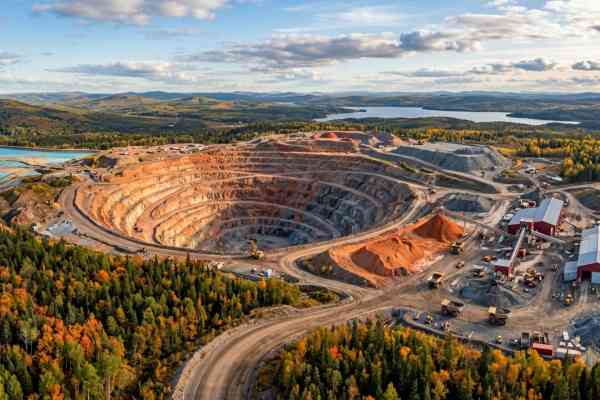
With the NISK multi-metal deposit, Power Metallic Mines is benefiting from the commodity boom like few others. Whether copper, platinum, palladium, cobalt, gold, or silver, the Canadians are in the game. After high-grade drill results in 2025, shareholders can look forward to an exciting 2026. Thanks to a solid financial base, the Company can use state-of-the-art technology to consistently advance its projects. The focus is likely to remain on the Lion-Tiger zones. Drilling will continue at greater depths there, as strong geophysical signals indicate previously unexplored sulfide zones. In addition, exploration is to be expanded to include projects such as NISK East and the newly acquired HydroLands.
These are likely to be enough reasons to bet on further price increases for Power Metallic Mines. But there is something else: the planned listing on the NYSE. This is likely to attract even more attention.
D-Wave: New momentum for the stock
Similar to Power Metallic Mines, D-Wave Quantum's stock has also performed well in recent weeks. In the still young stock market year, it rose from USD 26 to over USD 31. That is already around 20%.
There has also been news on the operational front. The quantum specialist reported a technological breakthrough in gate model quantum computer development. For the first time, it has successfully demonstrated scalable, chip-integrated cryogenic control of qubits. The core of the breakthrough is that the number of lines required to control many qubits can be drastically reduced without compromising reliability. This is precisely where large gate model systems often fail at present. D-Wave points out that the on-chip control technology used for this purpose comes from its own commercial annealing QPUs. There, multiplexed digital-to-analog converters control tens of thousands of qubits and couplers with around 200 bias lines. It is precisely this principle that is now intended to make gate model architectures "low-wiring" and thus scalable for industrial use.
Technically, the demonstrator is based on a multichip package that combines a high-coherence fluxonium qubit chip with a multilayer control chip. D-Wave cites superconducting bump bonding and advanced cryogenic packaging methods, among other things, for this. Key components were manufactured with the support of manufacturing and process expertise from NASA's Jet Propulsion Laboratory. Strategically, the Company emphasizes its positioning in superconducting technologies and established microcircuit manufacturing processes, which are intended to enable faster and more cost-effective scaling via existing supply chains. D-Wave plans to provide further insights into its roadmap and progress at its in-house conference "Qubits 2026" at the end of January 2026.
Nel ASA remains a problem child in the hydrogen sector
Nel ASA, on the other hand, remains a problem child. This applies to both its shares and its operating business. There is a lack of large orders, profitability is a long way off, and the share price hovered around EUR 0.20 last year – the jump in the share price following Samsung's investment was quickly reversed.
However, there are definitely positive developments in the hydrogen industry. Take Germany, for example: the most visible progress was the start of construction of the supraregional hydrogen core network. According to FNB Gas, the first 525 km should be completed on schedule by the end of 2025. At the same time, operators such as GASCADE reported important technical milestones. These included the conversion and commissioning of a 400 km section as a core network component – a signal that the repurposing of large pipe diameters works in practice. For investors and project developers, the pricing and financing architecture surrounding the core network was important in 2025. On July 14, 2025, the Federal Network Agency set the ramp-up fee at EUR 25 per kWh/h/a. This measure aims to define market access and, at the same time, promote the refinancing of the network. This was followed in December 2025 by the KOSMO regulation, which governs differentiated fee structures in the core network.
On the demand side, the federal government provided impetus at the end of 2025 with the amendment to the greenhouse gas reduction quota. According to the Ministry of the Environment, this is intended to stimulate additional demand for "green hydrogen." However, at the end of October 2025, the Federal Audit Office criticized the sluggish implementation of the hydrogen strategy. This poses risks for the energy transition, Germany as an industrial location, and federal finances.
D-Wave is likely to remain one of the basic quantum investments in 2026. As long as investors continue to overlook valuations in this sector, the rally may persist. Commodities are expected to stay in the spotlight this year, with Power Metallic Mines' share price having finally taken off and still offering considerable upside potential. In contrast, there is currently no pressing reason to buy Nel shares.
Conflict of interest
Pursuant to §85 of the German Securities Trading Act (WpHG), we point out that Apaton Finance GmbH as well as partners, authors or employees of Apaton Finance GmbH (hereinafter referred to as "Relevant Persons") may hold shares or other financial instruments of the aforementioned companies in the future or may bet on rising or falling prices and thus a conflict of interest may arise in the future. The Relevant Persons reserve the right to buy or sell shares or other financial instruments of the Company at any time (hereinafter each a "Transaction"). Transactions may, under certain circumstances, influence the respective price of the shares or other financial instruments of the Company.
In addition, Apaton Finance GmbH is active in the context of the preparation and publication of the reporting in paid contractual relationships.
For this reason, there is a concrete conflict of interest.
The above information on existing conflicts of interest applies to all types and forms of publication used by Apaton Finance GmbH for publications on companies.
Risk notice
Apaton Finance GmbH offers editors, agencies and companies the opportunity to publish commentaries, interviews, summaries, news and the like on news.financial. These contents are exclusively for the information of the readers and do not represent any call to action or recommendations, neither explicitly nor implicitly they are to be understood as an assurance of possible price developments. The contents do not replace individual expert investment advice and do not constitute an offer to sell the discussed share(s) or other financial instruments, nor an invitation to buy or sell such.
The content is expressly not a financial analysis, but a journalistic or advertising text. Readers or users who make investment decisions or carry out transactions on the basis of the information provided here do so entirely at their own risk. No contractual relationship is established between Apaton Finance GmbH and its readers or the users of its offers, as our information only refers to the company and not to the investment decision of the reader or user.
The acquisition of financial instruments involves high risks, which can lead to the total loss of the invested capital. The information published by Apaton Finance GmbH and its authors is based on careful research. Nevertheless, no liability is assumed for financial losses or a content-related guarantee for the topicality, correctness, appropriateness and completeness of the content provided here. Please also note our Terms of use.