June 4th, 2025 | 07:10 CEST
Rethinking country risk! BHP Group, Commerzbank, AJN Resources
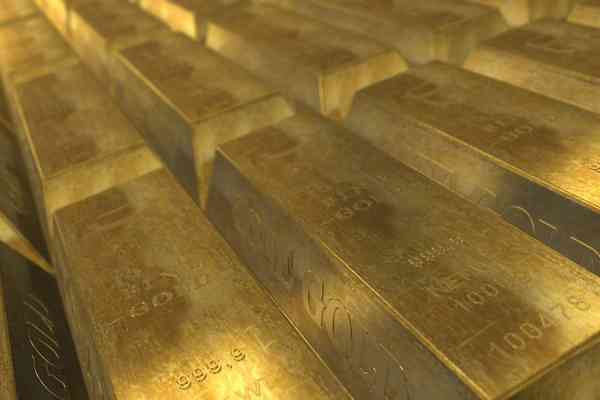
Commodities are in demand like never before! Gold is trading above the USD 3,000 mark, and the World Bank forecasts that cobalt consumption will rise to 344,000 tons by 2030 - equivalent to annual growth of around 9.6%. Over 70% of cobalt comes from the Democratic Republic of Congo – a country that is repeatedly viewed critically in Western media. But what are the real disadvantages of this location? Which mining jurisdictions are safe? Where are the returns?
time to read: 4 minutes | Author: Nico Popp
ISIN: BHP GROUP LTD. DL -_50 | AU000000BHP4 , BHP GROUP PLC DL -_50 | GB00BH0P3Z91 , COMMERZBANK AG | DE000CBK1001 , AJN RESOURCES INC. O.N. | CA00149L1058
Table of contents:
Author

Nico Popp
At home in Southern Germany, the passionate stock exchange expert has been accompanying the capital markets for about twenty years. With a soft spot for smaller companies, he is constantly on the lookout for exciting investment stories.
Tag cloud
Shares cloud
BHP Group: Risk management with ESG
For many years, the equation for commodity investors was simple: projects in Australia, Canada, the US, and, to a lesser extent, South America were considered promising, while other regions, such as Africa and especially the DR Congo, were viewed with caution. The portfolios of large commodity companies still reflect this view. BHP, for example, has its core activities in countries with lower country risk such as Australia, Chile, the US, and Canada. However, supposed legal certainty often harbors risks as well. When interest groups and local politicians hide particular interests to protect supposedly endangered species or enforce regulatory hurdles, even promising mining projects can fail. To mitigate such risks, major corporations like BHP have long been focusing on ESG strategies.
As the consultants at EY write, investors are now questioning every capital measure in mining – sustainability is just as important as returns. According to EY, mining executives cited capital procurement as the number one risk, closely followed by environmental regulations. For these reasons, professional investors have long been paying attention to sustainability in mining projects. Specialized funds are focusing on "green metals" with proven responsible extraction, and banks are offering sustainable financing instruments for raw material projects. Commerzbank, for example, promotes ESG future financing - customized loans for companies with a proven sustainability impact. Such loans are even promoted by the Kreditanstalt für Wiederaufbau (KfW).
ESG even in the DR Congo – Is this the key to success?
Instead of being guided by prejudices or best practice approaches from the past, Commerzbank relies on positive screening lists and uses clearly defined criteria to identify raw material projects with which it is willing to support. While involvement in coal or uranium remains difficult for various reasons, Commerzbank's ESG framework requires gold miners, for example, to do everything possible to preserve the environment and ban the use of mercury. In essence, it is the local conditions that determine whether a raw material project receives financing - or not.
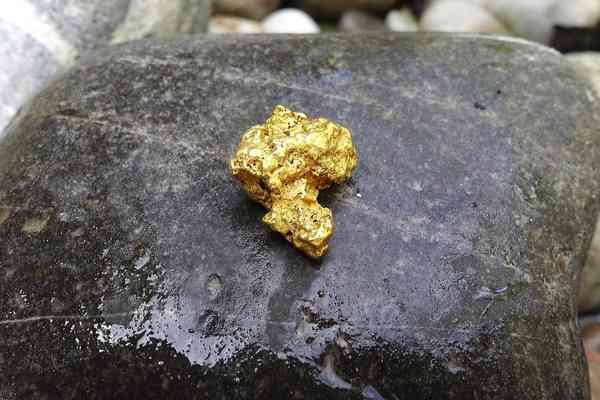
The fact that a flawless ESG profile is crucial for attracting financing partners is also evident in the young raw materials company AJN Resources. AJN Resources is a Canadian exploration company focusing on Central Africa deposits. To date, it has mainly been involved in lithium projects in the Democratic Republic of Congo, where AJN holds majority interests in several exploration licenses. These include Kabunda South and the Manono areas, which border Manono, one of the world's largest lithium pegmatite fields. However, due to the low price of lithium, AJN has recently reoriented itself and secured access to the Okote gold project in southern Ethiopia. The terms for the acquisition of the project have already been agreed – AJN now has three months to make a final decision and seal the deal.
Congo experts are now betting on gold – Will further projects follow?
"The Okote gold project is located in the same gold belt as Ethiopia's largest gold producer in Lega Dembi, less than 100 km to the north. We are particularly interested in conducting our own mapping and sampling in the northern area, where small-scale mining companies have reportedly uncovered new mineralization zones that will extend the previously defined mineralization of more than 2 km. Our field teams are ready to commence work immediately following the final presentation to the regional authorities," said Klaus Eckhof, the German CEO of AJN Resources. Eckhof is no stranger to the mining industry and is particularly knowledgeable about the DR Congo. In total, AJN's management has more than 75 years of experience in the region and has a proven track record of successfully discovering, financing, and developing mines in the DRC. Examples include the Kibali gold mine, which Eckhof played a key role in advancing through his company Moto Goldmines and later sold for USD 500 million. Today, the mine is considered one of the largest in Africa, with resources of 25.5 million ounces of gold. Other mines developed by Eckhof include the Bisié tin project and the Manono lithium project, both also located in the Democratic Republic of Congo.
As an expert on the region, Eckhof has always valued partnership-based dialogue with local residents and decision-makers. AJN Resources has also adopted an ESG strategy and takes a both reactive and proactive approach: reactive because ESG requirements are now a clearly formulated condition for potential investors and customers, and proactive because management anticipates ESG challenges such as corruption, infrastructure, and social conflicts and specifically employs experts with experience in the region. When speaking with Eckhof, he sees the opportunities in the Democratic Republic of Congo outweighing the risks. It goes without saying that the experienced geologist and mine developer knows of other promising properties in the region.It's
Market capitalization of CAD 5 million – AJN Resources is Eckhof's bet
AJN Resources has only recently initiated its shift from lithium to gold projects. With a management team rooted in the region, a up-to-date ESG approach tailored to local requirements, and a track record of convincing investors with projects in the DRC, the Company is well-positioned. With a market capitalization of less than CAD 5 million, the stock represents an exciting bet on rising gold prices and the experienced team on the ground.
Conflict of interest
Pursuant to §85 of the German Securities Trading Act (WpHG), we point out that Apaton Finance GmbH as well as partners, authors or employees of Apaton Finance GmbH (hereinafter referred to as "Relevant Persons") may hold shares or other financial instruments of the aforementioned companies in the future or may bet on rising or falling prices and thus a conflict of interest may arise in the future. The Relevant Persons reserve the right to buy or sell shares or other financial instruments of the Company at any time (hereinafter each a "Transaction"). Transactions may, under certain circumstances, influence the respective price of the shares or other financial instruments of the Company.
In addition, Apaton Finance GmbH is active in the context of the preparation and publication of the reporting in paid contractual relationships.
For this reason, there is a concrete conflict of interest.
The above information on existing conflicts of interest applies to all types and forms of publication used by Apaton Finance GmbH for publications on companies.
Risk notice
Apaton Finance GmbH offers editors, agencies and companies the opportunity to publish commentaries, interviews, summaries, news and the like on news.financial. These contents are exclusively for the information of the readers and do not represent any call to action or recommendations, neither explicitly nor implicitly they are to be understood as an assurance of possible price developments. The contents do not replace individual expert investment advice and do not constitute an offer to sell the discussed share(s) or other financial instruments, nor an invitation to buy or sell such.
The content is expressly not a financial analysis, but a journalistic or advertising text. Readers or users who make investment decisions or carry out transactions on the basis of the information provided here do so entirely at their own risk. No contractual relationship is established between Apaton Finance GmbH and its readers or the users of its offers, as our information only refers to the company and not to the investment decision of the reader or user.
The acquisition of financial instruments involves high risks, which can lead to the total loss of the invested capital. The information published by Apaton Finance GmbH and its authors is based on careful research. Nevertheless, no liability is assumed for financial losses or a content-related guarantee for the topicality, correctness, appropriateness and completeness of the content provided here. Please also note our Terms of use.