October 20th, 2022 | 12:10 CEST
Rare Earths and the China Shock: Volkswagen, Defense Metals, Freyr Battery
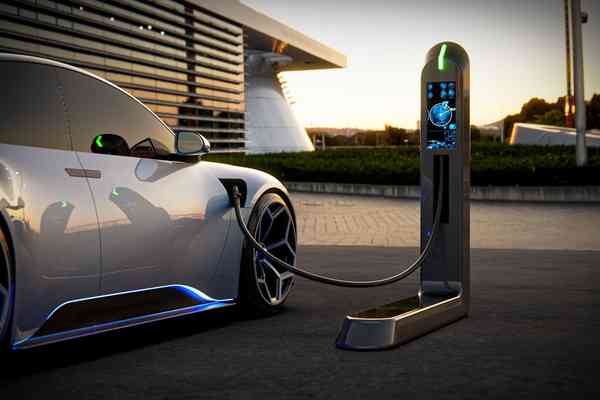
Remember the Toyota Prius? According to asset manager Pictet, the hybrid car that became the vehicle of choice for supposedly sustainable-minded consumers a few years ago is the consumer product that has gobbled up the most rare earths to date. World record! But the Prius was just the beginning. Soon, all cars will be electric and thus have a battery. Will the demand for rare earths then go through the roof? Can demand still be met at all? We present three stocks related to electromobility, GreenTech and rare earths.
time to read: 3 minutes | Author: Nico Popp
ISIN: VOLKSWAGEN AG VZO O.N. | DE0007664039 , DEFENSE METALS CORP. | CA2446331035 , Freyr Battery | LU2360697374
Table of contents:
Author

Nico Popp
At home in Southern Germany, the passionate stock exchange expert has been accompanying the capital markets for about twenty years. With a soft spot for smaller companies, he is constantly on the lookout for exciting investment stories.
Tag cloud
Shares cloud
Volkswagen relies on China for rare earths
But back to the Toyota Prius. Years ago, the flagship hybrid consumed up to 11kg of rare earths. But then tensions between Japan and China set in, and Toyota revamped the Prius to require fewer rare earths. Volkswagen was also sensitive in the design of its ID.3 and planned the e-car so that the more readily available ferrite could be used instead of the rare earth metal neodymium. The background to this is China's dominance of the rare earths market. After an incident in the South China Sea a few years ago in a dispute over fishing rights, China flexed its muscles and restricted the supply of rare earths - prices shot up fivefold and caused the industry to rethink. Since then, it has become clear that Western industrialized nations must go their own way.
Companies like Volkswagen demand of themselves that they obtain raw materials from ESG-compliant sources, and at the same time, they are dependent on adequate supplies. Even if there are alternatives to rare earths, as in the case of the ID.3 e-car, the industry cannot do without the elements. For this reason, the US and the EU have declared the supply of rare earth metals a top priority. Although companies like Volkswagen are still betting on China, as evidenced by the announcement of two memoranda of understanding on joint ventures with Chinese companies in March of this year, recent developments surrounding the war in Ukraine and the increasing global bloc formation do suggest that China should not remain the only source of rare earths.
Defense Metals: New step towards a pre-feasibility study
Pictet's asset managers point to Australia, Canada and the US as other potential sources of rare earths. Western industrialized countries score not only with stricter environmental regulations but also with modern mining methods. Under normal conditions, mining 1 ton of rare earths can produce 2,000 tons of toxic waste. Companies in North America have developed processes that are up to three times more efficient. Market experts see further potential in recycling. One rare earth project that is ideally suited as an alternative to China due to its location in Canada, and where there is also a big focus on ESG, is Defense Metals' Wicheeda project. The Company recently announced flotation results confirming its positive preliminary economic assessment (PEA).
"Our flotation results are among the best in rare earth projects. The exploration and metallurgical results to date give us great confidence that the preliminary feasibility study, which is expected to commence soon, indicates that Wicheeda is well positioned to become one of the next rare earth mineral producers in North America," commented Craig Taylor, Director of Defense Metals, on the results. The Wicheeda property covers 4,244 hectares and is 100% owned by Defense Metals. The share has stabilized after a period of weakness in the summer. It is now trading again around EUR 0.20, the level of about a year ago. The share is demonstrating relative strength in a challenging market environment.
Freyr Battery: A love marriage of convenience?
For example, the price of Freyr Battery shows that even more is possible with exciting second-line stocks such as Defense Metals. The Company signed a license and service agreement with Taiwanese cathode material manufacturer Aleees about a week ago. The Norwegians can thus produce and sell the Taiwanese company's products worldwide. A few months ago, the market assumed the two companies would form a joint venture. In the meantime, the planned close relationship seems to have become something more like a partnership of convenience. Consequently, the Freyr Battery share is also riding a roller coaster. After the price gains of the past weeks, disillusionment could set in here. Investors who buy now will be reaching for a falling knife.
Instead of betting on hype stocks like Frey Battery, investors would be better advised to wait and do their due diligence in peace. As engineers around the world duel it out for the best technology, resource companies with confirmed deposits in the ground could be the laughing third parties. For a closer look at Canadian rare earths company Defense Metals, it is worth taking a look at the Company's concise presentation from late September at the 4th International Investment Forum (IIF).
Conflict of interest
Pursuant to §85 of the German Securities Trading Act (WpHG), we point out that Apaton Finance GmbH as well as partners, authors or employees of Apaton Finance GmbH (hereinafter referred to as "Relevant Persons") may hold shares or other financial instruments of the aforementioned companies in the future or may bet on rising or falling prices and thus a conflict of interest may arise in the future. The Relevant Persons reserve the right to buy or sell shares or other financial instruments of the Company at any time (hereinafter each a "Transaction"). Transactions may, under certain circumstances, influence the respective price of the shares or other financial instruments of the Company.
In addition, Apaton Finance GmbH is active in the context of the preparation and publication of the reporting in paid contractual relationships.
For this reason, there is a concrete conflict of interest.
The above information on existing conflicts of interest applies to all types and forms of publication used by Apaton Finance GmbH for publications on companies.
Risk notice
Apaton Finance GmbH offers editors, agencies and companies the opportunity to publish commentaries, interviews, summaries, news and the like on news.financial. These contents are exclusively for the information of the readers and do not represent any call to action or recommendations, neither explicitly nor implicitly they are to be understood as an assurance of possible price developments. The contents do not replace individual expert investment advice and do not constitute an offer to sell the discussed share(s) or other financial instruments, nor an invitation to buy or sell such.
The content is expressly not a financial analysis, but a journalistic or advertising text. Readers or users who make investment decisions or carry out transactions on the basis of the information provided here do so entirely at their own risk. No contractual relationship is established between Apaton Finance GmbH and its readers or the users of its offers, as our information only refers to the company and not to the investment decision of the reader or user.
The acquisition of financial instruments involves high risks, which can lead to the total loss of the invested capital. The information published by Apaton Finance GmbH and its authors is based on careful research. Nevertheless, no liability is assumed for financial losses or a content-related guarantee for the topicality, correctness, appropriateness and completeness of the content provided here. Please also note our Terms of use.