January 9th, 2026 | 07:15 CET
Nuclear comeback: How AI is revitalizing the sector and American Atomics is becoming a key player alongside General Electric and Siemens
The year is 2026, and global energy markets are evolving rapidly. The narrative of nuclear power as a thing of the past is history – CO2 neutrality and energy security increasingly depend on reliable base-load generation. Driving this change is the rapidly growing energy demand of artificial intelligence. Hyperscalers and data centers require stable, 24/7 power that wind and solar alone cannot guarantee. In this new nuclear era, technology giants such as General Electric and Siemens are central as they build the reactors and grids of the future. However, the most attractive niche may lie at the start of the value chain: American Atomics is addressing uranium supply challenges with new technologies and secure US locations.
time to read: 3 minutes | Author: Nico Popp
ISIN: AMERICAN ATOMICS INC | CA0240301089 , General Electric Company | US3696043013 , SIEMENS AG NA O.N. | DE0007236101
Table of contents:
Author

Nico Popp
At home in Southern Germany, the passionate stock exchange expert has been accompanying the capital markets for about twenty years. With a soft spot for smaller companies, he is constantly on the lookout for exciting investment stories.
Tag cloud
Shares cloud
GE Vernova and Siemens: The architects of the infrastructure
GE Vernova is a prime example of the new nuclear power. After spinning off from its parent company, General Electric, the Company has positioned itself as a pure energy specialist and, according to reports in the Financial Times, is pushing ahead with the commercialization of small modular reactors (SMRs). Technologies such as the BWRX-300 SMR promise to make nuclear power plants faster, cheaper, and above all safer to build, as they can be passively cooled and are less susceptible to human error. GE Vernova is thus supplying the hardware for the decentralized energy supply of the future, in which data centers could operate their own small power plants.
On the other side of the Atlantic, Siemens and Siemens Energy are playing a crucial role in integration. Nuclear power must be distributed via grids. Market observers are already calling grids the "new gold" – and Siemens supplies the essential technology for this. While GE generates the energy, Siemens ensures that it gets to where the AI processors need it around the clock. Both companies are core investments for the nuclear supercycle, but due to their size, their percentage growth jumps are often limited.
American Atomics: The integrated approach as a lever for returns
This is where American Atomics comes in, a company that fills the gap created by years of neglect of Western supply chains in the uranium sector. The Company takes an integrated approach that goes far beyond simply mining rock. American Atomics covers the value chain from exploration and processing to technological solutions for conversion and enrichment. Its core asset is the Big Indian project in the historic Lisbon Valley district in the US state of Utah. The geology here speaks for itself: historically, around 78 million pounds of triuranium dioxide (U₃O₈) have been mined on the western flank of the district. American Atomics has secured the geologically comparable but hitherto largely unexplored eastern side, addressing massive discovery potential in one of the safest jurisdictions in the world.
However, what sets American Atomics apart from traditional explorers is its technology partnership. Together with partners such as CVMR Corporation, the Company is planning a central processing plant that will set new standards in environmentally neutral metal refining. As highlighted on CVMR's corporate website, the partner is known for its expertise in refining critical minerals and its collaboration with the US Department of Energy (DOE). This cooperation enables American Atomics to position itself in the most profitable stages of uranium processing. Another key lever is the development of proprietary fuel technologies, which are to be scaled from laboratory scale to pilot phase, promising enormous value growth with controlled capital expenditure.
Conclusion: Asymmetric opportunity in the uranium market
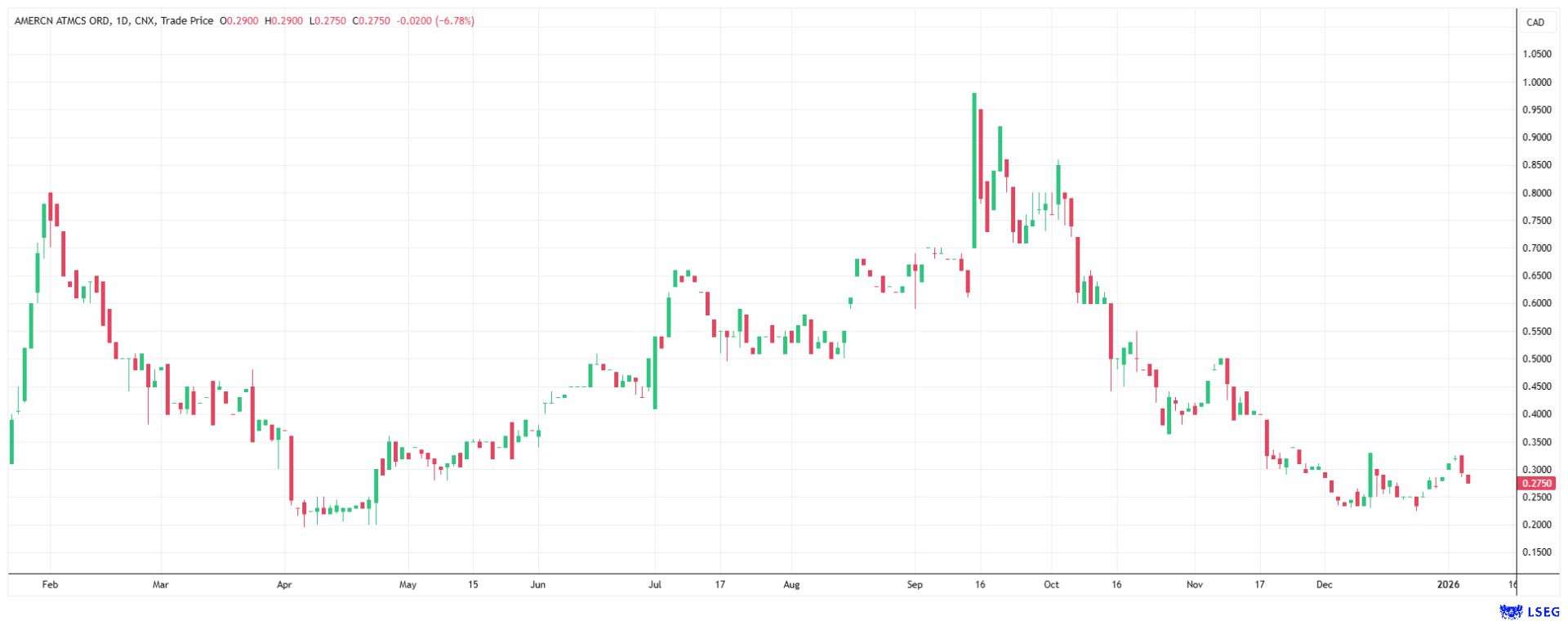
American Atomics offers investors a rare constellation. While GE and Siemens are the leading names in reactor technology, American Atomics has access to fuel and enrichment technology. According to an analysis by Simply Wall St, with a market capitalization of only around CAD 12 million, the stock offers an extremely attractive risk-reward profile compared to the billion-dollar valuations of the industry giants. Its strategic focus on US supply security, flanked by partnerships with technology leaders such as CVMR and its location in Utah, makes American Atomics a potential takeover candidate or strategic partner for large utilities desperately seeking secure uranium from North America.
According to renowned investors such as Eric Sprott, the structural supply deficit in the uranium market is cemented for years to come, putting companies with good assets and better technology in pole position for the coming bull market. American Atomics' stock strikes a chord in several ways: on the one hand, uranium is a strategic resource that the US government wants to promote in its own country; on the other hand, uranium is closely linked to important future technologies such as AI.
Watch YouTube videoConflict of interest
Pursuant to §85 of the German Securities Trading Act (WpHG), we point out that Apaton Finance GmbH as well as partners, authors or employees of Apaton Finance GmbH (hereinafter referred to as "Relevant Persons") may hold shares or other financial instruments of the aforementioned companies in the future or may bet on rising or falling prices and thus a conflict of interest may arise in the future. The Relevant Persons reserve the right to buy or sell shares or other financial instruments of the Company at any time (hereinafter each a "Transaction"). Transactions may, under certain circumstances, influence the respective price of the shares or other financial instruments of the Company.
In addition, Apaton Finance GmbH is active in the context of the preparation and publication of the reporting in paid contractual relationships.
For this reason, there is a concrete conflict of interest.
The above information on existing conflicts of interest applies to all types and forms of publication used by Apaton Finance GmbH for publications on companies.
Risk notice
Apaton Finance GmbH offers editors, agencies and companies the opportunity to publish commentaries, interviews, summaries, news and the like on news.financial. These contents are exclusively for the information of the readers and do not represent any call to action or recommendations, neither explicitly nor implicitly they are to be understood as an assurance of possible price developments. The contents do not replace individual expert investment advice and do not constitute an offer to sell the discussed share(s) or other financial instruments, nor an invitation to buy or sell such.
The content is expressly not a financial analysis, but a journalistic or advertising text. Readers or users who make investment decisions or carry out transactions on the basis of the information provided here do so entirely at their own risk. No contractual relationship is established between Apaton Finance GmbH and its readers or the users of its offers, as our information only refers to the company and not to the investment decision of the reader or user.
The acquisition of financial instruments involves high risks, which can lead to the total loss of the invested capital. The information published by Apaton Finance GmbH and its authors is based on careful research. Nevertheless, no liability is assumed for financial losses or a content-related guarantee for the topicality, correctness, appropriateness and completeness of the content provided here. Please also note our Terms of use.