September 27th, 2023 | 09:05 CEST
Nikola, Saturn Oil + Gas, BASF - A Buy in difficult times?
These are challenging times on the stock market. Central banks have not announced the end of interest rate hikes, which is poison for growth companies. In addition, extreme weather conditions are affecting the production of some companies, and there are geopolitical tensions to consider, including the ongoing Ukraine conflict and the simmering dispute between the US and China. Recently, there have also been tensions between China and Germany. Following critical statements by Foreign Minister Baerbock to China's Xi Jinping, the German ambassador was summoned. Energy shortages are becoming increasingly significant for many companies in Germany. Today, we look at three companies suffering from the problems described.
time to read: 4 minutes | Author: Armin Schulz
ISIN: NIKOLA CORP. | US6541101050 , Saturn Oil + Gas Inc. | CA80412L8832 , BASF SE NA O.N. | DE000BASF111
Table of contents:
Author

Armin Schulz
Born in Mönchengladbach, he studied business administration in the Netherlands. In the course of his studies he came into contact with the stock exchange for the first time. He has more than 25 years of experience in stock market business.
Tag cloud
Shares cloud
Nikola - Convertible bonds lift the share price
Nikola Corporation, a manufacturer of electric and hydrogen-powered trucks, is facing significant financial and reputational challenges. The Company's tight liquidity situation could be improved by the sale of USD 40 million in convertible bonds. A request to that effect has been filed with the SEC, as announced on September 25. Increased interest rates are making life difficult for the Company. Nikola's reputation has been damaged by missed financial and vehicle delivery targets and safety incidents.
Competition in the electric truck sector is fierce, and the Company has yet to deliver a hydrogen-powered vehicle. The website says the hydrogen truck is coming this year. However, there is a hitch with hydrogen and the infrastructure that needs to be built for it. Last year, the Company made only USD 57 million in sales with a free cash flow of around minus USD 780 million. According to the latest quarterly figures, cash was USD 240 million. If the cash burn continues, it will be tight for the Company.
On September 15, Nikola announced a partnership with ITD Industries to handle sales and service in Canada. This could boost sales. There have been recent changes in the management team as well. John Vesco joined the Board of Directors at the end of August. As of October 9, Mary Chan is set to become the new COO. Joseph S. Cappello became President of Energy on September 25. On Monday, the stock jumped from USD 1.20 to USD 1.44, possibly due to the prospect of a liquidity injection. However, survival may depend on further diluting existing shareholders.
Saturn Oil & Gas - Forecast adjustment
After a prolonged period of positive performance at Saturn Oil & Gas, there was a setback on September 20. Due to the weak oil price in the 1st half of the year and the forest fires in Alberta, the Company cannot achieve its targeted goals and issued updated guidance for the end of the year. Production was expected to average 27,170 barrels in 2023 but will only average 24,100 barrels. In December, production was planned at 30,000 barrels per day. According to new estimates, it will be only 27,000 barrels. Accordingly, the CAD 475 million EBITDA target will not be reached, and it is now expected to be CAD 375 million. This also impacts net debt at the end of the year, which is expected to be CAD 455 million.
On the positive side, however, the Company has reached an agreement with its lender to suspend principal payments for September and December in order to expand its drilling program during this period. This means that by the end of the year, the Company will have invested CAD 130 million in production development and will aim to produce 27,000 barrels of oil equivalent per day. The prospects of achieving this target are good, as recent Spearfish wells have exceeded expectations in terms of production rates and have done so with less capital investment. The Company plans to deploy the new drilling approach at up to three additional locations by the end of the year.
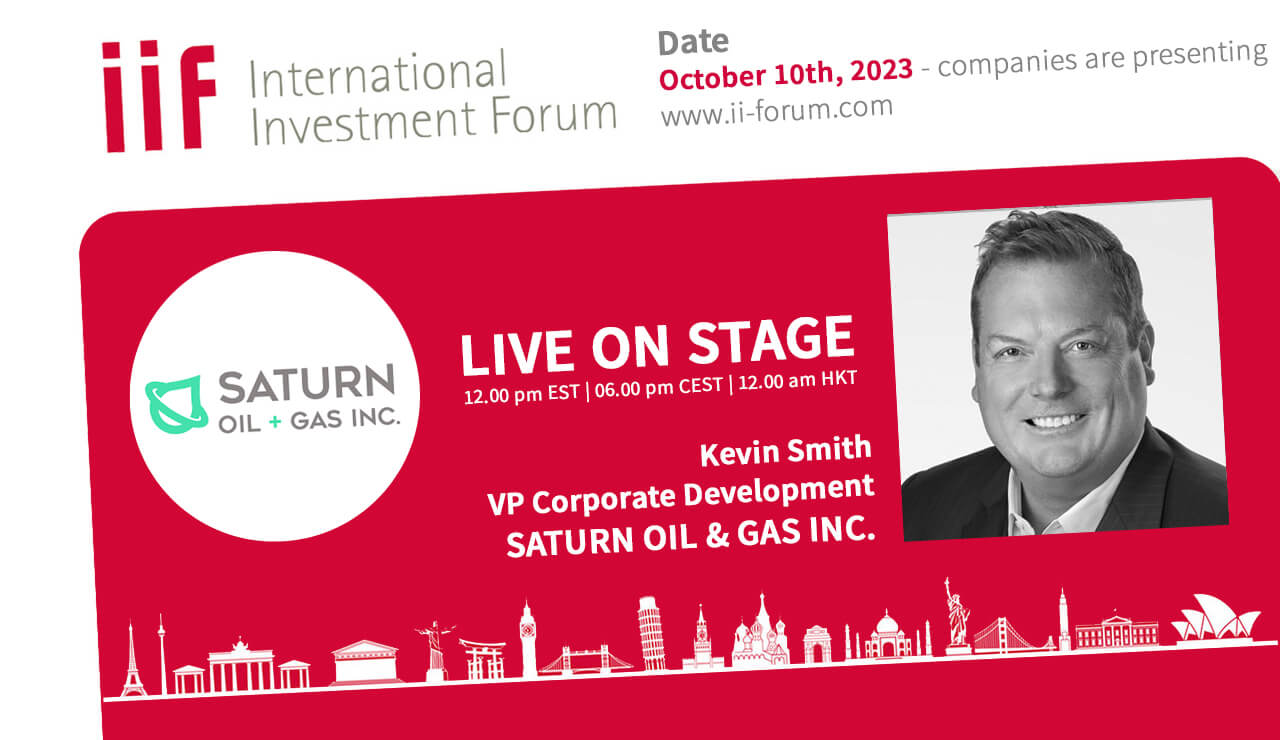
Following the announcement, several analysts spoke out. Echelon Capital Markets issued a Buy rating with a price target of CAD 5.65, highlighting the Company's good relationship with the lender, which gives it more room to manoeuvre. Velocity Trade Capital set the stock at Outperform with a CAD 7 price target. The analysts project a free cash flow of $200 million in 2024. Canaccord raised the stock from speculative buy to buy and expects a price of CAD 5.75. Analysts are bullish, even though loan repayment will take until Q1 2026. The stock is holding up very well despite the forecast adjustment and is priced at CAD 2.76. Questions for management will be addressed live on October 10 at the 8th International Investment Forum.
BASF - Economic problems weigh
The chemical industry is energy-hungry, and BASF is no exception. The Company is investing a lot of money in China, as this is the largest market for chemical products in the world. With its local factories, the Company wants to profit from the long-term growing market. However, when the German Foreign Minister offends the Chinese government by calling Xi Jinping a dictator, it is counterproductive for Germany's reputation and could potentially have repercussions for German companies operating in China. The Chinese economy has yet to return to its full potential.
A recovery of the economy would certainly help the German chemical giant, as business in the Middle Kingdom already accounts for 13% of total Group sales, and the Group expects this share to rise. Since September 4, BASF has begun constructing a syngas plant at its Zhanjiang Verbund site. The plant is expected to start operations as early as 2025 and significantly reduce CO2 emissions. In Germany, there is little fear of gas shortages like last year. Storage facilities are well stocked, and the economy is not humming, which means there should be no increased demand.
Nevertheless, high energy costs are weighing on the balance sheet, and initial experts are not sure whether the Group will achieve its EBIT targets, although the forecast was already revised downwards in July. In September, Bernstein and JPMorgan issued a Buy recommendation, while Warburg, Berenberg and Jeffries recommended a Hold. UBS sees the share as a Sell. The price targets are between EUR 37 and EUR 58. The share is currently trading at EUR 42.27, heading for the June low of EUR 41.94. If a double bottom is formed, there is rebound potential.
Nikola is facing significant financing problems and is currently not an attractive investment. Saturn Oil + Gas has suffered a setback, but in the long term much higher prices can be expected after debt repayment. Cooperation with the lender seems to be working well. BASF has paid EUR 3.40 dividend this year. If the dividend remains the same, that translates to an 8% dividend yield. However, a cut could also be in the offing here. If the economy picks up, the stock is a buy candidate.
Conflict of interest
Pursuant to §85 of the German Securities Trading Act (WpHG), we point out that Apaton Finance GmbH as well as partners, authors or employees of Apaton Finance GmbH (hereinafter referred to as "Relevant Persons") currently hold or hold shares or other financial instruments of the aforementioned companies and speculate on their price developments. In this respect, they intend to sell or acquire shares or other financial instruments of the companies (hereinafter each referred to as a "Transaction"). Transactions may thereby influence the respective price of the shares or other financial instruments of the Company.
In this respect, there is a concrete conflict of interest in the reporting on the companies.
In addition, Apaton Finance GmbH is active in the context of the preparation and publication of the reporting in paid contractual relationships.
For this reason, there is also a concrete conflict of interest.
The above information on existing conflicts of interest applies to all types and forms of publication used by Apaton Finance GmbH for publications on companies.
Risk notice
Apaton Finance GmbH offers editors, agencies and companies the opportunity to publish commentaries, interviews, summaries, news and the like on news.financial. These contents are exclusively for the information of the readers and do not represent any call to action or recommendations, neither explicitly nor implicitly they are to be understood as an assurance of possible price developments. The contents do not replace individual expert investment advice and do not constitute an offer to sell the discussed share(s) or other financial instruments, nor an invitation to buy or sell such.
The content is expressly not a financial analysis, but a journalistic or advertising text. Readers or users who make investment decisions or carry out transactions on the basis of the information provided here do so entirely at their own risk. No contractual relationship is established between Apaton Finance GmbH and its readers or the users of its offers, as our information only refers to the company and not to the investment decision of the reader or user.
The acquisition of financial instruments involves high risks, which can lead to the total loss of the invested capital. The information published by Apaton Finance GmbH and its authors is based on careful research. Nevertheless, no liability is assumed for financial losses or a content-related guarantee for the topicality, correctness, appropriateness and completeness of the content provided here. Please also note our Terms of use.