December 21st, 2023 | 07:20 CET
Nel ASA, dynaCERT, BYD - Greener driving, the new era of transportation technology
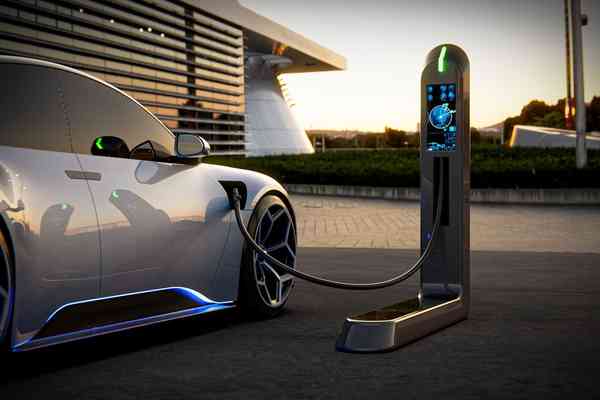
Reducing emissions from driving is crucial in the fight against climate change and air pollution. Large diesel engines in trucks, buses and industrial applications contribute significantly to the emission of nitrogen oxides (NOx) and particulate matter. Hydrogen and electric drives are seen as promising solutions for a low-emission future, although each technology has specific advantages and disadvantages. A coexisting application of both systems could enable the optimal reduction of emissions. However, there is still a long way to go. It will take years to build up the necessary infrastructure. There are already technologies available to reduce emissions today. We look at one company from each sector.
time to read: 4 minutes | Author: Armin Schulz
ISIN: NEL ASA NK-_20 | NO0010081235 , DYNACERT INC. | CA26780A1084 , BYD CO. LTD H YC 1 | CNE100000296
Table of contents:
Author

Armin Schulz
Born in Mönchengladbach, he studied business administration in the Netherlands. In the course of his studies he came into contact with the stock exchange for the first time. He has more than 25 years of experience in stock market business.
Tag cloud
Shares cloud
Nel ASA - A challenging environment
Nel ASA, a Norwegian company and leading provider of solutions for the production, storage and distribution of hydrogen from renewable energy, is facing a series of challenges. At the beginning of 2021, hydrogen was the hype topic par excellence. Although little has changed regarding the prospects for hydrogen technology, several companies have now fallen into difficulties. Nel ASA is one of them. In times of rising interest rates, raising money is no longer so easy, which is needed to develop advanced electrolysers.
While the electrolyser business is still doing relatively well, the hydrogen filling station sector is in a much worse state. This area is highly deficient. Vehicles with hydrogen fuel cells are scarce and primarily found in logistics centers. Trucks and light commercial vehicles are still in the early stages of development. Green hydrogen also lags behind fossil fuels in terms of economic efficiency. Nel ASA is also affected by the overall economic situation and specific industry problems. Fluctuating energy prices, uncertainties on the global markets and the slow pace of political decisions regarding climate protection measures are hindering the Company's development.
This is also reflected in the Company's announcement on December 12 that customer HyCC has cancelled its 40-megawatt order for electrolysers due to regulatory delays and market conditions. The order had a volume of around EUR 12 million. Since the beginning of the year, the share has lost another 50% of its value. This is one of the reasons why the Company has been dropped from the STOXX Europe 600. As a result, there is renewed pressure on the share, as the funds that invest in the index have to sell their shares. The share is currently trading at NOK 6.99.
dynaCERT - Verra certification will change everything
With its HydraGEN™ technology, dynaCERT already offers the possibility of significantly reducing emissions from diesel engines. The patented system produces hydrogen and oxygen on demand and optimizes combustion in the engine, ultimately reducing emissions and fuel consumption. At the same time, the engine performs better, and the engine oil can be used longer. The savings mean the purchase pays for itself in less than a year. In addition, it will be possible to obtain CO2 credits in the near future. The certification process with Verra is nearing completion.
An evaluation report on the methodology for improving the efficiency of vehicles and combustion methods still needed to be included. Earthood Services was commissioned to prepare the report, which was completed on November 27. The report indicates that all requirements set by Verra for HydraGEN™ and the HydraLytica™ software are now met. As soon as Verra issues the official confirmation, CO2 certificates are issued, which are shared between dynaCERT and its customers. Each ton of CO2 saved is currently worth around USD 75. The certification would be both a milestone and a significant selling point, turning the Company into a money-making machine.
There was also positive feedback from the French sales partner IPMD sas, which presented the technology at the Solutrans trade fair in Lyon. There, the technology was very well received by transport companies and mobility experts. The Company is in a good financial position. On December 5, the first tranche of the private placement of CAD 2.9 million was completed. The money is earmarked for working capital, repayment of debt and a stake in Cipher Neutron. We are already seeing an upturn in the share price. There may be tax reasons for this, but evidently, some market participants want to be invested before the Verra announcement. One share currently costs CAD 0.165.
BYD - Another record
In November, BYD again set a record for the number of New Energy Vehicles sold. A total of 301,903 vehicles were sold, an increase of 31% compared to the previous year. This brings the Company very close to its target of 3 million vehicles sold in 2023. Currently, 2.68 million units have been sold. Compared to October, however, only a few more vehicles were sold. The price reductions that caused the share price to plummet remain in place in December. In Germany, subsidies for electric cars are set to expire soon, but the market shift is not currently of interest to BYD.
The Group has set its sights on other markets for internationalization. Japan is one of them. The aim is to sell around 30,000 electric vehicles annually in over 100 branches by 2025. In Japan, Nissan is leading the way with its battery-powered vehicles. The Dolphin model is set to cause a stir here. The model costs 10% less than the comparable Nissan model and offers 20% more range thanks to the Blade batteries. For Europe and the US, where traditional car manufacturers still dominate, the competition is intensifying.
Experts believe that the German automotive industry, for example, is 10 years behind China in the development of electric vehicles. It is no coincidence that the EU has initiated a review of state subsidies for electric cars. The US is concerned about BYD's plans to build a factory in Mexico because the high tariffs could not be enforced due to the free trade agreement. The share is approaching the critical support level of EUR 23. There is further support below this at EUR 22.65. The share is currently trading at EUR 23.24.
The emissions problem is largely caused by mobility. The aim here is to reduce emissions in order to achieve climate targets. At the moment, however, combustion engines are still ahead. It will take a long time to build up the infrastructure. Hydrogen vehicles are still in the development phase. There is still enough money at Nel ASA, but if the Norwegians do not start earning money soon, the lights will go out sooner or later. dynaCERT benefits from the delays because its HydraGEN™ technology is already making it possible to save emissions and money. If the CO2 credits come, the share must be revalued. BYD is still rushing from record to record. If internationalization is successful, this will continue in the future.
Conflict of interest
Pursuant to §85 of the German Securities Trading Act (WpHG), we point out that Apaton Finance GmbH as well as partners, authors or employees of Apaton Finance GmbH (hereinafter referred to as "Relevant Persons") may hold shares or other financial instruments of the aforementioned companies in the future or may bet on rising or falling prices and thus a conflict of interest may arise in the future. The Relevant Persons reserve the right to buy or sell shares or other financial instruments of the Company at any time (hereinafter each a "Transaction"). Transactions may, under certain circumstances, influence the respective price of the shares or other financial instruments of the Company.
In addition, Apaton Finance GmbH is active in the context of the preparation and publication of the reporting in paid contractual relationships.
For this reason, there is a concrete conflict of interest.
The above information on existing conflicts of interest applies to all types and forms of publication used by Apaton Finance GmbH for publications on companies.
Risk notice
Apaton Finance GmbH offers editors, agencies and companies the opportunity to publish commentaries, interviews, summaries, news and the like on news.financial. These contents are exclusively for the information of the readers and do not represent any call to action or recommendations, neither explicitly nor implicitly they are to be understood as an assurance of possible price developments. The contents do not replace individual expert investment advice and do not constitute an offer to sell the discussed share(s) or other financial instruments, nor an invitation to buy or sell such.
The content is expressly not a financial analysis, but a journalistic or advertising text. Readers or users who make investment decisions or carry out transactions on the basis of the information provided here do so entirely at their own risk. No contractual relationship is established between Apaton Finance GmbH and its readers or the users of its offers, as our information only refers to the company and not to the investment decision of the reader or user.
The acquisition of financial instruments involves high risks, which can lead to the total loss of the invested capital. The information published by Apaton Finance GmbH and its authors is based on careful research. Nevertheless, no liability is assumed for financial losses or a content-related guarantee for the topicality, correctness, appropriateness and completeness of the content provided here. Please also note our Terms of use.