July 25th, 2023 | 10:05 CEST
Manuka Resources, JinkoSolar, BYD - Vanadium, a critical raw material in the energy transition
The energy transition is a crucial step towards a sustainable energy supply. The storage of solar energy and the optimization of batteries for electric vehicles are important topics in this context. Vanadium can play a key role in these areas. The critical raw material is used in the battery industry as a cathode material in redox flow batteries, primarily for energy storage. Whether vanadium will also find its way into batteries for electric vehicles remains to be seen. Originally, the material was used as an important alloying metal in structural and tool steels to refine the steel.
time to read: 4 minutes
|
Author:
Armin Schulz
ISIN:
Manuka Resources Limited | AU0000090292 , JINKOSOLAR ADR/4 DL-00002 | US47759T1007 , BYD CO. LTD H YC 1 | CNE100000296
Table of contents:
Author

Armin Schulz
Born in Mönchengladbach, he studied business administration in the Netherlands. In the course of his studies he came into contact with the stock exchange for the first time. He has more than 25 years of experience in stock market business.
Tag cloud
Shares cloud
Manuka Resources - Gold production resumes
Manuka Resources had encouraging news to report on June 15: Mt. Boppy's gold production has successfully resumed at the Company's 100% owned Wonawinta metallurgical plant. The Company is targeting the production of 20,000 to 25,000 ounces of gold annually for the next 3 years, laying the foundation to organically fund further exploration programs. This will focus on near-mine gold exploration and drilling aimed at delineating indicated mineral resource targets. This targeted exploration work is intended to exploit the full potential of the gold resources at the Mt. Boppy project.
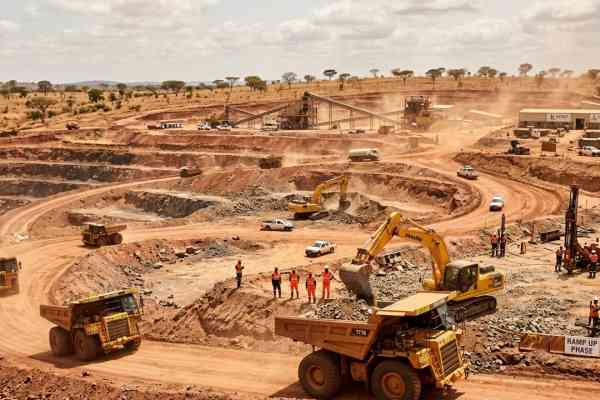
Gold production revenues will also enable the Company to advance its two other promising silver and vanadium projects, namely the Wonawinta Project and the South Taranaki Bight Project. The latter offers a lot of potential due to the growing vanadium market. Already, the electricity storage segment is growing rapidly. Vanadium redox flow batteries are an ideal storage system for renewable energy. In addition to 25 t of vanadium per year, an additional 5 million t of iron ore can be mined. The life of the project is at least 20 years, and the cost of production is exceptionally low. Manuka could become one of the world's largest vanadium producers.
The Wonawinta Silver Project is located in the Cobar Basin of Australia and hosts estimated silver reserves of up to 51 million ounces. Should the Company resume production here, it would mean further cash flow. As with the mined gold, the material can be further processed at the plant. On July 19, 10 million options expired. At the same time, 4 million new options were issued. The news about the start of gold production came at a time when the gold price was just slipping. Therefore, the share has yet to benefit appropriately so far. The share has formed a bottom at around AUD 0.05. If gold production starts well, the share price, currently at AUD 0.055, could increase further.
JinkoSolar - Growth in the solar industry
The solar industry is booming, partly due to the Ukraine conflict, which has made electricity much more expensive in Europe. However, government subsidies are also driving the expansion of renewable energy. But what is laudable, on the one hand, also has its downsides. For example, if the sun shines all day in Germany, the power grid is overloaded. The energy generated has to be "given away" abroad in order to keep the power grid stable. At night, we then have to buy expensive electricity because the sun is not shining. To counter this problem, the market for electricity storage is growing rapidly. Here, vanadium redox flow batteries are on the rise because they are scalable and more durable than lithium-ion batteries.
These are ideal conditions for one of the largest photovoltaic manufacturers like JinkoSolar. In addition, it is the market leader in TOPCon technology, which has a high energy efficiency and will gradually replace the old modules in the coming years. Already in the last quarterly figures, the Company was able to exceed expectations of analysts in part significantly. This is mainly due to the drop in the price of polysilicon, which has fallen by over 60%, pushing the margin up significantly. The 59% subsidiary Jiangxi Jinko also presented very good figures on July 14.
Nevertheless, JinkoSolar's stock continues to perform weakly. On an annual basis, the stock has lost more than 40%. Investors are ignoring the good results. Since mid-June, the stock has been running sideways between USD 39.68 and USD 47.85. Currently, one share costs USD 42.30. Considering the current price-earnings ratio, the company is undervalued compared to other module manufacturers, and there is catch-up potential. Furthermore, the Company is well-positioned for the future after investing around CYN 5.6 billion in research in 2022.
BYD - Strong 1st half year
BYD is a Chinese company and one of the world's leading electric vehicle (EV) manufacturers. What sets the group apart is its vertical integration. Both the batteries and the installed semiconductors are produced within the Company. Today, BYD is already the world's number 1 manufacturer of electric vehicles. Almost every 2nd electric car in China comes from BYD. In the future, the international markets are to provide further growth. Therefore, they plan to invest USD 1 billion in a joint venture with the Indian company Megha Engineering and Infrastructures. A wide range of electric cars is to be produced there.
Despite the price war in the Chinese domestic market, the Group increased its net profits to CYN 10.5 to 11.7 billion, according to the preliminary half-year figures. That is an increase of around 200%. In total, the EV manufacturer sold 641,350 vehicles. Around half of the vehicles sold were hybrid models. The strong margins are due to the fall in lithium prices and the broader vehicle range. Most recently, the Denza N7 SUV was launched, which aims to compete with Tesla's Model Y.
BYD is active internationally and has plans to open a lithium cathode plant in the US. A new plant is also planned in Brazil. Even if BYD's models cannot secure large market shares in Europe and the US right away, the brand is slowly becoming visible. Competitor NIO has a showroom on the island of Sylt and is trying to win over the island's well-heeled customers for its electric vehicles. BYD's stock is not fazed by share sales from Warren Buffet nor by minor YouTube scandals. The paper is currently trading at EUR 30.53.
The energy turnaround is creating new familiar companies on the stock markets. Ten years ago, hardly anyone knew the stocks presented today. Manuka Resources can finance further work with its gold production. If the financing for the vanadium project stands, the stock must be reassessed. JinkoSolar delivers impressive numbers, owns high-quality technology and is growing. The stock price has not yet been able to benefit from this. BYD is becoming a serious competitor to international automakers. No one covers the supply chain as well as the Chinese competitor. If the expansion into international markets succeeds, nothing will stand in the way of further growth.
Conflict of interest
Pursuant to §85 of the German Securities Trading Act (WpHG), we point out that Apaton Finance GmbH as well as partners, authors or employees of Apaton Finance GmbH (hereinafter referred to as "Relevant Persons") may hold shares or other financial instruments of the aforementioned companies in the future or may bet on rising or falling prices and thus a conflict of interest may arise in the future. The Relevant Persons reserve the right to buy or sell shares or other financial instruments of the Company at any time (hereinafter each a "Transaction"). Transactions may, under certain circumstances, influence the respective price of the shares or other financial instruments of the Company.
In addition, Apaton Finance GmbH is active in the context of the preparation and publication of the reporting in paid contractual relationships.
For this reason, there is a concrete conflict of interest.
The above information on existing conflicts of interest applies to all types and forms of publication used by Apaton Finance GmbH for publications on companies.
Risk notice
Apaton Finance GmbH offers editors, agencies and companies the opportunity to publish commentaries, interviews, summaries, news and the like on news.financial. These contents are exclusively for the information of the readers and do not represent any call to action or recommendations, neither explicitly nor implicitly they are to be understood as an assurance of possible price developments. The contents do not replace individual expert investment advice and do not constitute an offer to sell the discussed share(s) or other financial instruments, nor an invitation to buy or sell such.
The content is expressly not a financial analysis, but a journalistic or advertising text. Readers or users who make investment decisions or carry out transactions on the basis of the information provided here do so entirely at their own risk. No contractual relationship is established between Apaton Finance GmbH and its readers or the users of its offers, as our information only refers to the company and not to the investment decision of the reader or user.
The acquisition of financial instruments involves high risks, which can lead to the total loss of the invested capital. The information published by Apaton Finance GmbH and its authors is based on careful research. Nevertheless, no liability is assumed for financial losses or a content-related guarantee for the topicality, correctness, appropriateness and completeness of the content provided here. Please also note our Terms of use.