September 16th, 2021 | 10:46 CEST
BYD, Kainantu Resources, JinkoSolar: Investing in green technology
Electromobility is on the rise and unstoppable. In July, a survey by E.ON showed that 66% of Germans could imagine buying an e-car. For around 70% of e-car sympathizers, climate protection is the most important argument in favor of an e-car. We highlight three stocks that can benefit from the trend toward more e-mobility.
time to read: 2 minutes | Author: Nico Popp
ISIN: BYD CO. LTD H YC 1 | CNE100000296 , Kainantu Resources Ltd. | CA48301H1073 , JINKOSOLAR ADR/4 DL-00002 | US47759T1007
Table of contents:
Author

Nico Popp
At home in Southern Germany, the passionate stock exchange expert has been accompanying the capital markets for about twenty years. With a soft spot for smaller companies, he is constantly on the lookout for exciting investment stories.
Tag cloud
Shares cloud
BYD: Everything here, actually
The BYD share is one of the high flyers on the stock exchange floor. On a one-year view, the value increased by more than 200%. In recent days, however, the price declined a little. What is the reason for this? The Company has stopped the IPO of its chip division BYD Semiconductor. The Company was supposed to go public in Shenzhen. In the meantime, it wants to make a new attempt, but Beijing's interventions around IPOs and expansion plans of powerful Chinese companies are causing unrest in the market. With BYD now suffering from the conditions alongside companies from the education sector and Alibaba and its fintech subsidiary Ant, nervousness is growing.
Still, investors can look on the bright side - after all, BYD has a chip division. These products are in short supply worldwide, and their scarcity is even curbing the production of many BYD competitors. Since BYD is also well positioned in terms of batteries and produces them itself, the Company appears comfortable. However, the valuation is already ambitious. BYD is a stock that investors can buy on weakness.
Kainantu Resources: Papua New Guinea as an emerging location
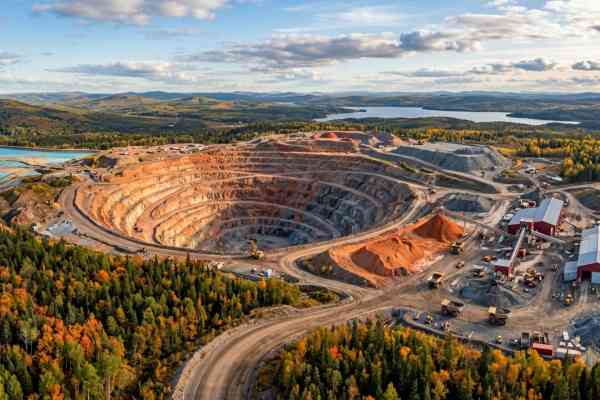
Closely linked to the boom in electric mobility is the steadily increasing demand for copper. Recently, media reports have been making the rounds according to which international mining companies are focusing on the Asia-Pacific region in developing new deposits. The reason for this is that production is falling in traditional mining regions. In this context, the shares of Kainantu Resources are considered interesting. The Company is developing gold-copper projects in Papua New Guinea and recently purchased additional land.
Kainantu is in the early stages of exploration and most recently took auger samples to discover gold deposits and further define both the KRL South and KRL North areas. In the process, it encountered a rock sample containing 40.13 g/t gold. Kainantu Resources' shares are currently valued at only about CAD 10 million. As the Company is well connected in Papua New Guinea and has an excellent connection to the government, the trend towards more exotic mining regions could positively affect the share.
JinkoSolar: How does the market interpret the numbers?
If you look at studies on the acceptance of electromobility, it is clear that those respondents who use a photovoltaic system themselves are particularly open to electric mobility. The synergies are obvious. Appropriate photovoltaic cells on the carport and the e-car are charged in a largely CO2-neutral manner. In the future, JinkoSolar modules have a good chance of being installed on many roofs in Germany and globally. Here, quality and efficiency are right. The figures published yesterday show exactly how the situation is at the Company. Even more important is how the share price reacts to the figures. If the level around EUR 40 in Germany holds, the share could continue to go up. If the figures are interpreted rather negatively, the value can also test the December low again.
Investments in renewable energy are challenging. Many companies make their profits only in the future. In addition, it is not clear whether the expected growth will materialize due to strong competition. In the case of BYD, the current China skepticism adds to the positive e-car fantasy. Kainantu Resources, on the other hand, is doing solidly. The micro-cap is moving forward step by step. However, the Company, which focuses on gold and copper, must be considered speculative given its early stage.
Conflict of interest
Pursuant to §85 of the German Securities Trading Act (WpHG), we point out that Apaton Finance GmbH as well as partners, authors or employees of Apaton Finance GmbH (hereinafter referred to as "Relevant Persons") may in the future hold shares or other financial instruments of the mentioned companies or will bet on rising or falling on rising or falling prices and therefore a conflict of interest may arise in the future. conflict of interest may arise in the future. The Relevant Persons reserve the shares or other financial instruments of the company at any time (hereinafter referred to as the company at any time (hereinafter referred to as a "Transaction"). "Transaction"). Transactions may under certain circumstances influence the respective price of the shares or other financial instruments of the of the Company.
Furthermore, Apaton Finance GmbH reserves the right to enter into future relationships with the company or with third parties in relation to reports on the company. with regard to reports on the company, which are published within the scope of the Apaton Finance GmbH as well as in the social media, on partner sites or in e-mails, on partner sites or in e-mails. The above references to existing conflicts of interest apply apply to all types and forms of publication used by Apaton Finance GmbH uses for publications on companies.
Risk notice
Apaton Finance GmbH offers editors, agencies and companies the opportunity to publish commentaries, interviews, summaries, news and etc. on news.financial. These contents serve information for readers and does not constitute a call to action or recommendations, neither explicitly nor implicitly. implicitly, they are to be understood as an assurance of possible price be understood. The contents do not replace individual professional investment advice and do not constitute an offer to sell the share(s) offer to sell the share(s) or other financial instrument(s) in question, nor is it an nor an invitation to buy or sell such.
The content is expressly not a financial analysis, but rather financial analysis, but rather journalistic or advertising texts. Readers or users who make investment decisions or carry out transactions on the basis decisions or transactions on the basis of the information provided here act completely at their own risk. There is no contractual relationship between between Apaton Finance GmbH and its readers or the users of its offers. users of its offers, as our information only refers to the company and not to the company, but not to the investment decision of the reader or user. or user.
The acquisition of financial instruments entails high risks that can lead to the total loss of the capital invested. The information published by Apaton Finance GmbH and its authors are based on careful research on careful research, nevertheless no liability for financial losses financial losses or a content guarantee for topicality, correctness, adequacy and completeness of the contents offered here. contents offered here. Please also note our Terms of use.