August 21st, 2023 | 08:15 CEST
BYD, First Phosphate, JinkoSolar - Benefiting from the growing energy storage market
The electrification of the world is an important step in reducing dependence on fossil fuels and achieving climate goals. Energy storage systems and batteries are essential to balance the fluctuating generation from renewable energy sources such as solar and wind. They can store excess electricity and release it when needed. One promising technology for electricity storage and rechargeable batteries is lithium-iron-phosphate (LFP) batteries, which are safer and cheaper than traditional lithium-ion batteries and have a longer service life. Moreover, the first automakers are exploring the usability of LFP batteries. The market for energy storage is growing rapidly. We take a look at three companies that stand to benefit from developments in the energy storage market.
time to read: 4 minutes
|
Author:
Armin Schulz
ISIN:
BYD CO. LTD H YC 1 | CNE100000296 , JINKOSOLAR ADR/4 DL-00002 | US47759T1007 , FIRST PHOSPHATE CORP | CA33611D1033
Table of contents:
Author

Armin Schulz
Born in Mönchengladbach, he studied business administration in the Netherlands. In the course of his studies he came into contact with the stock exchange for the first time. He has more than 25 years of experience in stock market business.
Tag cloud
Shares cloud
BYD - Renewed price war
There is hardly any segment where the demand for energy storage has increased as rapidly as in the automotive industry. Since almost all major manufacturers are active in this segment and see the future there, a lot of batteries are needed. But the battle for the best battery has only just begun. At the forefront is BYD, a Chinese manufacturer of electric vehicles that also produces batteries and microchips. BYD's Blade batteries are regarded as leading. They have even outpaced Tesla. Since then, a price war has been sparked in the Chinese market.
Although there was an agreement that was supposed to put an end to these price wars, it does not look as if all suppliers will adhere to it. Tesla has announced cheaper versions of its Model S and Model X. BYD offers affordable cars and a wide range of models, which has contributed to its enormous popularity in the Chinese auto market. Despite challenges such as inflation and interest rates, sales of electric vehicles remain strong worldwide, especially in the US, EU and China. BYD is expanding its electric vehicle and battery production capacity, with new plants in China scheduled to come on stream in the second half of 2023.
The group also plans to expand internationally, for example, to Thailand, where an EV factory is scheduled to start production in 2024. A plant is also being planned in Brazil. Since July 31, the share has been under pressure and lost around 22% at its peak until Friday. The share price ended up at EUR 25.86 in Germany. Reasons for this are quickly found, the renewed price war on the domestic market and statements by management, according to which BYD does not want to pursue the vision of autonomous driving. The easing of China's interest rate policy will also likely hit foreign investors. In the long term, however, BYD seems well positioned.
First Phosphate - PEA submitted
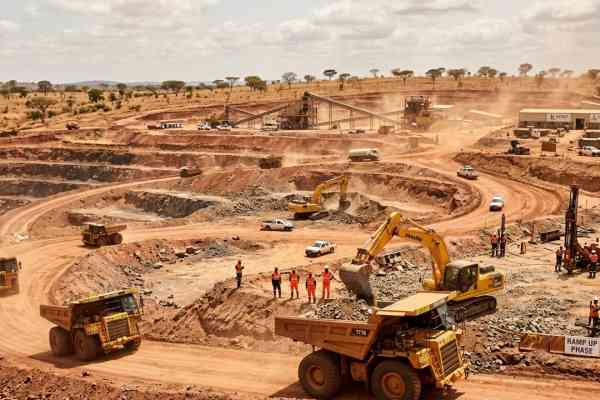
First Phosphate owns various properties in Quebec covering over 1,500 sq km. The properties contain anorthosite-eruptive phosphate rock, which is considered to be of high purity. Battery manufacturers need phosphate with a high purity content, and this is what the Company wants to make available to North American producers. On June 19, the pilot plant for the production of phosphate concentrate for battery-grade purified phosphoric acid was completed. As a result, over 900 kg of apatite concentrate had already been produced at that time, which was delivered to Prayon SA, the largest European producer of purified phosphoric acid, in Belgium, for appropriate refining. In the future, both companies intend to cooperate in various areas.
In mid-July, First Phosphate announced the signing of a non-binding letter of intent with NorFalco Sales to secure the supply of sulfuric acid for future production facilities. A final offtake agreement is expected to be developed over time. On July 26, a further milestone was reached with the positive results of the preliminary economic assessment (PEA) for the Lac à l'Orignal property. There, the Company plans to open-pit mine the material for the phosphorus concentrate. The project is expected to produce an average of 425,000 tonnes of processed phosphate concentrate, 280,000 tonnes of magnetite and 97,000 tonnes of ilmenite annually over a lifespan of 14.2 years. The project has a pre-tax internal rate of return of 21.7% and a pre-tax net present value of CAD 795 million.
The payback period is 4.9 years, assuming an after-tax cash flow of CAD 567 million in 5 years. First Phosphate's President Peter Kent expressed his satisfaction: "Our strategy of keeping capital costs low and controlling mine size reflects these PEA results very well." The Company is in a growth market. While the market volume in 2021 was still at USD 10 billion, it is expected to increase to around USD 50 billion by 2028. The stock is currently trading at CAD 0.34, giving it a market capitalization of just CAD 17.6 million.
JinkoSolar - China's real estate crisis weighs on the share price
Chinese shares do not have it easy at the moment, which also applies to JinkoSolar. The reason for this is the real estate crisis. First, it was Evergrande, and now it is the construction company Country Garden. JinkoSolar could also be indirectly affected by this, even if the figures for the 2nd quarter do not speak for it. The group was able to expand its module shipments significantly. Compared to the previous year, an increase of 74.4% and 36.2% compared to the 1st quarter was achieved. International demand was mainly responsible for this increase.
Total revenue increased to CNY 30.69 billion, up 31.5% quarter-on-quarter and an impressive 62.9% year-on-year growth. Gross profit also significantly increased, reaching CNY 4.78 billion with a gross margin of 15.6%. Adjusted net profit was CNY 1.43 billion. Management raised module shipment targets to 70 to 75 gigawatts. Despite the good numbers, the stock went on a dive.
Currently, the value is as low as it has been since May 2021. Yet the Company has improved its technology, delivers excellent figures, and is currently undervalued. Looking at Wall Street analysts, there are 6 buy recommendations, 1 hold recommendation and 1 sell recommendation in the last 90 days. The price targets range from USD 33 to USD 77. On average, the price expectation is USD 56.61. Currently, the stock is trading at USD 33.78. The support at USD 28.39 should hold, allowing the stock to initiate a rebound.
Electrification continues to progress. The market for energy storage will grow, and new developments should emerge. BYD has an ace up its sleeve with its Blade Battery. If internationalization succeeds, the stock has a lot of potential. First Phosphate wants to contribute to the North American battery industry and intends to supply purified phosphoric acid together with its renowned partners. The foundation for this has been laid with the PEA. JinkoSolar brings good numbers, is innovative and yet the stock is falling. Currently, the stock, like the other two, appears undervalued.
Conflict of interest
Pursuant to §85 of the German Securities Trading Act (WpHG), we point out that Apaton Finance GmbH as well as partners, authors or employees of Apaton Finance GmbH (hereinafter referred to as "Relevant Persons") may hold shares or other financial instruments of the aforementioned companies in the future or may bet on rising or falling prices and thus a conflict of interest may arise in the future. The Relevant Persons reserve the right to buy or sell shares or other financial instruments of the Company at any time (hereinafter each a "Transaction"). Transactions may, under certain circumstances, influence the respective price of the shares or other financial instruments of the Company.
In addition, Apaton Finance GmbH is active in the context of the preparation and publication of the reporting in paid contractual relationships.
For this reason, there is a concrete conflict of interest.
The above information on existing conflicts of interest applies to all types and forms of publication used by Apaton Finance GmbH for publications on companies.
Risk notice
Apaton Finance GmbH offers editors, agencies and companies the opportunity to publish commentaries, interviews, summaries, news and the like on news.financial. These contents are exclusively for the information of the readers and do not represent any call to action or recommendations, neither explicitly nor implicitly they are to be understood as an assurance of possible price developments. The contents do not replace individual expert investment advice and do not constitute an offer to sell the discussed share(s) or other financial instruments, nor an invitation to buy or sell such.
The content is expressly not a financial analysis, but a journalistic or advertising text. Readers or users who make investment decisions or carry out transactions on the basis of the information provided here do so entirely at their own risk. No contractual relationship is established between Apaton Finance GmbH and its readers or the users of its offers, as our information only refers to the company and not to the investment decision of the reader or user.
The acquisition of financial instruments involves high risks, which can lead to the total loss of the invested capital. The information published by Apaton Finance GmbH and its authors is based on careful research. Nevertheless, no liability is assumed for financial losses or a content-related guarantee for the topicality, correctness, appropriateness and completeness of the content provided here. Please also note our Terms of use.